Skip to content
Tamp & Pour

Roundups & reviews · Espresso Machines

The best super-automatic espresso machines under $1,000

Where bean-to-cup actually makes sense: the four-figure ceiling is where automatic milk stops being a luxury feature. Ranked on the milk system, the cleaning routine and the cup, with live prices.

By Stephen V.Updated How we review
#ad

We earn a commission when you buy through our Amazon links, at no extra cost to you. It never changes a verdict, and we say so when the cheaper product is the better buy. How this works.

Buy the De'Longhi Magnifica Evo. It is the pick for almost anyone shopping bean-to-cup with a $1,000 ceiling, because its LatteCrema carafe pours a hands-free cappuccino — the one feature people actually buy this category for — and it does it for roughly half the ceiling. If your priority is the least cleaning rather than the best cup, buy the Philips 3200 LatteGo instead; if counter width is your binding constraint and you do not mind frothing milk by hand, the Gaggia Brera is the only machine here that fits a genuinely narrow gap.

This page exists because $1,000 is a real decision line in this category, not an arbitrary one. Below roughly $400 the milk system is almost always a manual steam wand, which defeats the point of a super-automatic for most buyers. Above $1,000 you are paying for drink menus, color screens, saved profiles and extraction refinements — genuinely better machines, but a long way past the point of diminishing returns for a household that drinks espresso, coffee and cappuccino. The band in between is where one-touch milk, a removable brew group and an adjustable grinder all arrive at once.

Our wider super-automatic ranking covers the whole category including the premium end. This page is the same rubric with a hard price ceiling applied, which changes the order: the machines that win on breadth and polish are gone, and what is left is judged on how well it does the basic job. Every price on this page comes from the live buy button, and every machine here was under $1,000 when the page was written — the band is a guide, the button is the truth.

One caveat that applies to the whole category and not just this band: a super-automatic seals the grind and the puck inside a brew group you cannot reach. That is the point, and it is also the ceiling. None of these will out-pour a well-dialed semi-automatic machine with a real espresso grinder next to it, for similar total money. If you want to improve over time, that is the better path.

The short answer

Quick picks

  • 01
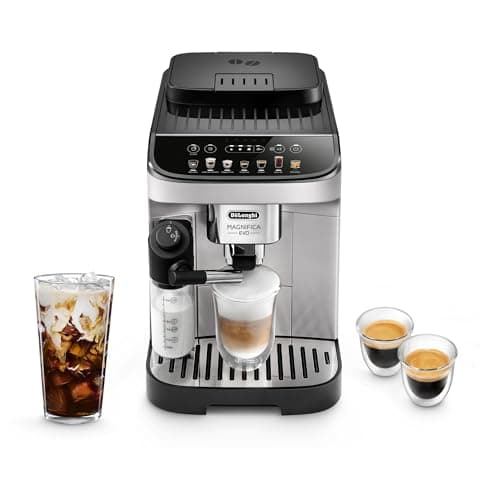
    De'Longhi De'Longhi Magnifica Evo (with LatteCrema)
    De'Longhi Magnifica Evo (with LatteCrema)

    The most machine for the money in bean-to-cup, and the one to buy if you want hands-free cappuccinos without spending the whole budget: an automatic LatteCrema carafe, 13 grind settings and a removable brew group.

    8.4Best overall under $1,000 — for the hands-free milk drinker
  • 02
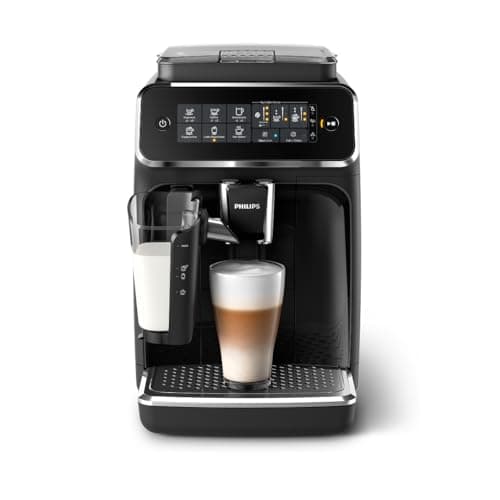
    Philips Philips 3200 Series LatteGo (EP3241)
    Philips 3200 Series LatteGo (EP3241)

    The lowest-maintenance route to a daily cappuccino: a tubeless two-part milk system that rinses in about fifteen seconds, ceramic burrs rated for roughly 20,000 cups, and an AquaClean filter Philips rates for up to 5,000 cups between descales.

    8.2Best for the person who hates cleaning
  • 03
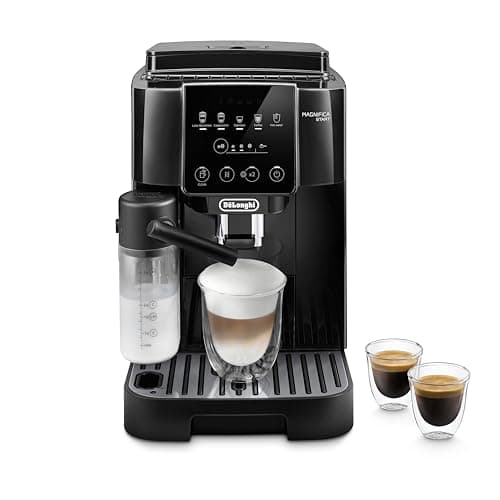
    De'Longhi De'Longhi Magnifica Start (auto milk)
    De'Longhi Magnifica Start (auto milk)

    The simplest way in: a soft-touch panel of plain one-touch icons and, on this auto-milk model, a LatteCrema Hot system that froths for you, stripped of the menus that intimidate first-time bean-to-cup buyers.

    7.7Best for someone who wants one obvious button
  • 04
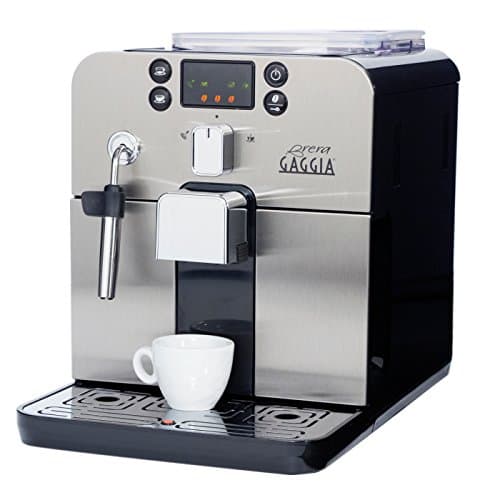
    Gaggia Gaggia Brera
    Gaggia Brera

    The compact contrarian: a genuinely narrow bean-to-cup machine with 100% ceramic burrs and front-loading refills, but its milk is a manual pannarello wand, so you froth by hand.

    7.2Best for a narrow counter — if you accept manual milk

#ad · Live prices from the Amazon Product API, as of October 17, 2026. Where we have no verified live price, we show none — a gap beats a number that has rotted.

In detail

The picks, in full

01
De'Longhi De'Longhi Magnifica Evo (with LatteCrema)

Best overall under $1,000 — for the hands-free milk drinker

De'Longhi Magnifica Evo (with LatteCrema)

Conical burr, 13 grind settingsLatteCrema automatic milk system7 one-touch recipes + My Latte60oz tank / 8.8oz bean hopper
8.4/10

The most machine for the money in bean-to-cup, and the one to buy if you want hands-free cappuccinos without spending the whole budget: an automatic LatteCrema carafe, 13 grind settings and a removable brew group.

Coffee quality
8
Milk system
8.5
Ease & cleaning
8.5
Drink range
8
Value
9

Pros

  • Automatic LatteCrema carafe froths milk and pours a cappuccino or latte macchiato at one touch, with no wand technique to learn
  • 13 grind settings and adjustable strength give more control than most machines at this price
  • Removable brew group lifts out for rinsing, and it routinely sells below its list price

Cons

  • Mostly plastic build, so it feels like the value machine it is
  • The milk carafe is another part to detach, rinse and store after milk drinks
  • No control over brew pressure or temperature the way an enthusiast semi-auto allows

Don't buy this if…

…you want to learn to pull and steam by hand. The Evo does all of that behind a sealed brew group, so a Breville Bambino or Barista Express is the better teacher.

Who it is for: the person who wants a cappuccino on a weekday morning without learning to steam milk, and who would rather spend half the budget than all of it. The Evo wins this band on the oldest logic in the category: it does the one-touch, auto-milk, bean-to-cup job as well as machines well above the ceiling. Thirteen grind settings and adjustable strength leave real room to tune the cup, and the brew group lifts out for a rinse. It is plastic where the premium machines are metal, and the carafe is one more thing to wash, but the trade is obvious at this price. Feed it good beans chosen for a bean-to-cup machine — which is a narrower list than “good espresso beans” — and it rewards them.

$875.00View on Amazon

Price as of October 17, 2026. Prices change — Amazon's at checkout is the one that counts.

#ad · we may earn a commission from this link to De'Longhi Magnifica Evo (with LatteCrema)

02
Philips Philips 3200 Series LatteGo (EP3241)

Best for the person who hates cleaning

Philips 3200 Series LatteGo (EP3241)

100% ceramic grinder, 12 settingsLatteGo tubeless milk (cleans ~15s)5 drinks + hot waterAquaClean: up to 5,000 cups between descales
8.2/10

The lowest-maintenance route to a daily cappuccino: a tubeless two-part milk system that rinses in about fifteen seconds, ceramic burrs rated for roughly 20,000 cups, and an AquaClean filter Philips rates for up to 5,000 cups between descales.

Coffee quality
7.5
Milk system
8.5
Ease & cleaning
9
Drink range
7.5
Value
8.5

Pros

  • LatteGo milk system is two parts with no tubes to clog, rinsed under the tap in about 15 seconds or dropped in the dishwasher
  • 100% ceramic burrs run cooler than steel and are rated for roughly 20,000 cups
  • AquaClean filter means no descaling for up to 5,000 cups, and the touch display keeps it simple

Cons

  • Only five drink presets, with no big menu of specialty one-touch drinks
  • Milk foam is good but a touch less refined than a twin-chamber carafe system
  • Strength and length adjust, but there is less fine control than on pricier machines

Don't buy this if…

…you want a long menu of one-touch specialty drinks. This keeps it to the core five, so a Gaggia Cadorna or a Jura suits a big-menu household better.

Who it is for:the household where a super-automatic will quietly stop being used if it needs ten minutes of attention a day. Milk tubes are what kill these machines in practice — they clog, they sour, and the cleaning cycle becomes a chore you skip. LatteGo deletes the tubes: two parts, off, rinsed, back on. The AquaClean filter genuinely cuts descaling frequency, and the ceramic burrs are a real upside at this price. What you give up is breadth — five presets, not fourteen. For espresso, coffee and cappuccino with the least upkeep in the band, that trade is easy.

$550.57View on Amazon

Price as of October 17, 2026. Prices change — Amazon's at checkout is the one that counts.

#ad · we may earn a commission from this link to Philips 3200 Series LatteGo (EP3241)

03
De'Longhi De'Longhi Magnifica Start (auto milk)

Best for someone who wants one obvious button

De'Longhi Magnifica Start (auto milk)

Bean-to-cup with adjustable grinderLatteCrema Hot automatic milkSoft-touch one-touch panel250g bean hopper
7.7/10

The simplest way in: a soft-touch panel of plain one-touch icons and, on this auto-milk model, a LatteCrema Hot system that froths for you, stripped of the menus that intimidate first-time bean-to-cup buyers.

Coffee quality
7.5
Milk system
8
Ease & cleaning
8
Drink range
7
Value
8

Pros

  • Soft-touch icons make it the most approachable De'Longhi super-automatic, with nothing to read a manual for
  • This model's LatteCrema Hot system froths milk automatically, so cappuccinos are still one touch
  • Compact footprint and a fast-heating, grind-fresh bean-to-cup workflow

Cons

  • Fewer recipes and less personalization than the step-up Magnifica Evo
  • Entry-level plastic build, with no color screen or saved user profiles
  • Grinder is adjustable but simpler than the ceramic burrs on some rivals

Don't buy this if…

…you want the extra recipes or the My Latte personalization. Spend a little more on the Magnifica Evo, which adds both for not much money.

Who it is for:a shared household where not everyone wants to learn a machine — a parent, a houseguest, an office kitchen. The control panel is a row of plain soft-touch icons with none of the nested menus that make a premium bean-to-cup machine feel like a gadget, and the auto-milk version adds the LatteCrema Hot carafe so a cappuccino is still one press. Against the Evo you lose recipes, personalization and a little build quality, and in this band the Evo is usually close enough in price that the Start only wins on simplicity. Buy it for that reason specifically.

$749.95View on Amazon

Price as of October 17, 2026. Prices change — Amazon's at checkout is the one that counts.

#ad · we may earn a commission from this link to De'Longhi Magnifica Start (auto milk)

04
Gaggia Gaggia Brera

Best for a narrow counter — if you accept manual milk

Gaggia Brera

100% ceramic burrs, 5 grind stepsPannarello manual steam wand~12.4in wide, front-access refills250g bean hopper, Rapid Steam
7.2/10

The compact contrarian: a genuinely narrow bean-to-cup machine with 100% ceramic burrs and front-loading refills, but its milk is a manual pannarello wand, so you froth by hand.

Coffee quality
7.5
Milk system
6.5
Ease & cleaning
7.5
Drink range
6.5
Value
8

Pros

  • One of the smallest bean-to-cup machines, about 12.4 inches wide, with water and dregs loaded from the front
  • 100% ceramic burrs and Rapid Steam for quick back-to-back drinks
  • The manual pannarello gives a bit of hands-on control over milk that fully automatic carafes don't

Cons

  • Milk is manual: the pannarello wand is the opposite of one-touch, which is why many buy a super-auto
  • Only five grind steps, and an older platform with mixed long-term reliability reports
  • No color screen, user profiles or specialty-drink menu

Don't buy this if…

…you bought a super-automatic specifically to avoid steaming milk. The Brera hands that job back to you, so an automatic-milk De'Longhi or Philips is the better fit.

Who it is for:someone with no counter space who still wants beans in, coffee out, and who does not mind texturing milk by hand. At about 12.4 inches wide with front-loading water and grounds, it fits where the De'Longhi and Philips machines cannot, and the ceramic burrs are a genuine plus at this price. The catch is the milk: a pannarello wand means a cappuccino is your job, which is either welcome control or the exact chore you were escaping. Long-term reliability reports on this platform are mixed, so weigh that honestly. If footprint is the whole problem, our compact espresso machine picks compare it against the narrow semi-automatics.

$499.00View on Amazon

Price as of October 17, 2026. Prices change — Amazon's at checkout is the one that counts.

#ad · we may earn a commission from this link to Gaggia Brera

The four machines side by side

Specifications below are the manufacturers' published figures for each model, as listed on the live Amazon listings and the brands' own product pages. No number here is a measurement we took.

 Magnifica EvoPhilips 3200 LatteGoMagnifica StartGaggia Brera
Milk systemLatteCrema automatic carafeLatteGo, tubeless, 2 partsLatteCrema Hot automatic carafeManual pannarello wand
GrinderConical burr, 13 settings100% ceramic, 12 settingsAdjustable burr100% ceramic, 5 steps
One-touch drinks7 recipes + My Latte5 drinks + hot waterCore icons (espresso, coffee, cappuccino)Coffee only; milk is manual
Water / beans60oz tank, 8.8oz hopperAquaClean filter supported250g hopper250g hopper, front-loading tank
Descaling storyStandard descale cycleAquaClean: up to 5,000 cups between descalesStandard descale cycleStandard descale cycle
Footprint noteFull-size counter machineFull-size counter machineCompact for a De'LonghiAbout 12.4in wide

Under $1,000 buys automatic milk. That is the whole point of the band.

If you take one thing from this page: the money in this bracket is buying a milk system, not a better shot. Every machine here grinds fresh and brews at a sealed, factory-set pressure, and the differences in the cup between them are small. The differences in the milk routine are enormous. A carafe system or the tubeless LatteGo gives you a cappuccino at one press. A pannarello wand gives you a jug, a learning curve and a few weeks of mediocre foam. Decide that first and the shortlist collapses to two or three machines.

What you give up versus spending more

Above this band you start buying drink menus (a dozen-plus one-touch specialties), saved user profiles, color screens, twin-cup brewing, and — at the top — extraction refinements like Jura's pulse process that genuinely improve a short shot. Those are real, and they are also the definition of diminishing returns for a two-drink household. If anyone in the house orders a flat white, a cortado and a latte macchiato off the same machine, read the full super-automatic ranking instead, because the breadth machines sit above this ceiling.

The cheaper floor, and why we did not rank it here

There is a bracket below these four. The Philips 2200 Series is a genuine bean-to-cup machine — ceramic burrs, removable brew group, AquaClean — for meaningfully less money, and its milk system is a classic steam frother rather than a carafe. We cover it on semi vs super-automatic, and we have deliberately left it off this ranking: a machine where you still froth milk yourself answers a different question than “which bean-to-cup machine should I buy under $1,000”, and ranking it here would reward it for a price it pays in the one feature that defines the category.

Running costs nobody quotes you

Budget for three consumables on any machine here: a water filter or filtered water, a descaler, and replacement seals for the milk carafe over several years. Water is the one that decides how long the machine lives — scale insulates the heater, drops brew temperature and eventually blocks flow, and on a sealed bean-to-cup machine that is not a repair most owners pay for. Our super-automatic maintenance guide sets out the actual schedule, and water filters covers the prevention side.

The closest head-to-head in this bracket

Two of the machines buyers most often shortlist here are both Philips, and the difference between them is one feature rather than a general step up in quality: the 3200 has the tubeless LatteGo milk carafe and the 2200 has a steam wand you use by hand. Everything else — ceramic burrs, removable brew group, AquaClean descaling interval — is shared. We compare them line by line on Philips 2200 vs 3200 LatteGo.

How we picked

We did not lab-test this gear

Everyone in this category says they tested twenty machines. We have not lab-tested any of these, and we say so. What we did instead: compiled the published manufacturer specifications, read the manuals, ran the math where there was math to run (heat-up time, pressure, dose capacity, grind range, cost per cup), and scored each pick against a published rubric. The scores are judgments from documented research — not measurements we took, because we do not have a lab and we will not pretend we do. Where a number came from someone else's work, we name them in Sources.
Questions

Frequently asked

What is the best super-automatic espresso machine under $1,000?
The De'Longhi Magnifica Evo, for most buyers. Its LatteCrema carafe pours a hands-free cappuccino, it has 13 grind settings and a removable brew group, and it sits at roughly half the ceiling. Choose the Philips 3200 LatteGo instead if the cleaning routine is what you care about most, or the Gaggia Brera if you need a narrow machine and accept frothing milk by hand.
Is a $500 super-automatic good enough, or should I spend more?
For espresso, coffee and cappuccino, around $500 buys everything that matters: a fresh grind, a sealed brew group and a one-touch milk system. Spending more buys drink variety, interface polish and — at the premium end — a measurably better short shot. It does not buy a dramatically better cappuccino.
Do super-automatic machines make worse espresso than manual machines?
Generally yes, at the same total spend. A super-automatic seals the grind and the puck away, so you cannot dial in the two variables that most decide a shot. A semi-automatic plus a real grinder beats any of these on the cup — and demands a skill and a routine these machines exist to remove.
Which has the easiest milk system to clean?
The Philips LatteGo, by a clear margin: two snap-off parts and no milk tubes, rinsed in about fifteen seconds or put in the dishwasher. The carafe systems on the De'Longhi machines are good and run their own rinse cycle, but they are more parts and more fridge-shuffling.
Are the prices on this page guaranteed to be under $1,000?
No. Every machine here was under $1,000 when the page was written, and the buy buttons show the live price with the date it was fetched. Amazon pricing moves daily, so treat the band as a guide and the button as the truth.

Keep reading

Receipts

Sources

We do not run a testing lab, and we do not pretend to. Where a measured number came from someone else's work, we name them and link them. Where we could not verify something, we say so on the page rather than quietly leaving it out. Read our full method.