Skip to content
Tamp & Pour

Roundups & reviews · Espresso Machines

Philips 2200 vs 3200 LatteGo

Two Philips bean-to-cup machines a bracket apart. One froths milk for you and one hands you a steam wand, and that single difference decides which one you should buy.

By Stephen V.Updated How we review
#ad

We earn a commission when you buy through our Amazon links, at no extra cost to you. It never changes a verdict, and we say so when the cheaper product is the better buy. How this works.

Buy the Philips 3200 Series LatteGo if you drink cappuccinos, lattes or flat whites. Its tubeless two-part LatteGo carafe froths milk automatically and rinses in about fifteen seconds, and that is the entire reason the bracket exists. Buy the Philips 2200 only if you drink espresso and black coffee: it is the same bean-to-cup idea with a ceramic grinder and an AquaClean filter, but its milk system is a classic steam frother, so you froth in a jug by hand.

These two machines are closer than their model numbers suggest. Both are genuine bean-to-cup machines: beans go in a sealed hopper, a 100% ceramic burr grinder doses and grinds per cup, an internal brew group handles the shot, and a removable brew unit lifts out so you can rinse the part that gets dirty. Both take the AquaClean filter Philips rates for up to 5,000 cups between descales. The grinder, the filter story and the basic workflow are shared.

What changes between them is the milk, and then a shorter list of conveniences that follow from it. Most comparisons of these two machines bury that under a feature grid, so here it is up front: if you never froth milk, the 2200 is the honest buy and the 3200’s main upgrade is wasted on you. If you froth milk even three mornings a week, the 2200 will annoy you by the second week.

The one real difference: LatteGo versus a steam wand

The 3200 LatteGo’s milk system is two plastic parts that clip together, with no tubes running inside the machine. You pour milk in, press a drink button, and the machine froths and dispenses. Afterwards the two parts come apart and go under a tap in roughly fifteen seconds, or into the dishwasher. The absence of tubes is the engineering point: there is no hidden internal milk path to sour, which is the usual failure mode of carafe systems with pickup lines.

The 2200’s milk system is a classic steam frother — a wand. You hold a pitcher under it and texture the milk yourself, exactly as you would on a manual machine. The wand itself is simple and reliable, and the skill is learnable in a week (our guide to frothing milk covers it). But it is a manual task on a machine people buy specifically to avoid manual tasks, and that contradiction is the single most common regret with this model.

The drink menu follows the milk system

The 2200 lists two one-touch coffees plus hot water. The 3200 lists five drinks plus hot water. That gap is not a software limitation Philips could have removed — the extra drinks are milk drinks, and they exist because there is a milk system to make them. If you are comparing spec sheets, do not read “five drinks versus two” as a separate upgrade. It is the same upgrade counted twice.

What is identical, and therefore not a reason to choose

The grinder. Both use 100% ceramic burrs. Ceramic runs cooler than steel and does not transfer heat into the grounds the way a hot steel burr can; Philips rates the burr set on the 3200 for roughly 20,000 cups. Grind adjustment is stepped on both.

The brew group. Both have a removable brew unit you rinse under the tap. This is the maintenance step cheaper machines seal away, and it is a real durability advantage on both models.

The descaling story.Both accept AquaClean, rated for up to 5,000 cups between descales. In a hard-water area that is the most valuable shared feature on this page — scale is the main thing that ends a bean-to-cup machine’s life, as we set out in how long espresso machines last.

How we compared them

From published Philips specifications and the decoded feature lists for each model, not from tests we did not run. Each machine keeps the scores it already carries elsewhere on this site, so our pages cannot contradict each other — note that the two use different score axes because they were each scored for the page they first appeared on, and we have not retro-fitted a shared rubric we did not apply at the time. The recommendation below is based on the specifications, not on the averages.

Below: both machines, plus the cross-brand option worth checking before you commit to either.

The short answer

Quick picks

  • 01
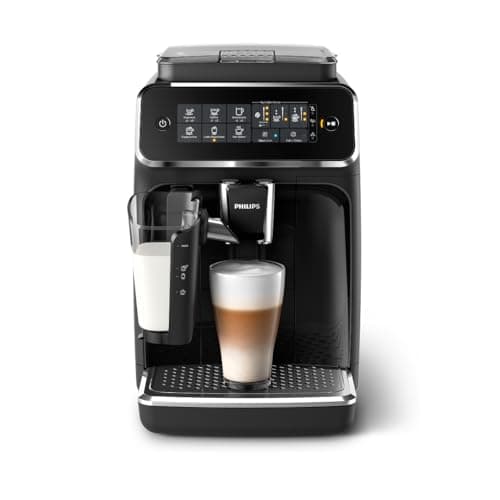
    Philips Philips 3200 Series LatteGo (EP3241)
    Philips 3200 Series LatteGo (EP3241)

    The one to buy if you drink milk drinks: a tubeless two-part LatteGo carafe that froths automatically and rinses in about fifteen seconds, on top of the same ceramic grinder and AquaClean filter as the 2200.

    8.2The winner — for anyone who froths milk
  • 02
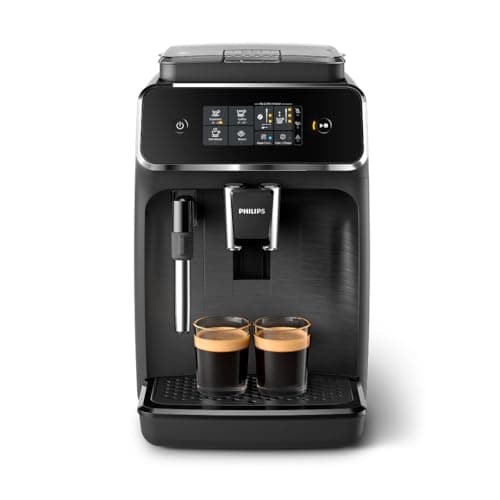
    Philips Philips 2200 Series (EP2220/14)
    Philips 2200 Series (EP2220/14)

    The floor of the super-automatic category: a genuine bean-to-cup machine with a ceramic grinder and a removable brew group, as long as you accept that the milk is still your job.

    6.9The cheaper one — for espresso and black coffee only
  • 03
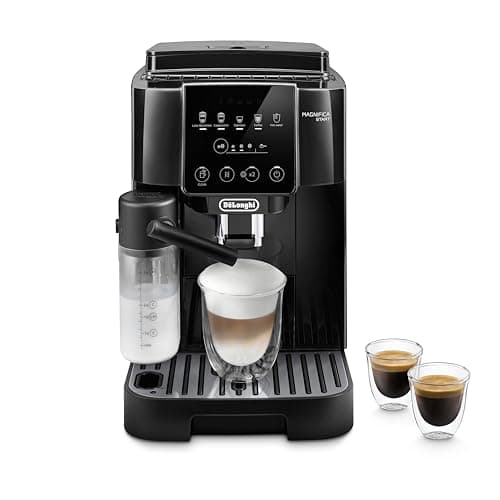
    De'Longhi De'Longhi Magnifica Start (auto milk)
    De'Longhi Magnifica Start (auto milk)

    The cross-brand check: a soft-touch icon panel and a LatteCrema Hot carafe that froths automatically, in a similar bracket to the 3200 and with an even simpler front panel.

    7.7Worth checking before you commit — simplest controls

#ad · Live prices from the Amazon Product API, as of October 17, 2026. Where we have no verified live price, we show none — a gap beats a number that has rotted.

In detail

The picks, in full

01
Philips Philips 3200 Series LatteGo (EP3241)

The winner — for anyone who froths milk

Philips 3200 Series LatteGo (EP3241)

100% ceramic grinder, 12 settingsLatteGo tubeless milk (cleans ~15s)5 drinks + hot waterAquaClean: up to 5,000 cups between descales
8.2/10

The one to buy if you drink milk drinks: a tubeless two-part LatteGo carafe that froths automatically and rinses in about fifteen seconds, on top of the same ceramic grinder and AquaClean filter as the 2200.

Coffee quality
7.5
Milk system
8.5
Ease & cleaning
9
Drink range
7.5
Value
8.5

Pros

  • LatteGo milk system is two parts with no tubes to clog, rinsed under the tap in about 15 seconds or dropped in the dishwasher
  • 100% ceramic burrs run cooler than steel and are rated for roughly 20,000 cups
  • AquaClean filter means no descaling for up to 5,000 cups, and the touch display keeps it simple

Cons

  • Only five drink presets, with no big menu of specialty one-touch drinks
  • Milk foam is good but a touch less refined than a twin-chamber carafe system
  • Strength and length adjust, but there is less fine control than on pricier machines

Don't buy this if…

…you want a long menu of one-touch specialty drinks. This keeps it to the core five, so a Gaggia Cadorna or a Jura suits a big-menu household better.

Who it is for:the cappuccino, latte or flat white drinker, and anyone buying for a household where not everyone will learn to steam milk. The honest limit is foam quality: a twin-chamber carafe system on a pricier machine textures milk slightly better, and the 3200’s five-drink menu is short next to a fourteen-drink Gaggia. Neither matters much if your order is one of the five. We rank it against the rest of the category on best super-automatic espresso machines.

$550.57View on Amazon

Price as of October 17, 2026. Prices change — Amazon's at checkout is the one that counts.

#ad · we may earn a commission from this link to Philips 3200 Series LatteGo (EP3241)

02
Philips Philips 2200 Series (EP2220/14)

The cheaper one — for espresso and black coffee only

Philips 2200 Series (EP2220/14)

100% ceramic burr grinder2 one-touch coffees plus hot waterClassic steam frother — not one-touch milkRemovable brew group; AquaClean filter
6.9/10

The floor of the super-automatic category: a genuine bean-to-cup machine with a ceramic grinder and a removable brew group, as long as you accept that the milk is still your job.

Shot quality
7
Milk quality
6
Ease of use
8.5
Total cost to brew
8.5
Upgrade ceiling
4.5

Pros

  • Genuinely complete — beans in, coffee out, nothing else to buy
  • The brew group lifts out and rinses under the tap, the maintenance step cheap machines usually seal away
  • Ceramic burrs, and an AquaClean filter Philips rates for up to 5,000 cups between descales
  • Touch display with adjustable strength and cup size, so it is not a single-button appliance

Cons

  • The milk system is a classic steam frother, not the tubeless LatteGo carafe on pricier Philips machines — you froth in a jug yourself
  • Only two coffee presets; the drink menu is far shorter than mid-range bean-to-cup machines
  • You cannot influence the shot beyond grind size and strength
  • Plastic-bodied and openly built to a price

Don't buy this if…

…you want one-touch cappuccinos. This is the model where the milk is still manual, which defeats the point for a lot of super-automatic buyers — step up to a LatteGo or LatteCrema machine instead.

Who it is for:the espresso-and-long-black drinker who wants the bean-to-cup workflow at the lowest honest price, and who will froth milk by hand on the occasions they want it. Everything that makes the 3200 durable is already here: ceramic burrs, a removable brew group, AquaClean. You are not buying a worse machine, you are buying the same machine without the milk automation. Just be honest with yourself about how often you order a cappuccino, because the gap between “occasionally” and “most mornings” is exactly where this purchase goes wrong.

$353.64View on Amazon

$394.9910% off

Price as of October 17, 2026. Prices change — Amazon's at checkout is the one that counts.

#ad · we may earn a commission from this link to Philips 2200 Series (EP2220/14)

03
De'Longhi De'Longhi Magnifica Start (auto milk)

Worth checking before you commit — simplest controls

De'Longhi Magnifica Start (auto milk)

Bean-to-cup with adjustable grinderLatteCrema Hot automatic milkSoft-touch one-touch panel250g bean hopper
7.7/10

The cross-brand check: a soft-touch icon panel and a LatteCrema Hot carafe that froths automatically, in a similar bracket to the 3200 and with an even simpler front panel.

Coffee quality
7.5
Milk system
8
Ease & cleaning
8
Drink range
7
Value
8

Pros

  • Soft-touch icons make it the most approachable De'Longhi super-automatic, with nothing to read a manual for
  • This model's LatteCrema Hot system froths milk automatically, so cappuccinos are still one touch
  • Compact footprint and a fast-heating, grind-fresh bean-to-cup workflow

Cons

  • Fewer recipes and less personalization than the step-up Magnifica Evo
  • Entry-level plastic build, with no color screen or saved user profiles
  • Grinder is adjustable but simpler than the ceramic burrs on some rivals

Don't buy this if…

…you want the extra recipes or the My Latte personalization. Spend a little more on the Magnifica Evo, which adds both for not much money.

Who it is for: the reader who has decided they want automatic milk and is not attached to the Philips badge. Its milk system is a detachable carafe rather than a tubeless two-part unit, which means it can live in the fridge between drinks but does have an internal path to rinse. In exchange, the control panel is the plainest here. We put the two brands side by side on De'Longhi vs Breville and rank the De'Longhi range on best De'Longhi espresso machines.

$749.95View on Amazon

Price as of October 17, 2026. Prices change — Amazon's at checkout is the one that counts.

#ad · we may earn a commission from this link to De'Longhi Magnifica Start (auto milk)

Philips 2200 vs 3200 LatteGo, spec by spec

SpecificationPhilips 2200 (EP2220)Philips 3200 LatteGo (EP3241)
Milk systemClassic steam frother (you froth)LatteGo, tubeless, two parts, automatic
Milk cleaningWipe and purge the wandTwo parts, ~15 seconds under a tap or dishwasher
Drinks listed2 coffees + hot water5 drinks + hot water
Grinder100% ceramic burrs100% ceramic burrs, 12 settings
Brew groupRemovable, rinses under tapRemovable, rinses under tap
DescalingAquaClean, up to 5,000 cupsAquaClean, up to 5,000 cups
DisplayTouch display, strength and sizeTouch display, strength and size
Best forEspresso and black coffeeCappuccino, latte, flat white

Which one, by what you actually order

Espresso and americanos only: the 2200. You would be paying for a carafe you never fill.

A cappuccino most mornings: the 3200. This is what the bracket is for.

Milk drinks occasionally, and you enjoy the process: the 2200, with a decent pitcher. A steam wand is a skill, and some people want it — see best milk frothing pitchers for what to texture in.

Milk drinks occasionally, and you resent the process: the 3200. The cleaning difference is fifteen seconds versus a wand purge plus a pitcher to wash, and resentment compounds.

Buying for other people — a household with varied skill, or a shared office kitchen: the 3200, every time. A manual wand in shared use is a wand nobody cleans. We rank the office case specifically on best espresso machines for an office.

What neither machine will do

Neither gives you control over the shot beyond grind setting and strength. There is no pressure gauge, no pre-infusion you can time, no brew-temperature setting, and no portafilter. That is the super-automatic bargain: convenience in exchange for control. If reading that sentence made you want the control back, you are shopping in the wrong category and our semi-automatic versus super-automatic comparison is the page you want. A Gaggia Classic Pro or a Breville Bambino with a separate grinder sits at a similar total cost and gives you a 58mm or 54mm basket to work with.

Running costs and beans

Both machines grind per cup from a sealed hopper, so bean choice matters more than it does on a pod machine and oily dark roasts are the one thing to avoid — they clog hoppers and chutes on every bean-to-cup machine, not just these. Our beans for super-automatic machines page is specifically about that failure. For water: use the AquaClean cartridge or filtered water from the start, because the 5,000-cup descaling claim assumes the filter is actually in there.
How we picked

We did not lab-test this gear

Everyone in this category says they tested twenty machines. We have not lab-tested any of these, and we say so. What we did instead: compiled the published manufacturer specifications, read the manuals, ran the math where there was math to run (heat-up time, pressure, dose capacity, grind range, cost per cup), and scored each pick against a published rubric. The scores are judgments from documented research — not measurements we took, because we do not have a lab and we will not pretend we do. Where a number came from someone else's work, we name them in Sources.

Questions

Frequently asked

What is the difference between the Philips 2200 and the 3200?
The milk system. The 3200 has the tubeless two-part LatteGo carafe that froths milk automatically; the 2200 has a classic steam frother you use by hand. The extra drinks on the 3200's menu are milk drinks, so they follow from the same difference. The grinder, the removable brew group and the AquaClean descaling interval are the same on both.
Is the Philips 3200 LatteGo worth the extra money over the 2200?
If you drink milk drinks, yes — it is the only way to get them at one touch in this part of the Philips range. If you drink espresso and black coffee, no: you would be paying for a carafe you never use, and the 2200 brews with the same ceramic grinder.
Does the Philips 2200 make cappuccinos?
It can make the components, but not at one touch. You brew the coffee, then froth milk yourself at the steam wand and pour it in. That is a manual step on a machine many people buy to remove manual steps, which is the main reason to consider the 3200 instead.
How often do you have to descale a Philips LatteGo?
With an AquaClean filter fitted and replaced as prompted, Philips rates up to 5,000 cups between descales. Without the filter, you are on a normal descaling schedule dictated by your water hardness, which in a hard-water area can mean every few weeks.
Is LatteGo hard to clean?
It is the easiest milk system of this type to clean, because it has no tubes. The two parts separate and rinse under a tap in roughly fifteen seconds, or go in the dishwasher. There is no internal milk line to flush, which is where carafe systems with pickup tubes cause trouble.

Keep reading

Receipts

Sources

We do not run a testing lab, and we do not pretend to. Where a measured number came from someone else's work, we name them and link them. Where we could not verify something, we say so on the page rather than quietly leaving it out. Read our full method.