Buy Lavazza Super Crema. It is a medium espresso roast with a dry surface, it pulls a thick crema that flatters any sealed brew group, and it will not leave the oil film that clogs a bean-to-cup grinder — which is the specification that matters most here and almost never appears on a bean list. If you want a cleaner, 100% Arabica cup under milk, Illy Classico is the pick; if your household drinks big lattes and wants a bolder shot, Lavazza Gran Crema is the one built for crema under steamed milk.
This is a different list from our general espresso bean ranking, and the reason is mechanical rather than culinary. On a machine with a portafilter you can open the grinder, brush the burrs and wipe the chute. On a super-automatic, the grinder, the chute and the brew group are sealed inside the machine, and the manufacturer's approved cleaning routine is mostly a dry brush and a rinse. Oil that gets in there stays in there, goes rancid, and taints every bean that follows.
So the top criterion is surface oil. Very dark roasts push oils to the surface of the bean — a visibly shiny, slick bean is a dark roast that has sweated — and those oils coat the hopper walls, the chute and the burr faces. The symptoms owners report are consistent: the chute blocks, the grinder starts sounding different, dose consistency wanders and the coffee tastes stale even from a fresh bag. Several manufacturers warn against oily beans in their manuals for exactly this reason, and it is the single most common self-inflicted problem in the category.
Two other rules follow from the same structure. Buy whole bean, never pre-ground, since a bean-to-cup machine grinds for you and pre-ground coffee has nowhere to go — some machines have a bypass chute for one dose, which is a convenience, not a feeding method. And do not use flavored beans: the coating is sugar and oil, and it is the fastest way to gum up a sealed grinder. Everything below is unflavored whole bean with a dry or lightly oily surface.
The short answer
Quick picks
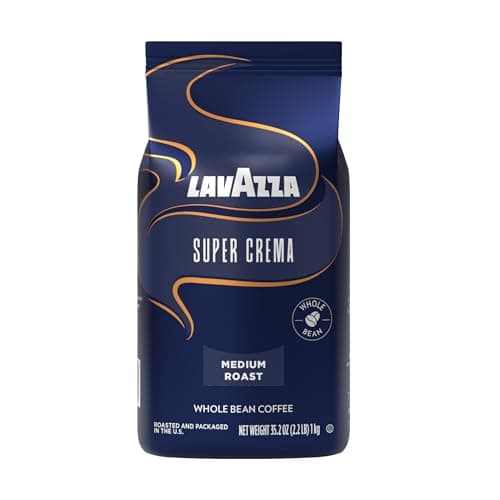
01Lavazza Super CremaThe forgiving all-round espresso default: a mild, creamy Arabica/Robusta blend that pulls a thick crema and a chocolatey, low-acid shot even before you have your grind fully dialed in.
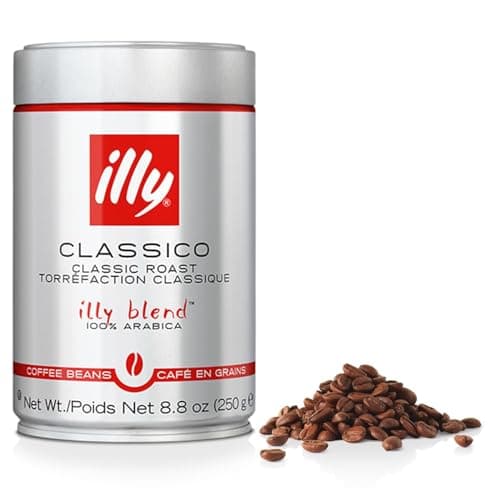
8.3Best overall for bean-to-cup — for the owner who wants one bag to always keep 02Illy ClassicoThe clean, balanced 100% Arabica pick: no robusta edge, just a smooth medium roast that stays consistent bag to bag — ideal if you mostly build a clean milk drink.
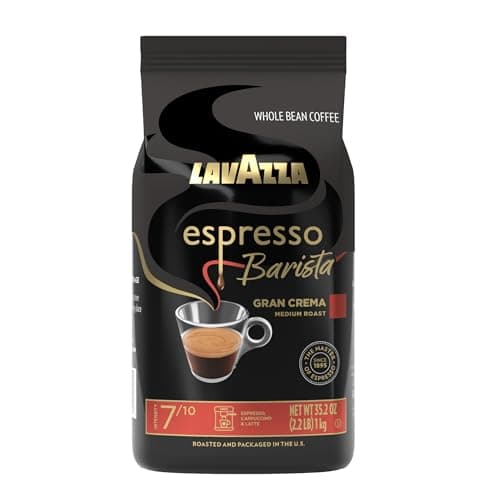
7.7Best 100% Arabica — for one-touch cappuccinos and lattes 03Lavazza Gran Crema (Barista)A milk-drink specialist: a medium espresso blend built to throw a big, thick crema and hold its own under steamed milk in a cappuccino or flat white.
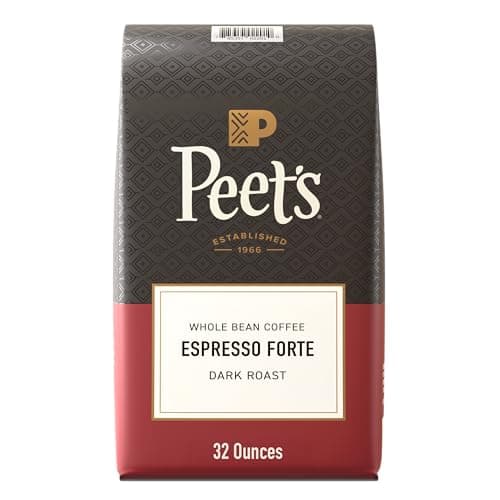
7.5Best for big milk drinks — for a household pouring lattes 04Peet's Espresso ForteThe bold, heavy pick for drinkers who want a punchy, intense shot: a proper dark roast with a deep, smoky-sweet body that stands up to a lot of milk.
7.5Best dark roast — with a maintenance caveat
| # | Product | Best for | Score | Price |
|---|
| 01 | Lavazza Super CremaThe forgiving all-round espresso default: a mild, creamy Arabica/Robusta blend that pulls a thick crema and a chocolatey, low-acid shot even before you have your grind fully dialed in. | Best overall for bean-to-cup — for the owner who wants one bag to always keep | | $23.51·Amazon |
| 02 | Illy ClassicoThe clean, balanced 100% Arabica pick: no robusta edge, just a smooth medium roast that stays consistent bag to bag — ideal if you mostly build a clean milk drink. | Best 100% Arabica — for one-touch cappuccinos and lattes | | $15.75·Amazon |
| 03 | Lavazza Gran Crema (Barista)A milk-drink specialist: a medium espresso blend built to throw a big, thick crema and hold its own under steamed milk in a cappuccino or flat white. | Best for big milk drinks — for a household pouring lattes | | Check price → |
| 04 | Peet's Espresso ForteThe bold, heavy pick for drinkers who want a punchy, intense shot: a proper dark roast with a deep, smoky-sweet body that stands up to a lot of milk. | Best dark roast — with a maintenance caveat | | $43.90·Amazon |
#ad · Live prices from the Amazon Product API, as of October 18, 2026. Where we have no verified live price, we show none — a gap beats a number that has rotted.
In detail
The picks, in full
Best overall for bean-to-cup — for the owner who wants one bag to always keep
Lavazza Super Crema
Medium espresso roastArabica/Robusta blendWhole bean2.2 lb bag
The forgiving all-round espresso default: a mild, creamy Arabica/Robusta blend that pulls a thick crema and a chocolatey, low-acid shot even before you have your grind fully dialed in.
- Flavor
- 8.5
- Crema & body
- 9
- Freshness policy
- 6.5
- Versatility
- 9
- Value
- 8.5
Pros
- +Medium roast with a dry surface, so it does not leave the oil film that clogs a sealed grinder and chute
- +Robusta in the blend delivers a thick, lasting crema that flatters any machine
- +Mild, chocolatey and low in acidity — an easy shot straight or in milk
- +Widely stocked and sold in a large 2.2 lb bag, so it is easy to keep on hand
Cons
- −Grocery bags carry a best-by date, not a roast date, so freshness is a guess
- −Too mellow for drinkers who want a bold, punchy or bright specialty shot
Don't buy this if…
…you want a bright, fruit-forward or intensely bold shot — this is deliberately smooth and mild, which is exactly why it works as a default but not as a statement.
Who it is for:every new super-automatic owner, as the bag you default to while you work out what you like. The medium roast level is the important part here — it is dark enough to taste like espresso through milk and light enough to stay dry on the surface, which is the compromise a sealed grinder wants. The crema it builds also does a specific job on these machines: a bean-to-cup brew group is set and sealed, so you cannot chase crema with technique, and a blend that produces it reliably makes the machine look better than it is.
Best 100% Arabica — for one-touch cappuccinos and lattes
Illy Classico
Medium roast100% ArabicaWhole beanConsistent house blend
The clean, balanced 100% Arabica pick: no robusta edge, just a smooth medium roast that stays consistent bag to bag — ideal if you mostly build a clean milk drink.
- Flavor
- 8.5
- Crema & body
- 8
- Freshness policy
- 7
- Versatility
- 8
- Value
- 7
Pros
- +Smooth, balanced 100% Arabica cup with none of the rubbery note robusta can add
- +Medium roast, so the beans stay dry and grinder-friendly in a sealed hopper
- +Famously consistent — the blend tastes the same from one tin to the next, which suits a machine you never re-dial
- +Clean and mellow under milk, which flatters a latte or cappuccino
Cons
- −Thinner crema than a robusta-containing blend like Super Crema
- −Premium price for the quantity, and grocery tins show a best-by, not a roast date
Don't buy this if…
…you chase a thick, heavy crema or a bold hit — a pure Arabica medium roast is smoother and lighter-bodied by design.
Who it is for: the household whose machine makes mostly milk drinks and whose owner will never adjust a setting again. Consistency is the argument: on a super-automatic you set grind and strength once, and a blend engineered to taste identical every bag means that setting stays correct. The cup is cleaner and lighter than the Lavazza blends, which is a preference rather than a ranking.
Best for big milk drinks — for a household pouring lattes
Lavazza Gran Crema (Barista)
Medium espresso roastArabica/Robusta blendWhole beanBuilt for milk drinks
A milk-drink specialist: a medium espresso blend built to throw a big, thick crema and hold its own under steamed milk in a cappuccino or flat white.
- Flavor
- 7.5
- Crema & body
- 8.5
- Freshness policy
- 6.5
- Versatility
- 7
- Value
- 8
Pros
- +Blended specifically for a large, stable crema in cappuccino and latte
- +Rounded, chocolatey body that carries through a lot of milk
- +Medium roast level keeps it dry enough for a sealed hopper and grinder
- +Big bag and easy availability, like the rest of the Lavazza espresso line
Cons
- −Very much a milk-drink bean — less rewarding as a straight shot
- −Best-by date rather than a roast date on the bag
Don't buy this if…
…you drink mostly straight espresso — this is tuned for crema and milk, and a cleaner Arabica will show more as a naked shot.
Who it is for: the LatteCrema or LatteGo owner whose machine pours large milk drinks at one touch. A bean-to-cup machine using an automatic carafe tends to build generous milk volumes, and a lighter Arabica disappears into them. This is the bag that still tastes like coffee at the bottom of a big cup.
Best dark roast — with a maintenance caveat
Peet's Espresso Forte
Dark roastEspresso blendWhole beanBold, intense body
The bold, heavy pick for drinkers who want a punchy, intense shot: a proper dark roast with a deep, smoky-sweet body that stands up to a lot of milk.
- Flavor
- 8
- Crema & body
- 8
- Freshness policy
- 7
- Versatility
- 6.5
- Value
- 8
Pros
- +Genuinely dark and intense — a heavy, punchy shot with real presence
- +Cuts through a large latte without vanishing the way a lighter roast can
- +Peet's roasts to a consistent house profile you can rely on
Cons
- −Dark roasts carry more surface oil than the medium blends above, so expect to wipe the hopper more often
- −Dark-roast intensity reads as bitter to anyone who prefers a smoother cup
- −Sold with a best-by date on the bag rather than a roast date
Don't buy this if…
…you find dark roasts ashy or bitter, or you want brightness and nuance — this is built to be big and bold, not delicate.
Who it is for:the dark-roast drinker who is not willing to compromise on intensity, and who accepts a little more hopper maintenance in exchange. This is ranked last here and it is not because the coffee is worse — it scores the same overall as the Gran Crema. It is because a dark roast is the riskier choice in a sealed grinder, and on a page about bean-to-cup machines that has to count against it. Keep the bag small, buy it more often, and wipe the hopper dry monthly as described in super-automatic maintenance.
What to look for, in priority order
| Criterion | What to buy | Why it matters on a sealed machine |
|---|
| Surface oil | Medium or medium-dark, matte rather than shiny | Oil coats the hopper, chute and burrs, and you cannot reach them to clean |
| Grind | Whole bean only | The machine grinds; pre-ground has nowhere to go but a one-dose bypass |
| Flavoring | None | Flavor coatings are sugar and oil, the fastest route to a gummed grinder |
| Roast style | Espresso blends, including some robusta if you want crema | A sealed brew group cannot be dialed in, so a crema-forward blend helps |
| Bag size | What you will drink in 2-4 weeks | Beans stale in the hopper; a huge bag is false economy |
How to tell an oily bean before you buy
Look at the product photo and the roast descriptor. A bean photographed with a visible sheen is a dark roast that has sweated oils to the surface; a matte bean has not. Roast names are a reasonable proxy too: anything described as espresso, Italian, French or “extra dark” roast is likely to be oily, while medium and medium-dark blends usually are not. When you open the bag, the test is your hand — beans that leave a greasy film on your fingers will leave the same film on the burrs.
Storage, and why the hopper is not a container
Keep beans in an airtight container away from light and heat, and put only a few days' worth in the hopper. Most bean-to-cup hoppers are translucent plastic sitting on top of a warm machine, which is close to a worst case for freshness, and beans left there for weeks go flat and sticky. If you keep a large bag, decant. Our coffee storage container picks cover the vacuum and valve options.
Grind setting is the one adjustment that matters
Every machine here grinds inside a sealed body, but the grind setting is exposed, and it is the control that does most of the work. Too coarse and the coffee runs fast and tastes thin; too fine and the machine may struggle or report a fault. Change it one step at a time and run two drinks before judging, because the old grind is still in the chute. One important caution from the manuals: on most machines you should only adjust the grinder while it is running, because turning a stationary burr against trapped beans can damage it. Check yours.
Robusta is not a dirty word here
Specialty coffee culture treats robusta as a defect and in a light-roast filter cup that is fair. In a super-automatic it is genuinely useful: robusta produces more and longer-lasting crema, and since you cannot dial in a sealed brew group to chase crema with technique, a blend that produces it chemically makes the machine's output look and feel better. Two of the four picks above contain it. The trade is flavour complexity, which is why both are medium blends rather than specialty single origins — and why we keep single origins on a separate list aimed at people who can dial a machine in.
What we would not put in a bean-to-cup machine
Flavored beans, for the reason above. Visibly oily extra-dark roasts, unless you accept the maintenance. Anything pre-ground, except via a bypass chute if your machine has one. And very light, dense specialty roasts — not because they damage anything, but because they need a fine grind and a dialed-in recipe to taste good, and a sealed machine gives you neither. Those beans belong with a semi-automatic machine and a real grinder.
How we picked
We did not lab-test this gear
Everyone in this category says they tested twenty machines. We have not lab-tested any of these, and we say so. What we did instead: compiled the published manufacturer specifications, read the manuals, ran the math where there was math to run (heat-up time, pressure, dose capacity, grind range, cost per cup), and scored each pick against a published rubric. The scores are judgments from documented research — not measurements we took, because we do not have a lab and we will not pretend we do. Where a number came from someone else's work, we name them in Sources.
Questions
Frequently asked
What beans are best for a super-automatic espresso machine?+
Unflavored whole-bean medium or medium-dark espresso blends with a dry, matte surface. Lavazza Super Crema is the best default: it pulls a thick crema, tastes good in milk, and does not leave the oil film that clogs a sealed grinder and chute.
Can you use oily dark roast beans in a bean-to-cup machine?+
You can, but it is the most common cause of a clogged chute and an inconsistent grinder, and several manufacturers warn against it. If you love dark roasts, buy smaller bags, keep only a few days in the hopper, and wipe the hopper dry regularly.
Can you put pre-ground coffee in a super-automatic?+
Only through a bypass chute, if your machine has one, and only one dose at a time. Never put ground coffee in the bean hopper — it will pack into the grinder.
Are flavored beans safe in a bean-to-cup machine?+
No. Flavor coatings are sugar and oil, which is the fastest way to gum up a grinder you cannot open and clean. Add syrup to the cup instead.
How much coffee should I keep in the hopper?+
A few days' worth. Hoppers are usually translucent plastic sitting on a warm machine, which is poor storage, so beans left there for weeks go flat. Decant from an airtight container as you need it.
Receipts
Sources
We do not run a testing lab, and we do not pretend to. Where a measured number came from someone else's work, we name them and link them. Where we could not verify something, we say so on the page rather than quietly leaving it out. Read our full method.