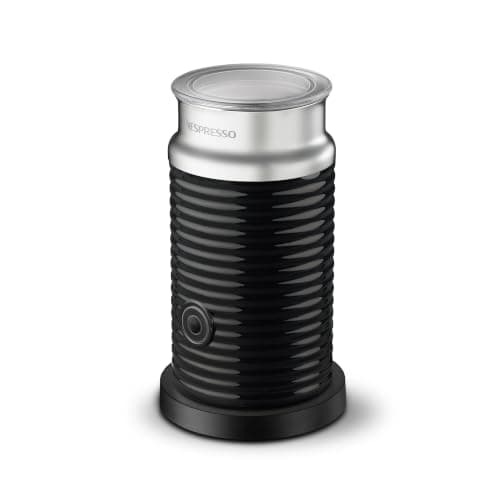
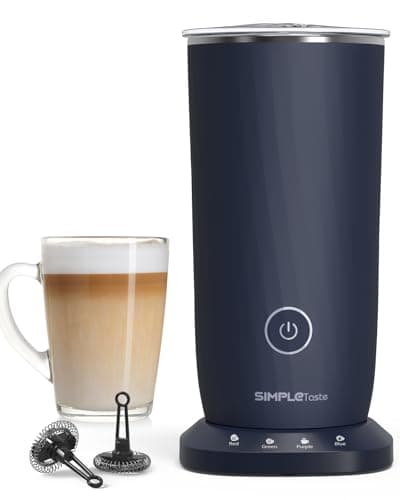
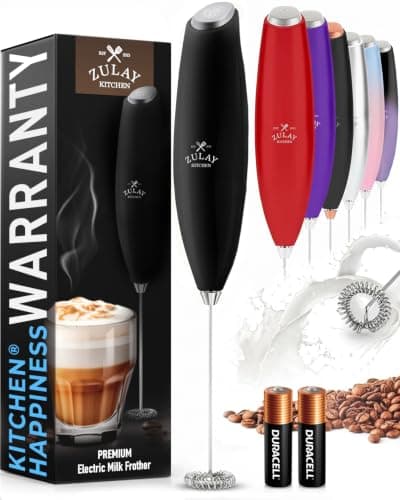
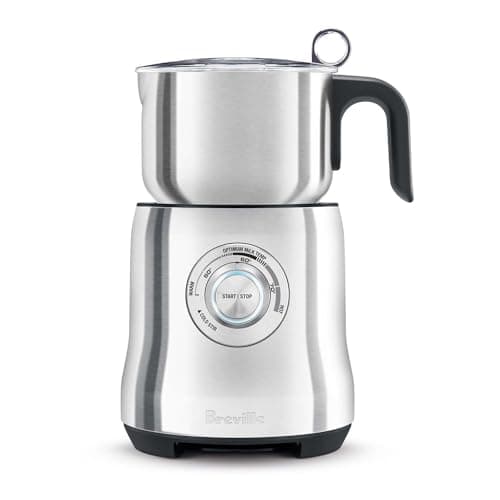
There are two completely different products sold as “milk frothers” and they make two different things. An electric jug frother heats milk and spins a whisk or disc through it, producing a stable foam sitting on hot milk. A steam wand injects steam, which both heats the milk and stretches it into microfoam — a glossy, paint-like liquid you can pour into a cup. Only the second one makes latte art, and no amount of money spent on the first one changes that.
Say that plainly because it decides whether you should be on this page at all. If you own an espresso machine with a steam wand, you already have the better tool, and the money belongs in a properly sized pitcher and ten minutes of practice instead. A frother earns its counter space in three cases: you run a pod machine with no wand, you make matcha or hot chocolate as often as coffee, or you want hot milk waiting hands-free while you do something else.
Within those cases, the ranking below sorts on foam quality first, then temperature control, then cleanup — because a frother that has to be scrubbed by hand every morning quietly stops being used by week three.
Foam versus microfoam, and why it decides your purchase
Frothing traps air in milk. Steaming does the same thing but also stretches the milk with pressurized steam, breaking the bubbles down until they are too small to see — that is microfoam, and it is why a properly steamed latte is glossy and pours in a stream rather than plopping out in clumps. A spinning disc cannot replicate it, because there is no steam to stretch the milk. Every frother on this page makes good foam; none makes microfoam. If latte art is the goal, you need a wand, and how to froth milk covers the technique.
Temperature is the flavor spec
Milk tastes sweetest when it is heated to roughly 140–155°F, because the lactose has warmed enough to read as sweet and the proteins have not yet begun to denature. Past about 160°F the proteins break down, the sweetness goes and the milk starts to taste cooked — the flavor most people associate with hotel coffee. Cheap frothers heat to one fixed temperature, usually at the high end, which is the main reason their drinks taste flatter than a café’s. Adjustable temperature is the single feature worth paying up for.
Plant milks change the rules
Dairy foams because of its proteins; plant milks foam because manufacturers add stabilizers and adjust the fat content to make them behave. That is why a “barista” oat milk foams well and a plain one does not, and it is not a fault in your frother. If you drink oat, almond or soy milk, buy the barista version before you buy a better appliance — it is a bigger upgrade for a fraction of the price. Cold foam behaves differently again, and only the units with a dedicated cold mode do it properly.
Cleaning decides whether you keep using it
Milk proteins bake onto hot surfaces and get harder to remove with every cycle. The units that survive in a real kitchen are the ones you can rinse immediately: a dishwasher-safe jug, a detachable pitcher, or a whisk you hold under the tap. A frother with a fixed base and a heating element in the bottom is the one that ends up in a cupboard. Whatever you buy, rinse it the second it is empty rather than after you drink the coffee.
What size do you actually need?
Match capacity to your drink, not to the biggest number available. A cappuccino needs about 120ml of frothed milk; a latte in a 10oz cup wants roughly 240ml of hot milk with a thin layer of foam. Overfilling is the most common user error in this category — foam needs headroom to expand into, and a jug filled past its mark either overflows or produces flat milk. The same logic applies to steam pitchers, which we sized properly in the milk pitcher roundup.
Should you buy one at all?
If you own an espresso machine with a real steam wand, probably not — a wand folds air back into the milk to make pourable microfoam, and no jug frother can, because it beats the air in instead. There are three honest exceptions: cold foam for iced drinks, which a steam wand cannot make at all; hands-free operation while the shot brews; and machines fitted with a pannarello sleeve rather than a bare steam tip. We work through the mechanism and the exceptions on milk frother vs steam wand.
How we picked
We did not lab-test this gear
Everyone in this category says they tested twenty machines. We have not lab-tested any of these, and we say so. What we did instead: compiled the published manufacturer specifications, read the manuals, ran the math where there was math to run (heat-up time, pressure, dose capacity, grind range, cost per cup), and scored each pick against a published rubric. The scores are judgments from documented research — not measurements we took, because we do not have a lab and we will not pretend we do. Where a number came from someone else's work, we name them in Sources.