Skip to content
Tamp & Pour

Roundups · Accessories

The best milk for frothing

Whole dairy milk is the default for a reason, and the reason is protein and fat doing two different jobs. What to buy, which plant milks actually work, and the temperature that ruins all of them.

By Stephen V.Updated How we review
#ad

We earn a commission when you buy through our Amazon links, at no extra cost to you. It never changes a verdict, and we say so when the cheaper product is the better buy. How this works.

Use cold whole dairy milk, straight from the fridge, and stop heating it at around 140 to 150°F. That is the answer for almost everyone: whole milk has enough protein to build a stable foam and enough fat to give the drink body and a soft, glossy texture, and the temperature ceiling is what keeps it tasting sweet instead of cooked. If you need a plant milk, buy a version labelled “barista” — those are reformulated specifically so they can foam, and the standard versions of the same brands usually cannot.

Two components do the work and they pull in opposite directions. Protein stabilises the foam: as milk is aerated, proteins unfold at the surface of each bubble and hold it together, which is why skim milk — proportionally higher in protein, with almost no fat — produces the most voluminous, stiffest foam of any milk. Fat does the opposite to volume and the right thing to quality: it interferes with that protein network, so you get less foam, but what you get is finer, denser and glossier, and the drink tastes richer. Whole milk is the compromise most people prefer, and it is what cafes pour.

That trade explains the two classic mistakes. Someone chasing the tall, dry foam of a traditional cappuccino uses skim and then wonders why their latte tastes thin and watery. Someone chasing latte art uses skim because it foams easily and then cannot pour anything, because stiff dry foam does not flow. If you are learning to pour, use whole milk: it produces the wet, paint-like microfoam that pours, and it is more forgiving of a slightly long stretch.

Temperature is the variable people get wrong

Milk texturing has a hard ceiling. Heated too far, lactose stops reading as sweet and the proteins denature far enough to give a distinctly cooked, eggy flavour, and the foam you built starts collapsing into large bubbles. Breville's own espresso machine documentation puts the target band for textured milk at roughly 140 to 149°F (60–65°C), and that matches standard cafe practice. In practice you do not need a thermometer: the outside of a metal pitcher becomes genuinely uncomfortable to hold at about the right moment, and that is the cue to stop.

Start cold, too. Cold milk gives you a longer window between “stretching” — introducing air — and reaching the temperature ceiling, which is the whole skill. Milk that starts at room temperature leaves you almost no time to work with, which is why half-finished pitchers from the counter froth so badly.

The dairy options, ranked for frothing

Whole milk: the default. Best balance of stable foam, body and sweetness, and the easiest to pour with. Buy this unless you have a reason not to.

Semi-skimmed / 2%: very close behind, slightly more foam volume and slightly less body. A perfectly good everyday choice.

Skim: the most foam, the stiffest foam, the thinnest drink. Genuinely the right answer for a traditional dry cappuccino and the wrong one for a flat white or latte art.

Ultra-filtered / high-protein milks: foam enthusiastically because of the extra protein. Texture can be slightly odd and the flavour is sweeter than standard milk, so treat it as a preference rather than an upgrade.

Lactose-free dairy: works well. The lactose has been split into simpler sugars, so it tastes noticeably sweeter when heated, which some people like a lot.

Raw, non-homogenised or cream-top milk: inconsistent. Homogenisation distributes fat evenly, and milk without it textures unpredictably.

Plant milks: buy the barista version

Plant milks do not naturally contain the protein structure that stabilises dairy foam, so manufacturers engineer it back in — added protein, stabilisers, a little fat, and often acidity regulators to stop the milk splitting in hot, acidic espresso. That is what a “barista” label means, and it is why the barista version of a brand froths while the standard carton of the same brand does not.

Oat (barista): the most reliable non-dairy option and the closest to whole milk in texture. Pours well, tastes neutral-sweet, and resists splitting.

Soy (barista): the original non-dairy answer, and the highest in protein, so it foams readily. More prone to curdling in very hot or very acidic coffee than oat.

Almond: thin and prone to large, short-lived bubbles unless you use a barista formulation. Even then it is the hardest of the three to pour.

Coconut and rice: low in protein and generally poor for foam. Fine in the drink, difficult on the wand.

One practical note for plant milks: they are less tolerant of heat than dairy. Stop earlier than you would with milk, because an over-heated oat milk goes thin and separates rather than merely tasting cooked.

Below is the gear that textures any of this properly, which is a different question from which carton to buy — and for most people the limiting factor is the equipment rather than the milk.

The short answer

Quick picks

  • 01
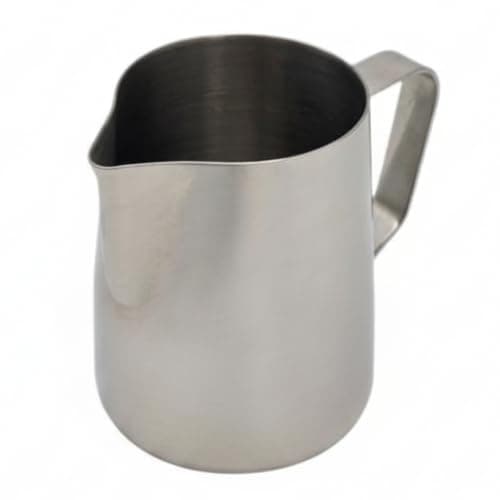
    Rattleware Rattleware 12oz Latte Art Pitcher
    Rattleware 12oz Latte Art Pitcher

    The barista-standard 12oz pitcher: a tapered, well-defined spout and the right size for one or two drinks make it the easiest pitcher to learn latte art on and the one most cafes actually use.

    8.6Best for steam-wand users — for learning to pour
  • 02
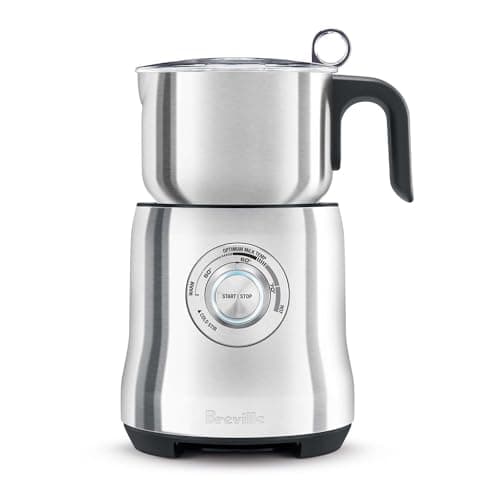
    Breville Breville Milk Café (BMF600XL)
    Breville Milk Café (BMF600XL)

    The one that behaves like real equipment: induction heating, two swappable discs for latte and cappuccino textures, adjustable temperature and a dishwasher-safe jug — at a price that only makes sense if you make milk drinks daily.

    8.3Best for no steam wand — for temperature control that matters
  • 03
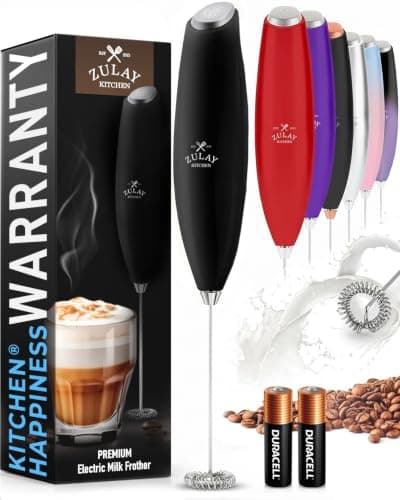
    Zulay Zulay Kitchen Handheld Milk Frother
    Zulay Kitchen Handheld Milk Frother

    Under ten dollars, and the honest recommendation for anyone who wants foam occasionally: a battery whisk that aerates already-hot milk in fifteen seconds and lives in a drawer the rest of the time.

    6.9Cheapest way to test any milk — for occasional foam

#ad · Live prices from the Amazon Product API, as of October 18, 2026. Where we have no verified live price, we show none — a gap beats a number that has rotted.

In detail

The picks, in full

01
Rattleware Rattleware 12oz Latte Art Pitcher

Best for steam-wand users — for learning to pour

Rattleware 12oz Latte Art Pitcher

12oz capacity (1-2 drinks)Tapered latte-art spoutPolished stainless steelRolled rim, weighted base
8.6/10

The barista-standard 12oz pitcher: a tapered, well-defined spout and the right size for one or two drinks make it the easiest pitcher to learn latte art on and the one most cafes actually use.

Spout & pour control
9
Build
8.5
Size fit
9
Feel
8.5
Value
8

Pros

  • 12oz is the sweet spot for a single or double latte, filling to the spout for a clean whirlpool
  • Tapered spout gives the precise cutoff that pours defined hearts and rosettas
  • Metal reads heat quickly, so your hand tells you when to stop without a thermometer
  • Durable polished stainless that lasts for years

Cons

  • Too small if you routinely steam milk for three or more drinks at once
  • No frills — measurement markings and gimmicks are absent by design

Don't buy this if…

…you regularly steam milk for three or more drinks at once — 12oz is sized for one or two, so a larger pitcher will save you refilling and re-steaming.

Who it is for:anyone with a steam wand, which is the only setup that can produce real pourable microfoam. The pitcher is also your thermometer: fill to the base of the spout, and stop when the outside becomes uncomfortable to hold — that lands close to the 140–150°F band. Technique is in how to froth milk, and the wider ranking is best milk frothing pitchers.

$16.95View on Amazon

Price as of October 18, 2026. Prices change — Amazon's at checkout is the one that counts.

#ad · we may earn a commission from this link to Rattleware 12oz Latte Art Pitcher

02
Breville Breville Milk Café (BMF600XL)

Best for no steam wand — for temperature control that matters

Breville Milk Café (BMF600XL)

Induction heating (no element in contact with milk)Latte and cappuccino frothing discs includedAdjustable temperature with automatic shutoffDishwasher-safe jug6.4 x 7.5 x 10.4 in, stainless steel
8.3/10

The one that behaves like real equipment: induction heating, two swappable discs for latte and cappuccino textures, adjustable temperature and a dishwasher-safe jug — at a price that only makes sense if you make milk drinks daily.

Foam quality
8.5
Temperature control
9
Ease of cleaning
9
Build
8.5
Value
6.5

Pros

  • Two discs is the feature that matters — the latte disc makes a finer, wetter foam you can actually pour, the cappuccino disc makes the stiff dry foam that sits on top
  • Induction heating means no hot element touching the milk, so it scorches far less and cleans far more easily than a heated-plate design
  • Adjustable temperature rather than one preset, which matters because milk scalded past about 155F tastes cooked and loses its sweetness
  • The jug is dishwasher safe, which is genuinely rare in this category
  • A measuring cap lets you add cocoa or syrup while it runs

Cons

  • Expensive — several times the price of a handheld or a pod-machine frother
  • Big footprint for a single-purpose appliance
  • Still not a steam wand: the foam is good, but it is spun rather than stretched, so it will not pour a rosetta
  • Overkill if you make one cappuccino a week

Don't buy this if…

…you own an espresso machine with a working steam wand. You would be spending $200 to do worse than the equipment already on your counter.

Who it is for:a daily milk-drink household with no steam wand — a pod machine, a drip machine, or a manual lever maker. The reason it earns a place on a page about milk specifically is the two discs and the adjustable temperature: those are the only controls on a jug frother that let you choose between pourable latte foam and stiff cappuccino foam, and let you stay under the scalding point that ruins either.

$199.95View on Amazon

Price as of October 18, 2026. Prices change — Amazon's at checkout is the one that counts.

#ad · we may earn a commission from this link to Breville Milk Café (BMF600XL)

03
Zulay Zulay Kitchen Handheld Milk Frother

Cheapest way to test any milk — for occasional foam

Zulay Kitchen Handheld Milk Frother

Battery-powered handheld whiskAerates in ~15-20 secondsNo heating — you warm the milk separatelyStores in a drawer
6.9/10

Under ten dollars, and the honest recommendation for anyone who wants foam occasionally: a battery whisk that aerates already-hot milk in fifteen seconds and lives in a drawer the rest of the time.

Foam quality
5.5
Temperature control
4
Ease of cleaning
9.5
Build
6
Value
9.5

Pros

  • Costs less than a bag of coffee and does the aerating part of the job perfectly well
  • No counter space at all, which is the real reason most people should start here
  • Useful for comparing milks cheaply — froth two cartons side by side and taste the difference
  • Rinse under the tap and it is clean — nothing to disassemble

Cons

  • No heating: you microwave or heat the milk yourself, which is an extra step and an easy way to scald it
  • Foam is airy and coarse, and it collapses faster than anything from a jug frother
  • Battery powered, so it slows down as the batteries fade and you notice before you replace them
  • Splashes if you start it above the milk surface, every time, forever

Don't buy this if…

…you want hands-free milk while you do something else. This is fifteen seconds of your attention, standing at the counter, holding a whisk.

Who it is for:someone who wants to find out which milk they prefer before spending anything on gear. Heat the milk to just-too-hot-to-touch, whisk for fifteen seconds, taste. It will not produce pourable microfoam — nothing without steam or a disc will — but it is more than enough to tell whole from skim from barista oat.

$7.99View on Amazon

$16.9953% off

Price as of October 18, 2026. Prices change — Amazon's at checkout is the one that counts.

#ad · we may earn a commission from this link to Zulay Kitchen Handheld Milk Frother

Which milk for which drink

MilkFoam volumePourabilityBest for
Whole dairyGoodBestLatte, flat white, latte art, everything by default
2% / semi-skimmedVery goodGoodEveryday milk drinks with a little less body
SkimHighestPoorTraditional dry cappuccino
Barista oatGoodGoodThe most reliable non-dairy choice
Barista soyVery goodFairHigh-protein non-dairy; watch for splitting
Almond / coconut / riceLow to fairPoorDrinking, not texturing

Why your equipment matters more than your carton

Three tools produce three different results from identical milk. A steam wand injects steam and air and lets you stretch milk into glossy microfoam that pours — the only setup that can produce latte art. A jug frother spins milk against a disc, which makes good, consistent foam that does not pour. A handheld whisk aerates, which makes airy foam that collapses quickly. If your foam is coarse and dies in a minute, the milk is probably not the problem.

The three mistakes

Starting with warm milk. You lose the working window between stretching and the temperature ceiling. Always start cold from the fridge.

Over-heating.Past roughly 150°F the drink tastes cooked and the foam starts to break. Use the pitcher as your gauge; stop when it is uncomfortable to hold.

Re-steaming leftover milk.Milk that has already been textured and cooled will not foam properly again — the protein structure has already done its work. Steam what you need, and keep the surplus for something else.

Does fresher milk froth better?

Within its date, not noticeably. Milk approaching the end of its life does froth worse, because acidity rises as it ages and that destabilises the foam, so a carton that is a day from turning will underperform badly. Buy it fresh, keep it cold, and do not leave the pitcher out between drinks.

UHT, and why cafes abroad use it

Ultra-heat-treated milk froths perfectly well, which surprises people. The protein structure that matters for foam survives the process, and plenty of cafes in warm countries run on it. It tastes slightly cooked compared with fresh milk, which is the real objection — a texture question it is not.

The other half of a milk drink

Getting the milk right exposes whatever is wrong with the coffee underneath it. If the foam is glossy and the drink still tastes thin and vaguely coffee-flavoured, the shot is being outvoted rather than under-textured — a bright or delicate bean loses most of its character under five or six parts milk. The beans that hold up are ranked on best coffee beans for lattes.
How we picked

We did not lab-test this gear

Everyone in this category says they tested twenty machines. We have not lab-tested any of these, and we say so. What we did instead: compiled the published manufacturer specifications, read the manuals, ran the math where there was math to run (heat-up time, pressure, dose capacity, grind range, cost per cup), and scored each pick against a published rubric. The scores are judgments from documented research — not measurements we took, because we do not have a lab and we will not pretend we do. Where a number came from someone else's work, we name them in Sources.

Questions

Frequently asked

What is the best milk for frothing?
Cold whole dairy milk. It has enough protein to build stable foam and enough fat to give the drink body and a glossy, pourable texture. Skim produces more and stiffer foam but a thinner drink; if you need non-dairy, choose a barista oat milk.
Does whole milk or skim milk froth better?
Skim produces more foam and stiffer foam, because fat interferes with the protein network that holds bubbles together. Whole milk produces less foam but finer, glossier microfoam that pours and tastes richer, which is why cafes use it for lattes and flat whites.
Which plant milk froths best?
Barista-formulated oat milk, in most hands — it is the closest to whole dairy in texture and resists splitting in hot espresso. Barista soy is higher in protein and foams readily but curdles more easily. Almond, coconut and rice are poor for foam.
What temperature should frothed milk be?
Roughly 140 to 150°F (60–65°C). Breville's own machine documentation specifies that band. Past it, milk tastes cooked, loses its perceived sweetness, and the foam begins to collapse into large bubbles.
Can you re-froth milk?
Not well. Once milk has been textured and cooled, the proteins have already done their work and it will not build the same foam again. Steam what you need for the drink in front of you.

Keep reading

Receipts

Sources

We do not run a testing lab, and we do not pretend to. Where a measured number came from someone else's work, we name them and link them. Where we could not verify something, we say so on the page rather than quietly leaving it out. Read our full method.