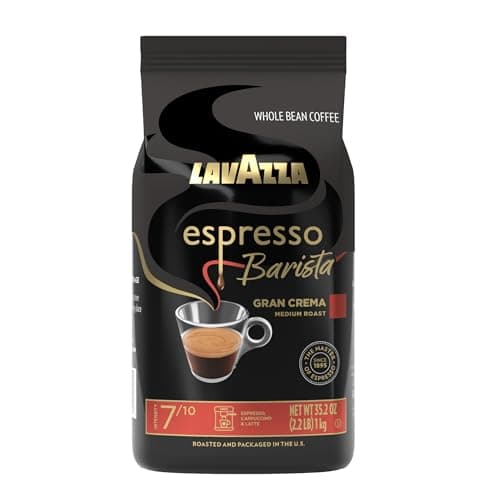
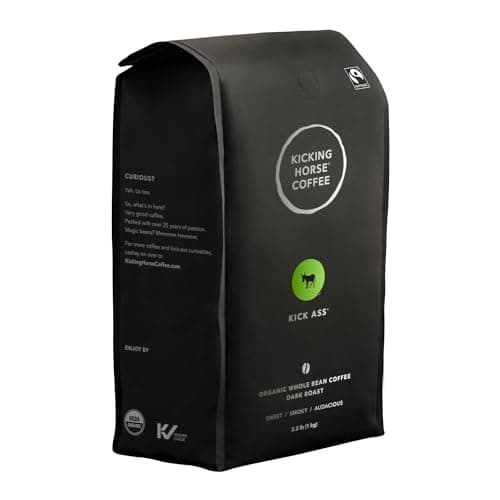
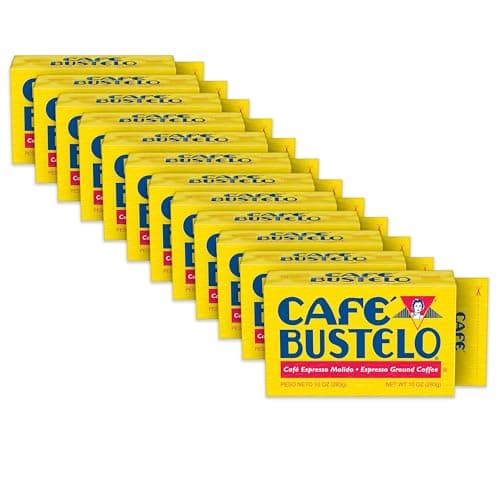
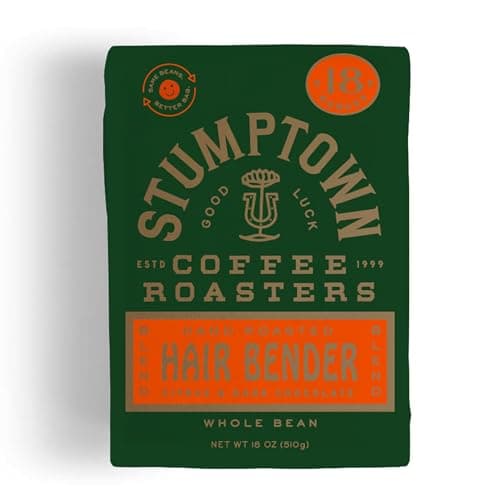
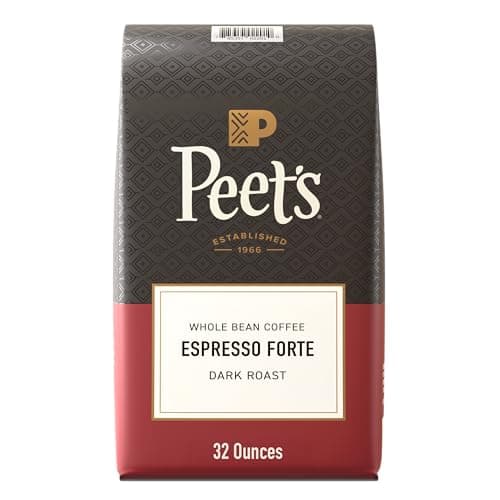
For most latte drinkers the answer is Peet’s Espresso Forte— a true dark roast with enough body that you can still taste coffee through a 6oz milk drink, which is the whole job. If you want the thickest crema and a bean blended specifically for bar milk drinks, buy Lavazza Gran Crema. If certifications matter, the dark organic answer is Kicking Horse Kick Ass. On the tightest budget, or with no grinder, Cafe Bustelo Espresso is pre-ground and still cuts through. And if you want a latte that tastes of something other than chocolate, Stumptown Hair Bender is the specialty pick that keeps its citrus in milk.
This page exists because the best espresso bean and the best latte bean are not the same bean, and most lists treat them as interchangeable. Our own best coffee beans for espresso page ranks Lavazza Super Crema first, because as a straight shot its balance is hard to beat. That same balance is exactly what disappears under milk. So the ranking below is deliberately different, and the reasoning is below before the picks.
What milk actually does to coffee
Three things happen when you pour 5–7oz of steamed milk into 1–2oz of espresso, and all three argue for a different bean than you would drink black.
1. Dilution, by a factor of four or more.A latte is roughly one part espresso to five or six parts milk. Whatever subtlety the shot had is now a minority of the liquid in the cup. A delicate, bright, washed Ethiopian can be exquisite as a straight espresso and taste like faintly coffee-flavoured milk in a latte — not because it is a worse coffee, but because there is not enough of it.
2. Fat and protein mute acidity and bind aromatics.Milk fat coats the palate and dairy proteins bind to some of the compounds that read as fruit and florals. The first thing to go is brightness. This is why a coffee described as “lively, citrus-forward, tea-like” tends to vanish in milk, and why chocolate, caramel, nut and toast notes come through instead — those sit in a frequency range milk does not erase.
3. Milk is sweet. Steaming converts some lactose perception to a distinctly sweeter taste, so the drink arrives with sweetness already supplied. A bean whose main virtue is delicate sweetness is competing with the milk; a bean with bitterness, body and roast character is complementing it.
What to look for, in order
Roast level: medium-dark to dark.This is the single biggest lever, and it is the opposite of what we would tell a pour-over drinker. Darker roasts bring chocolate, caramel and roast bitterness — the three things that read clearly through dairy. Light roasts are not wrong, they are simply outvoted by the milk.
Body over brightness. You want a syrupy, heavy-bodied shot. Body is the quality that physically persists in a mixed liquid, where aroma does not.
A little robusta helps here.On a straight-shot page robusta is a compromise — it can bring a rubbery, woody edge. In milk that edge is largely masked, and what you keep is the two things robusta genuinely adds: a thicker, more stable crema and more bitterness to cut through. This is why Italian bar blends almost all contain some, and why a 100% Arabica bean can be the better espresso and the thinner latte. Arabica vs robusta covers the species difference properly.
Freshness still matters, just less. Degassing affects crema, and crema affects the texture where the shot meets the milk. A roast date on the bag is better than a best-by date. But the honest ranking here puts profile first, because a two-week-old dark roast makes a better latte than a perfectly fresh light one.
One thing beans cannot fix: the milk itself and how you texture it. If your lattes taste thin or your foam is bubbly, the bean is not the problem — start at best milk for frothing and how to froth milk.
Match the bean to the size of the drink
The ratio changes the answer, and this is the part no bean list tells you. A macchiato or cortado is mostly coffee, so a specialty medium roast shines and a heavy dark roast can taste harsh. A 6oz cappuccino is roughly even and almost anything here works. A 12oz or 16oz latte is overwhelmingly milk and only the dark, heavy-bodied picks stay audible. If you drink both ends of that range, the pragmatic move is two bags rather than one compromise bag. Latte vs cappuccino sets out the ratios.
Dose up before you re-roast your opinion
Before concluding that a bean is too weak for milk, try the cheaper fix: pull a larger dose or a shorter, more concentrated shot. Moving from a single to a double, or pulling a ristretto-style shot that is denser rather than longer, changes the coffee-to-milk ratio in your favour without changing beans at all. Ristretto vs lungo explains what you are trading, and how many grams for a double shot gives you the numbers to work from.
Beans for a super-automatic are a different question
If your latte comes out of a bean-to-cup machine, the bean selection criteria change in a way that outranks everything on this page: very oily dark roasts can clog the grinder and the chute on some machines, and flavoured beans should be avoided entirely. That is its own ranking — best coffee beans for super-automatic machines — and it takes precedence over milk profile if the two disagree.
Storage, because a latte bean is usually a big bag
The beans that work best here tend to be sold in 2lb bags, which means most of the bag is sitting around going flat while you work through it. Keep it sealed and out of the light, and decant what you need rather than opening the main bag daily — best coffee storage containers covers the canisters worth owning. Do not refrigerate whole beans; the temperature cycling drives condensation into them.