Skip to content
Tamp & Pour

Roundups · Coffee Beans

Arabica vs robusta

Two species, not two grades. What actually differs — caffeine, altitude, disease resistance and flavor — and the one situation where robusta genuinely makes the better cup.

By Stephen V.Updated How we review
#ad

We earn a commission when you buy through our Amazon links, at no extra cost to you. It never changes a verdict, and we say so when the cheaper product is the better buy. How this works.

Nearly every bag of specialty coffee says “100% arabica” on it, and that phrase has trained a generation of coffee drinkers to read robusta as a defect. It is not a grade, it is a different species — Coffea canephora rather than Coffea arabica— and the differences between them are botanical, not a matter of quality control.

The National Coffee Association puts arabica at roughly 62% of world production and robusta at about 38% and rising. Arabica descends from Ethiopian trees and produces what the NCA describes as fine, mild, aromatic coffees that command the highest prices. Robusta comes from central and western sub-Saharan Africa, carries 50–60% more caffeine than arabica, and gives strong, bold flavors with bitter undertones and a pronounced aftertaste. It is heartier, more disease-resistant and cheaper to grow.

The interesting question is not which is better, because on flavor alone arabica plainly wins for most purposes. It is whythe difference exists, and where robusta’s particular properties are the right tool — because in one specific place, traditional Italian espresso, they genuinely are.

The short answer

Quick picks

  • 01
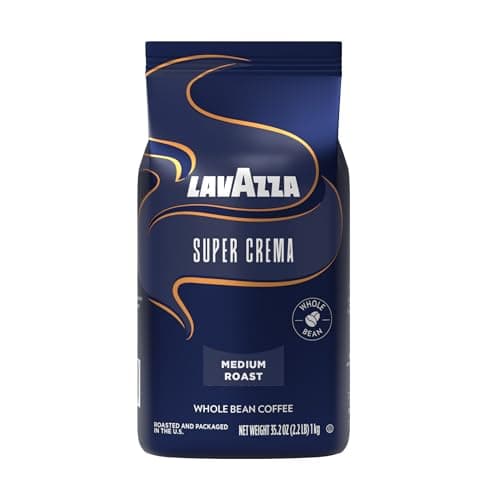
    Lavazza Lavazza Super Crema
    Lavazza Super Crema

    The everyday case for a robusta component: an arabica-led Italian espresso blend with enough robusta to build thick, persistent crema and a body that holds up in a cappuccino.

    8.5Best blend with robusta
  • 02
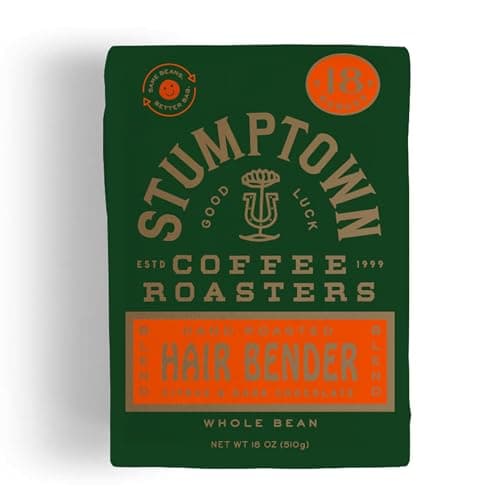
    Stumptown Stumptown Hair Bender
    Stumptown Hair Bender

    The arabica counter-argument: a multi-origin all-arabica espresso blend that keeps fruit, sweetness and complexity in the shot rather than trading them for crema and punch.

    8.0Best 100% arabica espresso

#ad · Live prices from the Amazon Product API, as of Sep 2, 2026. Where we have no verified live price, we show none — a gap beats a number that has rotted.

In detail

The picks, in full

01
Lavazza Lavazza Super Crema

Best blend with robusta

Lavazza Super Crema

Arabica and robusta blendMedium roastEspresso-orientedWhole bean
8.5/10

The everyday case for a robusta component: an arabica-led Italian espresso blend with enough robusta to build thick, persistent crema and a body that holds up in a cappuccino.

Crema
9.5
Body
9
Nuance
6
Consistency
9
Value
9

Pros

  • The robusta component is doing a specific job: robusta produces noticeably thicker, longer-lasting crema than arabica alone
  • Body and bitterness stand up to milk, which is exactly what an Italian espresso blend is engineered for
  • Consistent bag to bag, which matters in espresso where a changing bean means re-dialing the grinder
  • Widely available and cheap for the quality, because robusta is cheaper to grow

Cons

  • The nuance and acidity that make single-origin arabica exciting are simply not the goal here
  • Roast-forward: you taste the blend and the roast, not a place
  • Not a coffee for a pour-over cone, where its virtues do not apply

Don't buy this if…

you drink filter coffee black and want origin character. Everything this blend is good at is aimed at espresso and milk.

$26.99View on Amazon

Price as of Sep 2, 2026. Prices change — Amazon's at checkout is the one that counts.

#ad · we may earn a commission from this link to Lavazza Super Crema

02
Stumptown Stumptown Hair Bender

Best 100% arabica espresso

Stumptown Hair Bender

100% arabicaMulti-origin blendRoast date printedWhole bean
8.0/10

The arabica counter-argument: a multi-origin all-arabica espresso blend that keeps fruit, sweetness and complexity in the shot rather than trading them for crema and punch.

Crema
7
Body
7.5
Nuance
9.5
Consistency
8.5
Value
7.5

Pros

  • Demonstrates what arabica does that robusta cannot — layered fruit and sweetness inside a shot that still has structure
  • Blended across origins for consistency without resorting to a robusta component for body
  • Roast dates printed, so you can actually brew it in its window
  • Works as espresso and as filter, which is unusual for an espresso-labeled blend

Cons

  • Thinner, faster-fading crema than a robusta-containing blend, which some people read as a worse shot
  • Considerably more expensive than an Italian supermarket blend
  • More delicate in milk — the complexity you paid for gets partly buried

Don't buy this if…

your daily drink is a large milk-based latte. Much of what makes this coffee expensive disappears under eight ounces of steamed milk.

$18.95View on Amazon

Price as of Sep 2, 2026. Prices change — Amazon's at checkout is the one that counts.

#ad · we may earn a commission from this link to Stumptown Hair Bender

The differences in one table

 Arabica (Coffea arabica)Robusta (Coffea canephora)
Share of world production~62%~38%, rising
CaffeineLower50–60% more than arabica
FlavorFine, mild, aromaticStrong and bold, bitter undertones, pronounced aftertaste
Altitude~2,000–6,000 ftLower altitudes
Temperature59–75°F75–85°F
Disease resistanceMore disease-prone, costlier to growHeartier, more resistant, cheaper
Typical useSpecialty coffee, single originsBlends, instant coffee, Italian espresso

Why altitude explains almost everything

Arabica needs cool, steady temperatures between about 59 and 75°F, which in the tropics means growing it high up. Cooler temperatures slow the cherry’s maturation, and a slower ripening period develops more sugars and more complex aromatic precursors in the seed. That is the mechanism behind the whole specialty coffee industry: high-grown arabica has more to say because it took longer to grow. Robusta tolerates 75–85°F and lower elevations, where cherries mature fast and develop less complexity — but where the plant is far easier and cheaper to farm.

The caffeine difference, and why the plant bothers

Caffeine is a natural insecticide. It is bitter to taste and toxic to many insects, and the plant produces it as a defense. Robusta grows in hotter, lower, more pest-heavy environments, and its higher caffeine content is part of why it survives there — along with the disease resistance the NCA describes. That extra caffeine is also directly responsible for the harsher, more bitter cup, because caffeine itself is bitter. The two facts are the same fact.

Where robusta genuinely wins: crema and body

Traditional Italian espresso blends have included robusta for a century, and not to cut costs. Robusta produces markedly thicker and more persistent crema than arabica, and it brings a heavier body and a bitter backbone that stands up to milk instead of vanishing into it. If your drink is a cappuccino, a blend with 10–20% robusta will often taste better and look better than a delicate 100% arabica shot drowned in eight ounces of milk. This is the one place where “100% arabica” is not automatically the better answer.

Where robusta loses, decisively

Black filter coffee. Everything a pour-over or a drip machineexists to reveal is aromatic complexity and clean acidity, and robusta has substantially less of both. Also worth knowing: the vast majority of instant coffee is robusta, which is a large part of why instant tastes the way it does — the harshness people attribute to the drying process is partly the species.

Fine robusta exists, and it is not what is in your supermarket blend

Robusta’s reputation is built on commodity-grade beans grown for volume and processed cheaply, which is genuinely most of the robusta in the world. Carefully grown, carefully processed robusta — sometimes sold as fine robusta — is a different product and is taken seriously by a growing number of roasters, particularly in India and Vietnam. It is still not arabica and it does not try to be. But “robusta is bad coffee” is a statement about farming and processing standards, not about the species.

What to actually buy

For black filter coffee, buy 100% arabica and spend your attention on origin and roast date instead of species. For espresso with milk, do not rule out a blend containing robusta — judge the cup, not the label. And if you are buying coffee for its caffeine, robusta-heavy blends genuinely do deliver more per gram, though the dose you brew and the volume you drink matter far more than the species does.

How we picked

We did not lab-test this gear

Everyone in this category says they tested twenty machines. We have not lab-tested any of these, and we say so. What we did instead: compiled the published manufacturer specifications, read the manuals, ran the math where there was math to run (heat-up time, pressure, dose capacity, grind range, cost per cup), and scored each pick against a published rubric. The scores are judgments from documented research — not measurements we took, because we do not have a lab and we will not pretend we do. Where a number came from someone else's work, we name them in Sources.
Questions

Frequently asked

Is arabica better than robusta?
For flavor complexity and clean acidity, yes — the NCA describes arabica as fine, mild and aromatic and robusta as strong and bold with bitter undertones. For crema, body and standing up to milk in espresso, a robusta component is genuinely useful.
How much more caffeine does robusta have?
The National Coffee Association puts it at 50–60% more caffeine than arabica. Caffeine is a natural insecticide, and robusta grows in hotter, lower, more pest-heavy conditions where that defense matters more.
Why is robusta cheaper?
It is heartier and more resistant to disease and parasites, tolerates hot low-altitude conditions, and yields more per plant. Arabica needs cooler high-altitude terrain, is more disease-prone, and is costly to cultivate on steep ground.
Is robusta used in espresso?
Traditionally, yes — Italian espresso blends commonly include it, because robusta produces thicker, more persistent crema and a body that survives milk. The NCA lists Italian espresso blends among robusta’s common uses.
Is instant coffee robusta?
Most of it is, which is part of why instant coffee tastes harsher than brewed. The NCA lists instant coffee as one of robusta’s primary uses alongside blends and Italian espresso.
Does 100% arabica mean good coffee?
No. It means one species, and says nothing about grade, altitude, freshness or roast quality. A stale supermarket 100% arabica will make a worse cup than a fresh, well-roasted blend that contains some robusta.

Keep reading

Receipts

Sources

We do not run a testing lab, and we do not pretend to. Where a measured number came from someone else's work, we name them and link them. Where we could not verify something, we say so on the page rather than quietly leaving it out. Read our full method.