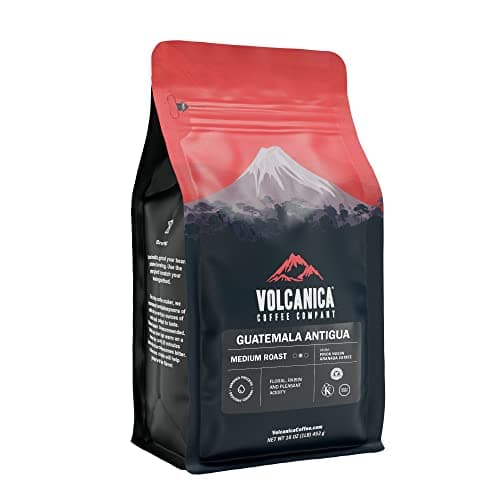
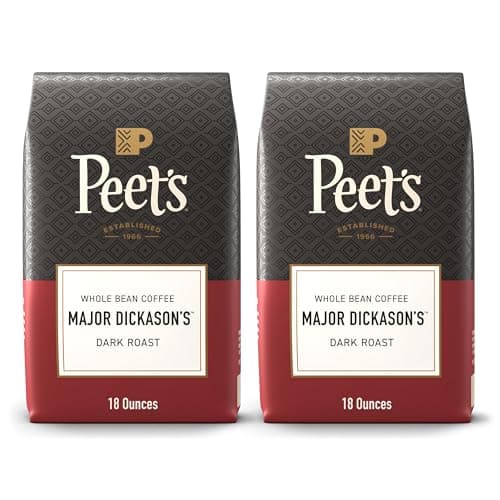
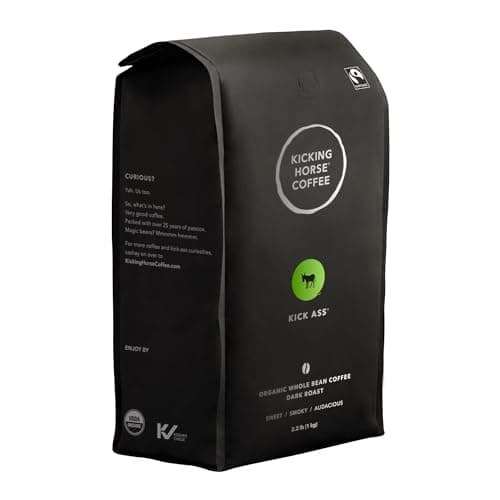
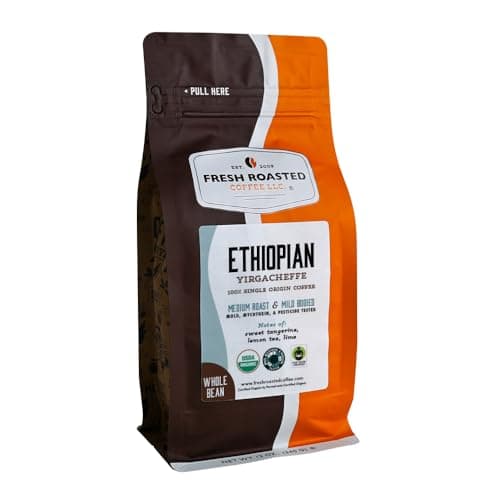
Roast level is the single biggest decision on a bag of coffee, and it is widely misunderstood because the marketing language is backwards. Dark roast is not “stronger.” Light roast is not “weaker.” What roasting actually does is trade the character of the bean’s origin for the character of the roast, and every other difference follows from that trade.
Inside the roaster, heat drives water out and triggers caramelization and Maillard browning. Around 196°C the beans audibly crack — first crack — and a coffee pulled shortly after is a light roast: dense, acidic, and still tasting distinctly of where it grew. Keep going and the sugars caramelize further, acids break down, and the bean loses mass and gains volume. At second crack, oils migrate to the surface and roast flavors — smoke, chocolate, char — take over. That is a dark roast.
The short answer
Light roast if you want to taste the specific coffee: bright, fruity or floral, with high acidity and a lighter body, brewed as pour-over or filter. Dark roast if you want a bold, chocolatey, low-acid cup with weight, especially in milk drinks, French press, moka or espresso. Neither is better. Most people who think they dislike one have only had a bad example of it.
Side by side
| | Light roast | Dark roast |
|---|
| Pulled from the roaster | At or just after first crack | At or after second crack |
| Dominant flavor | The origin — fruit, florals, citrus, tea | The roast — chocolate, smoke, caramel, char |
| Acidity | High and bright | Low |
| Body | Lighter, tea-like | Heavier, syrupy |
| Bitterness | Low | Higher |
| Surface | Dry, matte | Oily, glossy |
| Bean density | Denser, harder | Less dense, more brittle |
| Caffeine per gram | Very slightly lower | Very slightly higher |
| Caffeine per scoop | Slightly higher | Slightly lower |
| Forgiveness when brewing | Low — needs hot water and a fine-ish grind | High — extracts easily |
| Best brewed as | Pour-over, filter, black | Espresso, moka, French press, milk drinks |
The caffeine question, settled
This is the most persistent myth in coffee, and both common answers are half right. Roasting barely destroys caffeine — it is remarkably heat-stable. What roasting does is remove water and burn off mass, so a dark-roasted bean weighs less and is physically larger than the same bean roasted light.
The consequence runs in two directions at once. Per gram, dark roast has very slightly more caffeine, because the bean kept its caffeine while losing weight. Per scoop, dark roast has very slightly less, because those larger, lighter beans mean fewer grams of coffee fit in the same scoop. Both statements are true, and both differences are small enough to be irrelevant next to your dose and your brew method — which is the strongest practical argument for weighing your coffee with a scale rather than scooping it.
Why light roasts are harder to brew
Light-roasted beans are denser and less soluble, so the same water has to work harder to extract them. Brew a light roast with water that is too cool or a grind that is too coarse and you get a sour, thin, under-extracted cup — and most people who say they hate light roast have actually only had it under-extracted. Push the water to the top of the range (around 205°F), grind a step finer than you would for a dark roast, and extend the contact time slightly.
Dark roasts are the opposite: porous, brittle and highly soluble, so they extract easily and quickly. That makes them forgiving of cooler water, coarser grinds and imprecise technique — and prone to over-extraction and bitterness if you push too hard.
Match the roast to the brewer
| Brew method | Best roast | Why |
|---|
| Pour-over | Light to medium | Paper filter and controlled percolation show off clarity and acidity |
| Drip machine | Medium | Fixed parameters suit a forgiving middle roast |
| French press | Medium-dark to dark | Immersion blends flavors; body and depth survive, subtlety does not |
| Espresso, straight | Medium to medium-dark | Enough sweetness to balance concentration without going ashy |
| Espresso, with milk | Medium-dark to dark | Needs to cut through dairy |
| Moka pot | Medium-dark to dark | High extraction pressure and metal filter favor roast character |
| Cold brew | Medium to dark | Cold water leaves light-roast aromatics behind entirely |
Reading the bag
Roast names are unregulated and inconsistent between roasters — one company’s “medium” is another’s “light.” Two more reliable signals: look at the beans, since an oily, glossy surface means second crack and a dry matte surface means a lighter roast; and read the tasting notes, because “citrus, floral, tea-like” describes a light roast whatever the label says, while “chocolate, smoke, toasted nuts” describes a dark one. Notably, “espresso roast” is a marketing convention rather than a roast level — see coffee vs espresso beans.
Freshness behaves differently at each end
Dark roasts have oil on the surface, and surface oil goes rancid faster than the oils locked inside a lighter roast. So dark roasts stale noticeably quicker once the bag is open, and they also degas faster. Light roasts hold longer but need a slightly longer rest after roasting before they brew well. Either way, buy whole bean and grind fresh — and if the bag has only a “best by” date rather than a roast date, buy the smallest size you will finish in a month.
How we picked
We did not lab-test this gear
Everyone in this category says they tested twenty machines. We have not lab-tested any of these, and we say so. What we did instead: compiled the published manufacturer specifications, read the manuals, ran the math where there was math to run (heat-up time, pressure, dose capacity, grind range, cost per cup), and scored each pick against a published rubric. The scores are judgments from documented research — not measurements we took, because we do not have a lab and we will not pretend we do. Where a number came from someone else's work, we name them in Sources.