Skip to content
Tamp & Pour

Roundups · Coffee Beans

The best low acid coffee

Roast level and origin do most of the work, not marketing. Ranked on what actually lowers perceived acidity, with live prices and honest cons.

By Stephen V.Updated How we review
#ad

We earn a commission when you buy through our Amazon links, at no extra cost to you. It never changes a verdict, and we say so when the cheaper product is the better buy. How this works.

“Low acid coffee” is a term doing two jobs at once, and separating them is the whole point of this page. In the specialty world, acidityis a flavor word — the bright, citric, sparkling quality prized in a good Kenyan. In the low-acid shopping aisle, it means something else entirely: coffee that is gentler on a stomach or on reflux. Those are different problems with mostly the same solutions, but the marketing blurs them badly.

Here is what actually reduces the acid in your cup, in order of effect. Roast level: darker roasting breaks down chlorogenic acids, so a dark roast is measurably less acidic than the same bean roasted light. Origin and altitude: low-grown Brazilian and Sumatran coffees are naturally lower in acid than high-grown Ethiopian and Kenyan. Processing: wet-hulled Indonesian coffees are famously low-acid. Brewing method: cold brew extracts far less acid than any hot method, which is a bigger lever than the bag you buy.

The picks below are ranked on those real mechanisms, and we flag clearly which brands publish an actual pH figure and which simply describe their coffee as smooth. If reflux is a medical issue for you, this page is a shopping guide and not medical advice — talk to a doctor about that part.

The short answer

Quick picks

#ad · Live prices from the Amazon Product API, as of Sep 2, 2026. Where we have no verified live price, we show none — a gap beats a number that has rotted.

In detail

The picks, in full

01
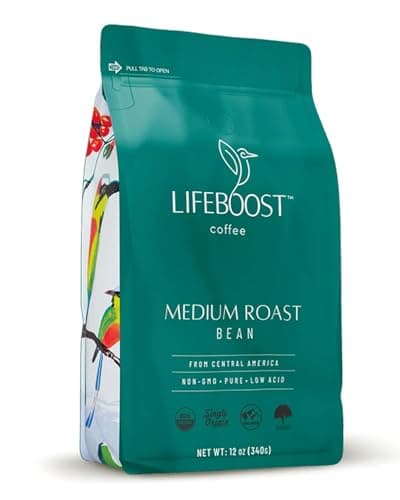
Lifeboost Lifeboost Medium Roast

Best overall low acid

Lifeboost Medium Roast

Medium roastSingle-origin NicaraguanShade-grown, USDA OrganicThird-party tested
7.8/10

The best-tasting gentle bag here: a shade-grown, single-origin Nicaraguan roasted medium, so it stays sweet and smooth without the flat, over-roasted taste most low-acid coffees settle for.

Gentleness
8.5
Flavor quality
8.5
Evidence for the claim
7
Versatility
8.5
Value
6.5

Pros

  • Genuinely smooth without being dull — most low-acid coffee buys gentleness by roasting the life out of the bean
  • Shade-grown and organic, with unusually well-documented sourcing and testing
  • Medium roast keeps sweetness that very dark roasts burn away
  • Works in drip, pour-over and press

Cons

  • Expensive per ounce — the priciest bag on this page by some margin
  • Mild profile can read as flat if you are used to bold coffee
  • Acidity is described rather than published as a pH figure

Don't buy this if…

you want a strong, bold cup — this is deliberately smooth, and some people read that as weak.

$28.40View on Amazon

Price as of Sep 2, 2026. Prices change — Amazon's at checkout is the one that counts.

#ad · we may earn a commission from this link to Lifeboost Medium Roast

02
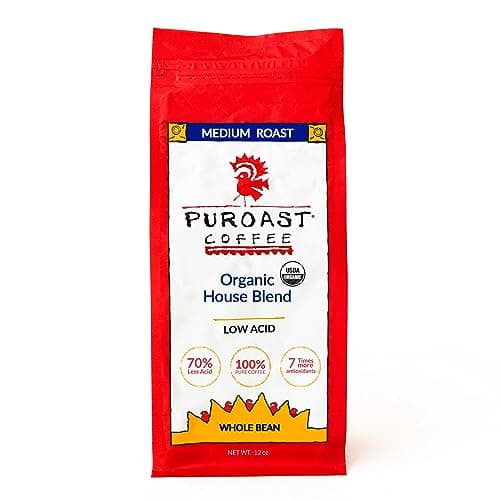
Puroast Puroast Low Acid Organic House Blend (medium roast)

Best documented low-acid claim

Puroast Low Acid Organic House Blend (medium roast)

Medium roastUSDA OrganicWhole beanRoaster publishes a high-pH, low-acid claim
8.2/10

The brand that actually publishes numbers: Puroast markets a measured high-pH, low-acid profile from its roasting process, and this organic house blend is the easiest place to start.

Gentleness
9
Flavor quality
7
Evidence for the claim
8.5
Versatility
8
Value
8.5

Pros

  • Puroast states a specific pH and antioxidant position rather than only calling the coffee 'smooth'
  • Organic certification alongside the low-acid claim
  • Priced sensibly for a specialty low-acid bag
  • Mild, nutty profile that suits milk and drip brewing

Cons

  • The roasting process that lowers acidity also flattens origin character
  • Flavor is pleasant rather than exciting — this is a functional purchase
  • No printed roast date

Don't buy this if…

you buy coffee for flavor complexity — the same process that gentles the acid removes most of the nuance.

$25.26View on Amazon

Price as of Sep 2, 2026. Prices change — Amazon's at checkout is the one that counts.

#ad · we may earn a commission from this link to Puroast Low Acid Organic House Blend (medium roast)

03
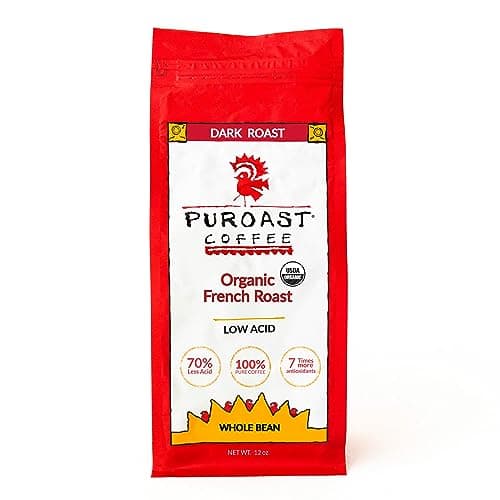
Puroast Puroast Low Acid Organic French Roast (dark roast)

Best low-acid dark roast

Puroast Low Acid Organic French Roast (dark roast)

Dark (French) roastUSDA OrganicWhole beanRoaster publishes a high-pH, low-acid claim
8.3/10

The gentlest combination available: a dark roast from a roaster whose whole proposition is low acidity, at the lowest price per bag on this page.

Gentleness
9.5
Flavor quality
6.5
Evidence for the claim
8.5
Versatility
7.5
Value
9.5

Pros

  • Dark roasting and the roaster's low-acid process work in the same direction
  • Cheapest bag here, and organic
  • Smoky, full-bodied cup that takes milk well and suits a French press

Cons

  • Dark roast means essentially no origin character
  • Oily surface will gum up ceramic burrs over time
  • Some will find a French roast profile harsh even at low acidity — roast bitterness is not the same as acid

Don't buy this if…

your issue with coffee is bitterness rather than acidity. A dark roast fixes the second and worsens the first.

$20.53View on Amazon

Price as of Sep 2, 2026. Prices change — Amazon's at checkout is the one that counts.

#ad · we may earn a commission from this link to Puroast Low Acid Organic French Roast (dark roast)

04
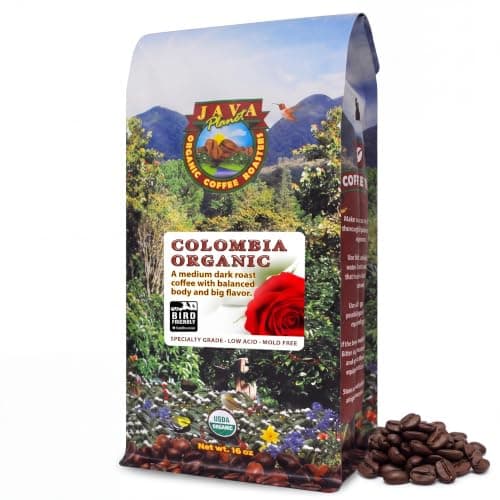
Java Planet Java Planet Low Acid Organic Coffee, Colombian (medium-dark)

Best balance of gentle and good

Java Planet Low Acid Organic Coffee, Colombian (medium-dark)

Medium-dark roastColombiaUSDA Organic16oz whole bean
7.8/10

The specialty middle ground: an organic Colombian roasted medium-dark, which is the classic recipe for a gentle cup that still tastes like coffee rather than like roast.

Gentleness
8
Flavor quality
8
Evidence for the claim
6.5
Versatility
8.5
Value
7.5

Pros

  • Medium-dark is the sweet spot — enough roast to drop the acid, not so much that sweetness goes
  • Caramel-forward Colombian profile that almost nobody dislikes
  • Certified organic in a category full of uncertified health marketing

Cons

  • 'Low acid' here is a taste description, not a published measurement
  • Costs more per ounce than the Puroast bags
  • Limited origin nuance at this roast level

Don't buy this if…

you need the strongest possible acid reduction — a full dark roast or cold brewing will get you further.

$26.99View on Amazon

Price as of Sep 2, 2026. Prices change — Amazon's at checkout is the one that counts.

#ad · we may earn a commission from this link to Java Planet Low Acid Organic Coffee, Colombian (medium-dark)

05
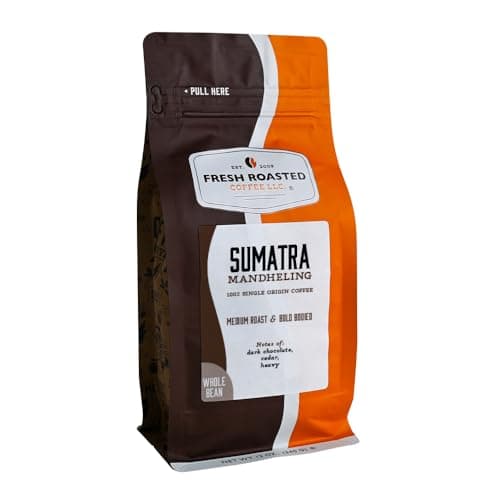
Fresh Roasted Coffee Fresh Roasted Coffee Sumatra Mandheling (medium roast, 12oz)

Best naturally low-acid origin

Fresh Roasted Coffee Sumatra Mandheling (medium roast, 12oz)

Medium roastSumatra, MandhelingWet-hulled processing12oz whole bean
8.1/10

Naturally low acid rather than engineered to be: Indonesian wet-hulled processing produces an earthy, syrupy, genuinely low-acidity cup at a normal specialty price.

Gentleness
8
Flavor quality
8.5
Evidence for the claim
7.5
Versatility
7.5
Value
9

Pros

  • Low acidity comes from origin and processing, so it does not need a heavy roast to get there
  • Big, syrupy body — the most satisfying mouthfeel on this page
  • Priced like ordinary specialty coffee rather than carrying a health-marketing premium
  • Excellent in a French press, where the body shows off

Cons

  • The earthy, herbal wet-hulled character genuinely divides people
  • Less clean in the cup than washed coffees
  • No published acidity figure — the claim rests on the origin's known profile

Don't buy this if…

you like bright, clean, fruity coffee. Sumatra is the opposite of that by design and will taste muddy to you.

$17.99View on Amazon

Price as of Sep 2, 2026. Prices change — Amazon's at checkout is the one that counts.

#ad · we may earn a commission from this link to Fresh Roasted Coffee Sumatra Mandheling (medium roast, 12oz)

Two meanings of “acidity,” and why it matters when you shop

In tasting language, acidity is a positive: the bright, sparkling, fruit-like quality that makes a good Kenyan or Ethiopian exciting. In the low-acid aisle, it means the coffee is gentler on the stomach. The overlap is real — the same chlorogenic acids contribute to both — but a shopper who wants a gentle cup and reads “bright, complex acidity!” on a specialty bag is being told the exact opposite of what they want. When you see “high acidity” on a bag, read it as “bright and fruity,” and walk past it if your stomach is the reason you are here.

What genuinely lowers acid, ranked by effect

1. Brew it cold.Cold brewing extracts far less acid than any hot method, because many of the compounds responsible need heat to dissolve. If acidity is a real problem for you, switching to cold brew does more than any bag change — see our cold brew maker picks.

2. Roast darker. Chlorogenic acids break down as roasting progresses, so a dark roast of any bean is measurably less acidic than the same bean roasted light. This is the single biggest bag-level lever.

3. Choose a low-acid origin. Brazilian, Sumatran and other lower-altitude coffees are naturally lower in acid than high-grown East African beans. Wet-hulled Indonesian processing pushes this further.

4. Change the brew method. Metal-filtered immersion (French press) leaves more oils that soften perceived sharpness; paper-filtered pour-over is cleaner and shows acid more plainly.

5. Add milk.Unglamorous but effective — dairy proteins buffer acidity noticeably, and a flat white is a genuinely gentler drink than the same shot taken black.

Which claims are measured and which are marketing

Very few roasters publish an actual pH figure. Puroast is the notable exception on this page, building its whole proposition on a documented low-acid roasting process. Most others describe their coffee as “smooth” or “easy on the stomach,” which is a taste description, not a measurement. Neither is dishonest — but if you want a number rather than an adjective, buy from a roaster that publishes one. That is why “evidence for the claim” is one of the five scores on every pick here.

Decaf is a separate question

If caffeine rather than acid is what disagrees with you, low-acid coffee will not help. The two are unrelated compounds and dark roasting does not remove caffeine in any meaningful amount — if anything, a dark roast measured by scoop has slightly more caffeine per gram than a light one, because the beans lose mass. Our decaf picks cover that side properly, including which decaffeination processes preserve flavor.

Freshness still applies

Nothing about a low-acid bag exempts it from staling. Buy whole bean, grind immediately, and store airtight at room temperature away from light. A stale low-acid coffee is still stale coffee. If you are grinding with a blade grinder, fixing that will improve your cup more than any of these bags will — see burr vs blade grinders.

How we picked

We did not lab-test this gear

Everyone in this category says they tested twenty machines. We have not lab-tested any of these, and we say so. What we did instead: compiled the published manufacturer specifications, read the manuals, ran the math where there was math to run (heat-up time, pressure, dose capacity, grind range, cost per cup), and scored each pick against a published rubric. The scores are judgments from documented research — not measurements we took, because we do not have a lab and we will not pretend we do. Where a number came from someone else's work, we name them in Sources.
Questions

Frequently asked

What is the best low acid coffee?
For the best-tasting gentle cup, Lifeboost Medium Roast. For a claim backed by a published acidity position rather than adjectives, Puroast — the organic French roast is the gentlest and cheapest combination here.
Does dark roast coffee have less acid?
Yes. Roasting breaks down chlorogenic acids, so a dark roast of a given bean is measurably less acidic than the same bean roasted light. It is the biggest lever available at the bag level.
Is cold brew less acidic than hot coffee?
Noticeably, yes. Many of the compounds that make hot coffee taste sharp need heat to dissolve, so cold extraction leaves them behind. If acidity is a real problem for you, changing brew method does more than changing beans.
Which coffee origins are naturally low in acid?
Lower-altitude coffees generally — Brazilian and Indonesian in particular. Sumatran coffee, with its wet-hulled processing, is the classic naturally low-acid, full-bodied choice. High-grown Ethiopian and Kenyan coffees are the opposite.
Does low acid coffee have less caffeine?
No. Acidity and caffeine are unrelated. If caffeine is what bothers you, you want decaf, not low-acid coffee.
Is low acid coffee better for acid reflux?
Many people with reflux find darker roasts, low-acid origins and cold brew more comfortable, and that is why this category exists. It is a shopping observation rather than medical advice — if reflux is a persistent problem, that is a conversation for a doctor.

Keep reading

Receipts

Sources

We do not run a testing lab, and we do not pretend to. Where a measured number came from someone else's work, we name them and link them. Where we could not verify something, we say so on the page rather than quietly leaving it out. Read our full method.