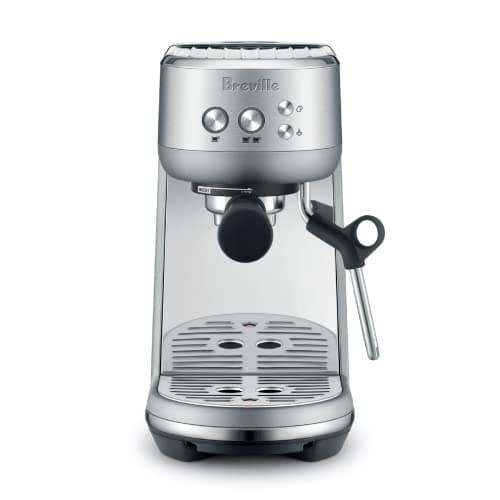
If you want to pour latte art, buy the Breville Bambino— it is the cheapest machine here with a bare steam tip and enough steam pressure to texture a jug properly, which is the entire requirement. Spend more only for a specific reason: the Gaggia Classic Pro if you want a 58mm commercial wand and a machine you can mod, the Breville Barista Pro if you need a grinder in the same box, the Rancilio Silvia if you want the steam power to texture jug after jug, and the Breville Dynamic Duo if you are done waiting between brewing and steaming.
This page exists because almost every “best espresso machine for lattes” list recommends machines that cannot physically do what the reader is asking for. So before the ranking, the disqualification rule, because it removes most of the market.
What actually decides latte art: a bare tip you control
Latte art needs microfoam— milk and air combined into one glossy liquid with no visible bubbles, which pours like wet paint and holds a line. Microfoam is made in two deliberate phases: you stretch (hold the tip just under the surface and let the jet draw a thin stream of air in), then you texture (submerge the tip and let the jet spin the whole jug so the bubbles break down and fold into the body of the milk). Both phases are judged by ear and by hand, in about twenty seconds.
That mechanism is why three popular categories are disqualified here, and we would rather say so plainly than rank them and let you find out:
Automatic milk systems are out.A machine that froths the milk for you — Breville’s auto-steam on the Bambino Plus, De’Longhi’s LatteCrema carafe, Philips’ LatteGo, any bean-to-cup milk circuit — decides the texture itself and delivers it into the cup. There is no stretch phase for you to control and often no jug at all. These make very good lattes; they cannot make latte art. If that is the trade you want, the rankings are on best espresso machines with a milk frother and best super-automatic espresso machines.
Pannarello sleeves are out. A pannarello is the perforated plastic shroud fitted over the steam tip on many entry machines. It pre-mixes air and steam before the milk, which makes thick stiff foam reliably and fine foam never. You cannot control the air because the sleeve already did. Some can be unscrewed to expose a bare tip underneath, which is worth checking on a machine you already own.
Electric jug frothers are out. They beat air in with a whisk or disc rather than folding it back, so the foam forms as a separate layer. We explain the physics in milk frother vs steam wand.
What is left is the machine with a bare metal tip and a steam knob or lever. Among those, the ranking below is on steam power (enough pressure to spin a jug, not just warm it), wand geometry(length and swivel — a short stubby wand forces an awkward jug angle), and whether you have to wait between pulling the shot and steaming, which on a single boiler means the espresso sits there cooling while you work.
One thing no machine on this list can buy you: the practice. Expect a couple of weeks of bubbly milk before anything pours. The technique is in how to froth milk, and a 12oz pitcher with a sharp spout does more for your first rosetta than any upgrade on this page — see best milk frothing pitchers.
The short answer
Quick picks
01Breville Bambino (BES450)The cheapest honest entry to latte art: a bare manual steam tip with real pressure behind it, on a machine that is up to temperature in about three seconds.
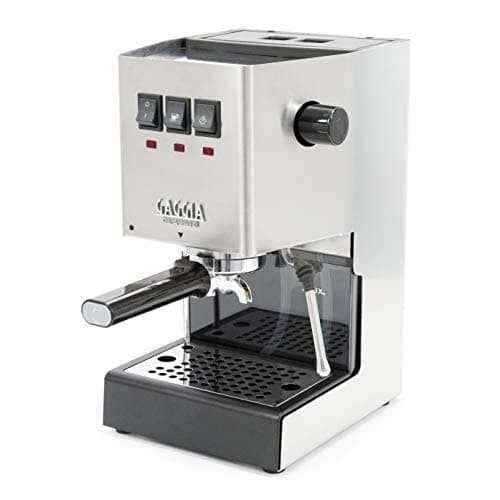
7.8Best for latte art on a budget 02Gaggia Classic Pro (E24)The 58mm commercial answer: a rotary steam wand with no sleeve in the way, on a brass-boiler machine that takes every professional accessory and every known mod.
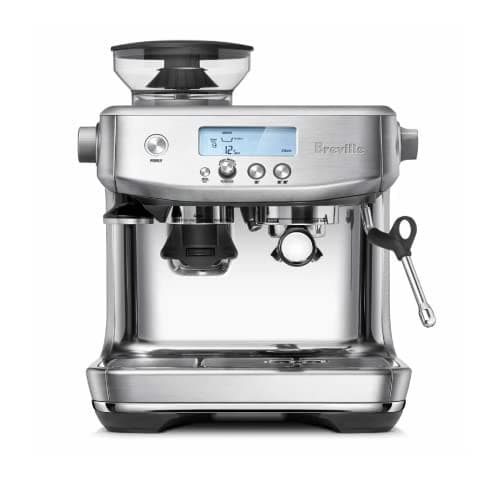
7.7Best 58mm wand under $500 03Breville Barista Pro (BES878)The complete latte-art setup in one box: a manual wand that comes up to steam almost immediately, plus the grinder, baskets and 480ml jug you would otherwise buy separately.
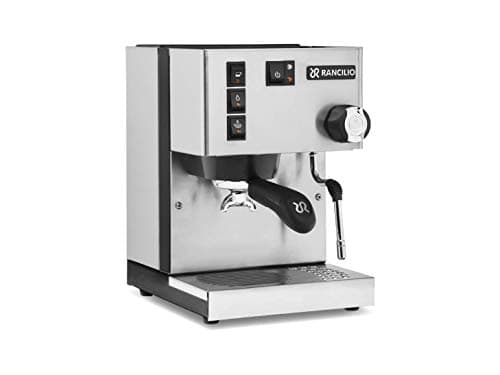
8.0Best all-in-one for latte art 04Rancilio SilviaThe steam wand people learn on and keep: a genuinely powerful single-boiler wand with no sleeve, bolted to a brass group and a steel body that gets rebuilt rather than replaced.
8.0Best steam power for jug after jug
| # | Product | Best for | Score | Price |
|---|
| 01 | Breville Bambino (BES450)The cheapest honest entry to latte art: a bare manual steam tip with real pressure behind it, on a machine that is up to temperature in about three seconds. | Best for latte art on a budget | | $299.95·Amazon |
| 02 | Gaggia Classic Pro (E24)The 58mm commercial answer: a rotary steam wand with no sleeve in the way, on a brass-boiler machine that takes every professional accessory and every known mod. | Best 58mm wand under $500 | | $458.19·Amazon |
| 03 | Breville Barista Pro (BES878)The complete latte-art setup in one box: a manual wand that comes up to steam almost immediately, plus the grinder, baskets and 480ml jug you would otherwise buy separately. | Best all-in-one for latte art | | $825.00·Amazon |
| 04 | Rancilio SilviaThe steam wand people learn on and keep: a genuinely powerful single-boiler wand with no sleeve, bolted to a brass group and a steel body that gets rebuilt rather than replaced. | Best steam power for jug after jug | | $995.00·Amazon |
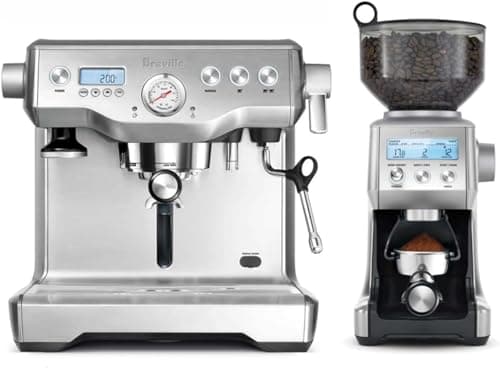
| 05 | | Best for brewing and steaming at once | | $1,699.95·Amazon |
#ad · Live prices from the Amazon Product API, as of October 18, 2026. Where we have no verified live price, we show none — a gap beats a number that has rotted.
In detail
The picks, in full
Best for latte art on a budget
Breville Bambino (BES450)
54mm portafilterThermoJet 3s heat-upManual steam wandCompact 7.7-inch width
The cheapest honest entry to latte art: a bare manual steam tip with real pressure behind it, on a machine that is up to temperature in about three seconds.
- Shot quality
- 8
- Steam power
- 7
- Build
- 7.5
- Ease of use
- 7.5
- Value
- 9
Pros
- +Nearly the same espresso as the Bambino Plus for substantially less money
- +Heats up in seconds, so it suits a rushed weekday morning
- +Manual wand teaches you to steam milk instead of doing it for you
- +One of the smallest footprints of any real espresso machine
Cons
- −Manual steaming is a genuine skill and takes weeks to get right
- −No grinder, same as the Plus
- −Short steam wand needs a small pitcher to work comfortably
Don't buy this if…
…lattes are the entire reason you are buying. The extra money for the Plus buys automatic milk, and that is the feature most milk drinkers actually want.
Who it is for:the person who wants to learn to pour and does not want to spend four figures finding out whether they enjoy it. Note the deliberate inversion against the rest of this site: the Bambino’s own cons list says buy the Bambino Plusif lattes are the whole point — and for latte art specifically that advice reverses, because the Plus automates the milk and takes the stretch phase away from you. The honest cost is the wand itself: it is short, so a small 12oz pitcher is close to mandatory and your hand sits closer to the drip tray than is comfortable. Steam power scores lowest of the five picks here, which in practice means one jug at a time rather than four in a row.
Best 58mm wand under $500
Gaggia Classic Pro (E24)
58mm commercial portafilterLead-free brass boiler3-way solenoid valveRotary steam wand
The 58mm commercial answer: a rotary steam wand with no sleeve in the way, on a brass-boiler machine that takes every professional accessory and every known mod.
- Shot quality
- 8
- Steam power
- 7.5
- Build
- 8.5
- Ease of use
- 6.5
- Value
- 8
Pros
- +Full-size 58mm portafilter shares accessories with commercial gear
- +Legendary modding platform — add a PID later for precise temperature
- +Simple, repairable, and built to last for years
Cons
- −No PID out of the box — temperature surfing takes practice
- −Single boiler; a pause between pulling and steaming
Don't buy this if…
…you want it to work perfectly out of the box with no learning curve — the reward here comes from practice (and, for many owners, mods).
Who it is for:the reader who wants the wand to be the part of the machine they outgrow last. The rotary wand swivels where the Bambino’s is fixed, which sounds minor and is the difference between holding a jug at a natural angle and bracing your wrist. Because the group is 58mm, the pitchers, baskets and bottomless portafilters that cafes use fit for ordinary money — see 58mm espresso accessories. The single boiler is the real constraint for milk drinks: you pull the shot, flip to steam, wait for the boiler to climb, and the espresso cools while you texture. That order of operations is survivable for one or two drinks and tiresome for four.
Best all-in-one for latte art
Breville Barista Pro (BES878)
54mm stainless steel portafilterIntegrated conical burrs, 30 espresso grind settingsThermoJet heating, about 3 seconds to temperatureDigital PID temperature, adjustable in the menu2L (68 fl oz) tank, 250g bean hopper
The complete latte-art setup in one box: a manual wand that comes up to steam almost immediately, plus the grinder, baskets and 480ml jug you would otherwise buy separately.
- Shot quality
- 8.5
- Grinder quality
- 8
- Steam power
- 7.5
- Ease of use
- 8.5
- Value
- 7.5
Pros
- +Thirty grind settings instead of sixteen, which is the difference between being able to dial in a light roast and giving up on it
- +ThermoJet reaches optimum extraction temperature in about three seconds, so there is no warm-up ritual standing between you and a shot
- +Steam comes up almost immediately too; one long-term reviewer timed a jug at about 50 seconds, roughly a quarter faster than the Barista Express
- +Brew temperature is adjustable from the menu, so you can raise it for light roasts instead of living with one fixed number
- +Complete in the box: single and dual wall baskets in both sizes, the Razor dose trimming tool, a 480ml stainless milk jug, a water filter and a cleaning kit
- +A dedicated hot water outlet for long blacks and preheating cups, which is exactly what a single-boiler machine needs
Cons
- −No pressure gauge. The Express has one, and it is the cheapest way to see that a puck is choking or gushing before you taste it
- −Low thermal mass is what makes it heat instantly, and it is also why the group and cup tray sit cold; one long-term reviewer calls needing a blank shot or two to preheat the biggest downside of the machine
- −The integrated grinder is the ceiling. It retains roughly half a gram internally, clumps into the basket, and will not match a good standalone grinder
- −Grind-by-time, not by weight, so your dose drifts as beans age and you should weigh the basket rather than trust the dial
- −Single boiler: you pull, then you steam. There is no doing both at once
- −Loud. One reviewer's blunt summary was that you could not sneak an early espresso without waking the household
- −Costs meaningfully more than the Barista Express for gains that are real but incremental if warm-up time is not a problem you have
Don't buy this if…
…you already own an espresso-capable burr grinder. You would be paying a second time for a grinder that is worse than the one on your counter, and a bare machine at the same money buys a better shot engine.
Who it is for:someone buying their whole latte-art setup at once, from nothing. The 480ml stainless jug in the box is a real convenience here rather than a throw-in, because it is the right size for a single 6oz latte and sharp enough at the spout to pour with. The steam figure is the reason it ranks above the Classic Pro for this job: one long-term reviewer timed a jug at about 50 seconds, and more importantly the machine is ready to steam almost immediately rather than after a boiler climb. It is still a single boiler, so the pull-then-steam order stands. Its own cons list is blunt about the ceiling — the built-in grinder clumps and doses by time — which matters less for milk drinks than for straight espresso, and is why we rank it here but not top of best espresso machines with a grinder.
Best steam power for jug after jug
Rancilio Silvia
58mm commercial portafilter, brass group0.3L boiler, 2L water tankVibration pump, manual thermostat controlStainless steel body, ~30.8 lb
The steam wand people learn on and keep: a genuinely powerful single-boiler wand with no sleeve, bolted to a brass group and a steel body that gets rebuilt rather than replaced.
- Shot quality
- 8.5
- Steam power
- 8.5
- Build
- 9.5
- Ease of use
- 6
- Value
- 7.5
Pros
- +A brass commercial group with real thermal mass — temperature holds through the shot rather than sagging
- +58mm means every professional basket, tamper and bottomless portafilter fits, cheaply
- +Built to be serviced: gaskets, valves and switches are stock parts and the machine is designed to come apart
- +Genuinely powerful steam wand for a single boiler, and no panarello sleeve in the way
Cons
- −No PID from the factory — Rancilio lists temperature regulation as a manual thermostat, so you learn temperature surfing or fit a kit
- −No grinder, so the real budget is this plus $250 or more
- −Heavy and tall, at roughly 30.8 lb and 13.4 inches
- −Small drip tray and tight group clearance; taller cups do not fit
Don't buy this if…
…you want good drinks without study. This is a machine that rewards routine and punishes improvisation, and the Barista Pro will make a better cappuccino in your first month.
Who it is for:the reader who has already decided latte art is the hobby, not a feature. Its pros list names the thing this page is about in its own words — a genuinely powerful wand for a single boiler, with no pannarello in the way — and that is why it carries the joint-highest steam score here. Ranked fourth rather than second on purpose: the same single boiler that makes the steam good makes the workflow slow, there is no PID so you are managing temperature by routine, and its own cons list warns that a Barista Pro will make a better cappuccino in your first month. Buy it if you intend to still be using it in ten years, which is the case its full review makes.
Best for brewing and steaming at once
Breville Dynamic Duo (Dual Boiler + Smart Grinder Pro)
True dual boiler (separate brew and steam boilers)58mm commercial portafilterPID temperature controlBundled with Smart Grinder Pro
The machine that removes the wait: separate brew and steam boilers, so the shot is extracting while you are already texturing the milk.
- Temperature stability
- 9
- Steam power
- 9
- Build
- 8.5
- Ease of use
- 7.5
- Value
- 8
Pros
- +Genuine separate boilers — brew and steam simultaneously with a stable brew temperature
- +58mm commercial group, so the whole professional accessory market fits
- +PID lets you set brew temperature by the degree rather than manage a cycling thermostat
- +The grinder is in the box, which at this price point is a meaningful saving over buying separately
- +Pre-infusion and adjustable shot parameters give real control
Cons
- −Expensive, and the bundle means you pay for a grinder you may already own
- −Large and heavy — this is a permanent counter installation
- −Two boilers means a longer warm-up and more descaling surface to maintain
- −The bundled Smart Grinder Pro is a good all-rounder rather than a precision espresso grinder
Don't buy this if…
…you already own a grinder you like — you would be paying for a second one, and a standalone dual boiler is the better buy in that case.
Who it is for:the household pouring several drinks back to back — a weekend with guests, or two people who both want a cappuccino before work. The second boiler is the only feature on this page that changes the order of the job rather than the quality of one step: on every other pick the espresso cools while you steam, and here it does not. It carries the highest steam score of the five and the highest overall, and it is ranked last anyway, because it costs several times the Bambino and the gap it closes is a workflow annoyance rather than a limit on what you can pour. Its own cons list makes the other honest point: the bundled Smart Grinder Pro is an all-rounder, so if you already own a grinder you like, a standalone dual boiler is the better buy.
The upgrade order, if your milk is not pouring
In rough order of how much each one changes the milk per dollar, and it is not the machine first:
1. A pitcher with a sharp spout, 12oz. You cannot draw a line with a blunt spout, and a jug that is too big leaves the milk too shallow to spin. This is a $20 fix that outperforms every other item on this list. Best milk frothing pitchers.
2. Whole milk, cold, poured to the bottom of the spout. Protein and fat are what stabilise the foam. Skim froths faster and collapses sooner, and most plant milks need a barista formulation to hold at all. Best milk for frothing.
3. Technique — roughly two weeks of it. Stretch for a count, then submerge and spin. The most common failure is stretching for too long because the hissing sounds productive. How to froth milk.
4. Removing a pannarello sleeve, if your machine has one that unscrews. Free, and it is the difference between stiff foam and controllable foam.
5. The machine. Last, genuinely. A bare tip with modest pressure in trained hands pours better art than a powerful wand in untrained ones.
Why the shot still matters
Latte art is poured into espresso, and a thin under-extracted shot gives you no contrast — the pattern appears and then disappears into a pale drink. You want a dense shot with real crema for the milk to displace, which means a single-wall basket, a burr grinder and a dose you weigh. The mechanics are in how to pull an espresso shot, and if your crema is thin or absent, start at why your espresso has no crema.
What we did not rank, and why
Machines with automatic milk.The Bambino Plus, the De’Longhi LatteCrema models and every bean-to-cup machine on this site are excluded by the rule at the top of the page, not by a judgment about quality. Several of them are better lattes machines than anything ranked here, and two of them win their own roundups.
The Breville Oracle Touch.It has a dual boiler and an auto-steam wand — which puts it on both sides of the line. It automates the texture by default, so it is not a latte-art recommendation at roughly three times the Barista Pro.
Manual lever machines. A Flair or a Picopresso has no steam boiler at all, so there is no wand to rank. Best manual espresso makers covers them on their own terms.
How we picked
We did not lab-test this gear
Everyone in this category says they tested twenty machines. We have not lab-tested any of these, and we say so. What we did instead: compiled the published manufacturer specifications, read the manuals, ran the math where there was math to run (heat-up time, pressure, dose capacity, grind range, cost per cup), and scored each pick against a published rubric. The scores are judgments from documented research — not measurements we took, because we do not have a lab and we will not pretend we do. Where a number came from someone else's work, we name them in Sources.
Questions
Frequently asked
Can you do latte art with an automatic milk frother?+
No. An automatic system — Breville’s auto-steam, LatteCrema, LatteGo, any bean-to-cup milk circuit — chooses the texture itself and often delivers the milk straight into the cup, so there is no stretch phase you control and frequently no jug. You need a bare steam tip and a pitcher.
What is the cheapest espresso machine you can pour latte art on?+
Of the machines we rank, the Breville Bambino — it has a bare manual tip and enough pressure to texture a 12oz jug. Cheaper machines usually carry a pannarello sleeve, which pre-mixes air and makes microfoam impossible unless the sleeve unscrews to expose a bare tip.
Do I need a dual boiler for latte art?+
No. A dual boiler removes the wait between pulling and steaming, which is a workflow improvement rather than a requirement. Every pick here except the Dynamic Duo is a single boiler and all of them pour.
Why does my milk have big bubbles instead of microfoam?+
Almost always too long in the stretch phase, or never submerging the tip to fold the air back in. The third cause is hardware: a pannarello sleeve pre-mixes air and gives stiff bubbly foam no matter how good your technique is. Step-by-step fix in
how to froth milk.
Is a bigger steam boiler better for latte art?+
More steam capacity helps with consecutive drinks rather than with the first one. A modest wand textures one jug fine; a bigger boiler is what lets you do four in a row without waiting for pressure to recover.
Receipts
Sources
We do not run a testing lab, and we do not pretend to. Where a measured number came from someone else's work, we name them and link them. Where we could not verify something, we say so on the page rather than quietly leaving it out. Read our full method.