Every Keurig makes the same drink. Water is heated, punched through a K-Cup at low pressure, and lands in your mug as American-style coffee — no crema, no espresso, no pressure extraction. That is not a criticism; it is the product, and it is why comparing Keurigs is unlike comparing espresso machines. You are not choosing a better cup, you are choosing a better machine around the same cup.
So the honest way to rank the lineup is by what actually changes between models, and the list is shorter than the catalog suggests. Reservoir size decides how often you refill and whether the machine can be left alone. Brew temperature and strength control decides whether you can compensate for a pod you find weak. MultiStream, Keurig’s multi-needle shower, wets the grounds more evenly than the single center jet older models use, which is a real if modest improvement. And a carafe turns a single-serve machine into something that can also make a pot. Everything else — colors, app connectivity, iced buttons — is packaging.
One thing worth saying up front, because nobody selling these will: K-Cups are the most expensive way to buy coffee by weight, and a 12oz bag of good whole beans through a drip machine costs a fraction as much per cup. You are buying convenience, and it is a legitimate thing to buy. Just buy it knowingly.
The short answer
Quick picks
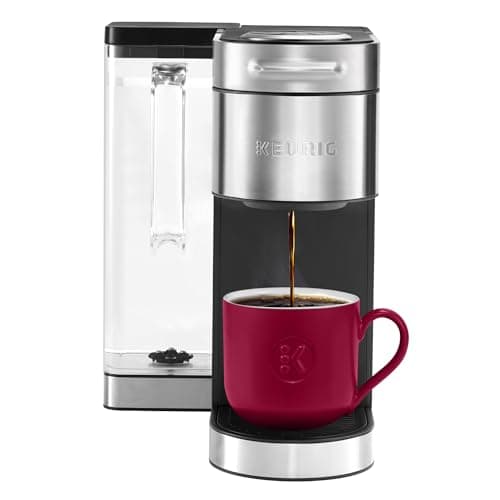
01Keurig K-Supreme PlusThe one that adds real control rather than features: MultiStream multi-needle brewing plus adjustable strength and temperature, on a large dual-position reservoir that stops the machine dominating the counter.
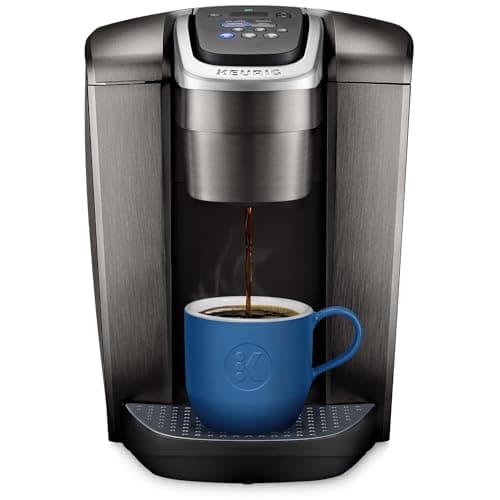
02Keurig K-EliteThe sensible middle of the range and the best value in the lineup: strong brew, an iced setting, a hot water dispenser and a large reservoir, without the K-Supreme's price.
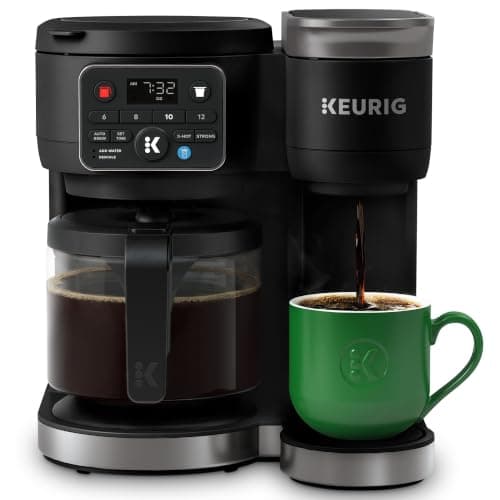
03Keurig K-Duo (Gen 2)The one that solves the actual problem with pod machines: it brews a K-Cup for one person and a full carafe from ground coffee for everyone else, from a single 72oz reservoir.
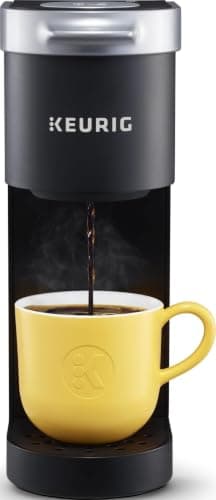
04Keurig K-MiniFive inches wide, no reservoir, and the only Keurig that makes sense in a dorm, an office drawer or a kitchen where counter space is genuinely the constraint.
| # | Product | Best for | Score | Price |
|---|
| 01 | Keurig K-Supreme PlusThe one that adds real control rather than features: MultiStream multi-needle brewing plus adjustable strength and temperature, on a large dual-position reservoir that stops the machine dominating the counter. | Best overall | | $157.77·Amazon |
| 02 | Keurig K-EliteThe sensible middle of the range and the best value in the lineup: strong brew, an iced setting, a hot water dispenser and a large reservoir, without the K-Supreme's price. | Best value | | $99.99·Amazon |
| 03 | Keurig K-Duo (Gen 2)The one that solves the actual problem with pod machines: it brews a K-Cup for one person and a full carafe from ground coffee for everyone else, from a single 72oz reservoir. | Best for households | | $129.99·Amazon |
| 04 | Keurig K-MiniFive inches wide, no reservoir, and the only Keurig that makes sense in a dorm, an office drawer or a kitchen where counter space is genuinely the constraint. | Best small footprint | | $77.49·Amazon |
#ad · Live prices from the Amazon Product API, as of October 17, 2026. Where we have no verified live price, we show none — a gap beats a number that has rotted.
In detail
The picks, in full
Best overall
Keurig K-Supreme Plus
MultiStream multi-needle extractionAdjustable brew temperature and strengthLarge removable reservoir, dual-positionMultiple brew sizesSaves per-user settings
The one that adds real control rather than features: MultiStream multi-needle brewing plus adjustable strength and temperature, on a large dual-position reservoir that stops the machine dominating the counter.
- Cup quality
- 7.5
- Brew control
- 9
- Convenience
- 8.5
- Build
- 7.5
- Value
- 7
Pros
- +Adjustable temperature is the standout — most Keurigs brew at one fixed setting, and being able to raise it fixes the most common complaint about pod coffee tasting thin
- +MultiStream wets the grounds from several points rather than one, which extracts the pod more evenly and does make a noticeable difference on darker roasts
- +The dual-position reservoir slides to the side or back, which is the practical fix for a machine that otherwise needs deep counter space
- +Strength control gives you somewhere to go when a pod tastes weak, instead of brewing a smaller size and hoping
- +Remembers settings per user, which matters in a household where one person wants 6oz strong and another wants 12oz
Cons
- −Substantially more expensive than the K-Express for a cup difference that is real but not dramatic
- −Still low-pressure brewing, so no amount of adjustment turns it into espresso
- −The reservoir is large enough that water sits for days in light use, which needs occasional dumping
- −More electronics than a K-Classic, which is more to fail eventually
Don't buy this if…
…you drink one pod a day and are happy with how it tastes. The adjustments are the entire premium, and they only earn their money if you actually use them.
Best value
Keurig K-Elite
Large removable reservoirStrong brew and iced settingsHot water on demandMultiple cup sizes up to 12oz
The sensible middle of the range and the best value in the lineup: strong brew, an iced setting, a hot water dispenser and a large reservoir, without the K-Supreme's price.
- Cup quality
- 7
- Brew control
- 7.5
- Convenience
- 8.5
- Build
- 7.5
- Value
- 8.5
Pros
- +Strong brew setting slows the flow to extract more from the pod, which is the cheapest fix for weak pod coffee
- +The hot water dispenser is quietly the most-used feature — tea, oatmeal, French press top-ups, all without a kettle
- +Big reservoir means several days between refills for one person
- +Iced setting brews smaller and hotter into ice without immediately watering down
Cons
- −Single-needle extraction rather than MultiStream, so wetting is less even
- −No temperature adjustment on most versions
- −Bulky footprint for a single-serve machine
- −Still lands you in the highest per-cup coffee cost there is
Don't buy this if…
…counter space is tight. This is a big machine for one cup at a time, and the K-Mini exists precisely for that constraint.
Best for households
Keurig K-Duo (Gen 2)
K-Cup pods and ground coffee carafe72oz reservoirMultiStream extractionHot and iced brewing
The one that solves the actual problem with pod machines: it brews a K-Cup for one person and a full carafe from ground coffee for everyone else, from a single 72oz reservoir.
- Cup quality
- 7.5
- Brew control
- 8
- Convenience
- 9
- Build
- 7.5
- Value
- 7.5
Pros
- +Ground coffee for the carafe side means you are not paying pod prices when you make a pot — the single biggest running-cost fix available in this category
- +One machine covers the guest-with-a-pot scenario and the one-cup-before-work scenario
- +72oz reservoir feeds both sides without constant refilling
- +MultiStream on the pod side, so cup quality matches the better single-serve models
Cons
- −Two systems in one chassis means a larger machine and more to clean
- −The carafe side is an ordinary drip brewer — nothing here matches a temperature-certified machine
- −Costs as much as the K-Supreme Plus, so you pay for the versatility
- −Carafe coffee sits on a hot plate, which cooks it if it sits
Don't buy this if…
…you never make more than one cup at a time. The carafe half is most of the price and most of the footprint.
Best small footprint
Keurig K-Mini
Under 5 inches wideSingle-cup reservoir — you fill per brew6-12oz brew sizesCord storage in the base
Five inches wide, no reservoir, and the only Keurig that makes sense in a dorm, an office drawer or a kitchen where counter space is genuinely the constraint.
- Cup quality
- 6.5
- Brew control
- 5
- Convenience
- 7
- Build
- 7
- Value
- 8.5
Pros
- +Genuinely tiny — it fits where no other pod machine does, which is the entire reason to buy it
- +Fill-per-cup means no water standing in a reservoir going stale
- +Cheapest way into the K-Cup system
- +Fast, because there is only one cup of water to heat
Cons
- −You fill it every single time, which is the trade for the size and gets old
- −No strength or temperature control at all
- −No hot water dispenser, no iced setting, no programmability
- −Smallest heater in the range, so cup temperature is at the low end
Don't buy this if…
…you make several drinks a day. Filling the tank per cup is fine once and tiresome four times.
What actually differs between Keurig models
| Feature | What it changes | Worth paying for? |
|---|
| Reservoir size | How often you refill | Yes, if more than one person uses it |
| Temperature control | Cup heat and perceived strength | Yes — the most common complaint it fixes |
| Strength / strong brew | Slows flow to extract more | Yes, cheap and effective |
| MultiStream needles | Wets the grounds more evenly | Modest but real |
| Carafe side | Ground coffee, pot-sized | Yes, if you ever make a pot |
| App / smart features | Very little | No |
The running-cost math, done properly
A K-Cup holds roughly 9–12 grams of coffee. A pound of whole-bean coffee is 454 grams, so a bag contains something like forty cups’ worth of coffee — and a box of forty pods costs several times what a good bag of beans does. That is the entire economic picture and it does not improve with a better machine. If the cost matters to you, a reusable K-Cup filter and your own ground coffee cuts it enormously, and a drip machine or French press eliminates it. If it does not matter, you are buying ninety seconds and zero cleanup, which is a real product.
How to make pod coffee taste better
Four things, in order of effect. Use the smallest brew size the pod is rated for — a 6oz setting on a pod designed for 8oz is stronger, not weaker coffee, and most people brew too large and then complain about strength. Turn the temperature up if your model allows it. Descale on schedule, because scale drops brewing temperature before it causes any visible fault. And buy pods from roasters who print roast dates; K-Cups sit in warehouses, and the difference between a fresh pod and an old one is bigger than the difference between two machines.
Reusable pods, honestly assessed
A refillable K-Cup filter costs very little and lets you use any coffee you like, which fixes both the cost and the freshness problem at once. The trade is that you now grind, fill, tamp lightly, brew and rinse — which is most of the work of a pour-over without the cup quality. Grind medium-fine, and do not overfill: a packed reusable pod restricts flow and floods the machine’s overflow. Worth doing if the cost bothers you, not worth doing for flavor alone.
Maintenance is the thing that kills these machines
Keurigs are small water heaters, and scale is what ends them. Descale every three to six months depending on your water, using a proper descaler rather than vinegar — the method is in our descaling guide, and it applies to pod machines identically. Also clean the exit needle: it clogs with grounds, and a partially blocked needle is the single most common cause of a Keurig brewing short or overflowing. A paperclip does it.
How we picked
We did not lab-test this gear
Everyone in this category says they tested twenty machines. We have not lab-tested any of these, and we say so. What we did instead: compiled the published manufacturer specifications, read the manuals, ran the math where there was math to run (heat-up time, pressure, dose capacity, grind range, cost per cup), and scored each pick against a published rubric. The scores are judgments from documented research — not measurements we took, because we do not have a lab and we will not pretend we do. Where a number came from someone else's work, we name them in Sources.
Questions
Frequently asked
Which Keurig model is the best?+
The K-Supreme Plus for control — it is the one with adjustable temperature and strength plus MultiStream brewing. The K-Elite is the better value if you do not need those adjustments, and the K-Duo is the right answer if anyone in the house ever wants a pot.
Do more expensive Keurigs make better coffee?+
Marginally. All of them brew the same pod at low pressure; the more expensive machines let you raise the temperature, slow the flow and wet the grounds more evenly. That helps, but the pod sets the ceiling.
What is MultiStream technology?+
Keurig’s multi-needle shower head, which sends water into the pod from several points instead of a single center jet. More even wetting means more even extraction, and it is the main technical difference between the newer and older ranges.
Is a Keurig cheaper than making regular coffee?+
No — it is the most expensive way to buy coffee by weight. A K-Cup holds roughly 9–12 grams, and a box of pods costs several times what an equivalent weight of good whole beans does. You are buying speed and zero cleanup, not economy.
Can a Keurig make espresso?+
No. Espresso requires roughly nine bars of pressure; Keurigs push water through the pod at low pressure and produce American-style coffee. If you want espresso from pods, that is Nespresso’s Original line — see
Keurig vs Nespresso.
How often should you descale a Keurig?+
Every three to six months, sooner with hard water. Scale lowers brew temperature before it causes any obvious fault, so coffee that has gradually got weaker is usually a descaling problem rather than a pod problem.
Receipts
Sources
We do not run a testing lab, and we do not pretend to. Where a measured number came from someone else's work, we name them and link them. Where we could not verify something, we say so on the page rather than quietly leaving it out. Read our full method.