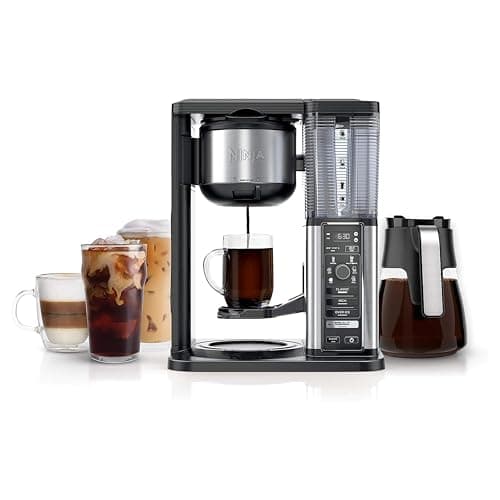
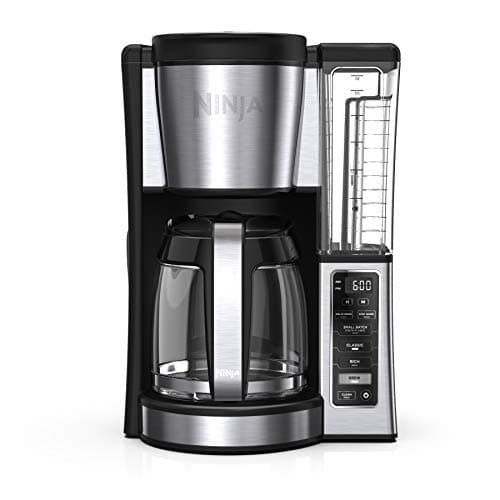
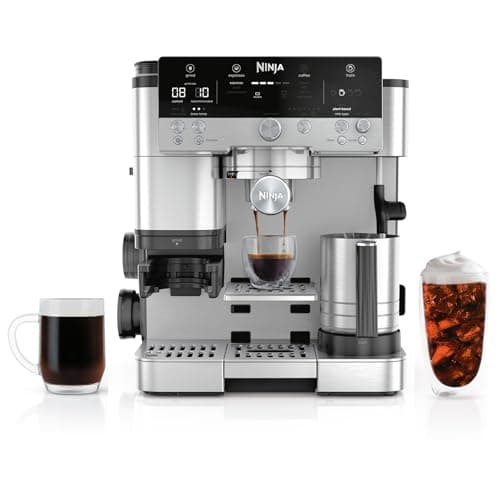
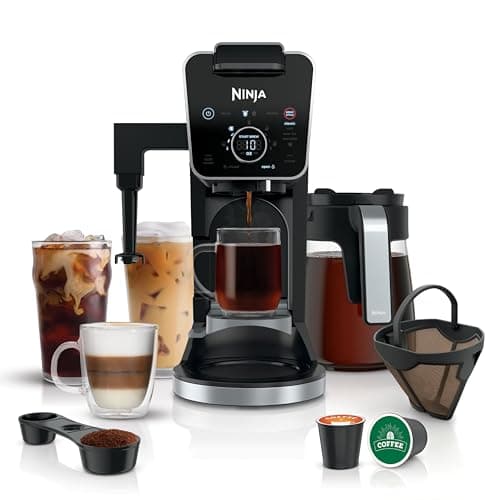
Ninja’s position in coffee is easy to state: take the jobs a household actually has — a pot for the morning, a single cup at 3pm, iced coffee in summer, sometimes a pod for a guest — and fit them all into one machine. It is a genuinely useful idea, and the reason Ninja machines look overloaded on a spec sheet is that they are doing four things rather than one very well.
The feature that matters most across the range is concentrate brewing. Ninja machines can brew a smaller, much stronger volume than a normal drip cycle, which is what makes their iced coffee actually taste like coffee rather than like a watered-down pot poured over ice. That is a real engineering answer to a real problem, and it is the thing a Ninja does that a Cuisinart or a Technivorm does not.
What Ninja does not compete on is brew-temperature certification. If your priority is a pot of drip coffee brewed within the 195–205°F window that decides whether drip tastes flat or not, the machines in our main coffee maker roundup address that directly. Ninja competes on flexibility, and that is how the ranking below reads it.
Concentrate brewing, and why it matters for iced coffee
Pouring hot drip coffee over ice dilutes it by roughly a third as the ice melts, which is why most home iced coffee tastes thin. The correct answer is to brew stronger to begin with, so that after dilution you land at normal strength. Ninja’s Specialty and concentrate settings do exactly this by running a much smaller volume of water through the same dose. It is the same principle as cold brew concentrate, arrived at in minutes rather than twelve hours — a different, brighter drink, but a genuinely strong one.
Grounds, pods, or both
The DualBrew models take both, and the case for that is domestic rather than technical: one person in the house wants the convenience of a pod, another does not want to pay pod prices for a daily pot. If everyone in your house drinks the same way, the dual system is a large machine solving a problem you do not have. If your household is split, it is the only machine on this page that ends the argument. Running-cost math for the pod half is in our Keurig roundup.
Where Ninja does not compete
Brew temperature. The reason cheap drip coffee tastes flat is usually that the machine never reaches the 195–205°F window the SCA specifies, and the brands that address this publish it and get certified. Ninja does not lead with brew-temperature data, and its machines are engineered around flexibility instead. If a perfect pot of black filter coffee is your priority above everything else, that is a different shopping list.
The carafe problem
Every glass-carafe machine here sits the pot on a hot plate, and a hot plate does not keep coffee warm — it keeps cooking it. Thirty minutes on a burner is enough to turn a good pot bitter and papery. If you brew a full carafe and drink it over an hour or two, buy a thermal-carafe model or decant into an insulated flask immediately. This is the single most common reason a well-made pot of coffee tastes bad by the second cup.
Cleaning and descaling
Ninja machines have more removable parts than a plain drip brewer, and the frother arms in particular need rinsing straight after milk or they gum up permanently. Descale on the machine’s prompt using a proper descaler; scale drops brewing temperature on a machine that was not certified as hot enough to begin with, which compounds. The routine is in our descaling guide.
How we picked
We did not lab-test this gear
Everyone in this category says they tested twenty machines. We have not lab-tested any of these, and we say so. What we did instead: compiled the published manufacturer specifications, read the manuals, ran the math where there was math to run (heat-up time, pressure, dose capacity, grind range, cost per cup), and scored each pick against a published rubric. The scores are judgments from documented research — not measurements we took, because we do not have a lab and we will not pretend we do. Where a number came from someone else's work, we name them in Sources.