Skip to content
Tamp & Pour

Roundups & reviews · Coffee Makers

The best Cuisinart coffee makers, ranked

Cuisinart's range is large, similar-looking and mostly good. Here is what separates the models that matter — carafe type, brew temperature, and whether a built-in grinder helps or hurts.

By Stephen V.Updated How we review
#ad

We earn a commission when you buy through our Amazon links, at no extra cost to you. It never changes a verdict, and we say so when the cheaper product is the better buy. How this works.

Cuisinart makes more coffee makers than anyone reasonably needs and the model numbers do a poor job of explaining themselves. Underneath, the range divides on three decisions, and once you have made them the right machine is obvious: glass carafe or thermal, single-serve capability or not, and grinder built in or not.

The technology that runs through the range is PerfecTemp, Cuisinart’s heating system, marketed as hotter coffee without sacrificing flavor. That matters because the most common fault in cheap drip machines is brewing below the 195–205°F window the SCA specifies — coffee brewed at 185°F is under-extracted, sour and thin no matter what beans you use. Cuisinart addresses it, and combined with brew-strength control it is why these machines make better coffee than their price suggests.

What Cuisinart does not do is compete at the top of the drip market on certification or build. For that, the machines in our main coffee maker roundupare the comparison. Cuisinart’s strength is that it does the ordinary things well, at prices most households will actually pay.

The short answer

Quick picks

#ad · Live prices from the Amazon Product API, as of Sep 2, 2026. Where we have no verified live price, we show none — a gap beats a number that has rotted.

In detail

The picks, in full

01
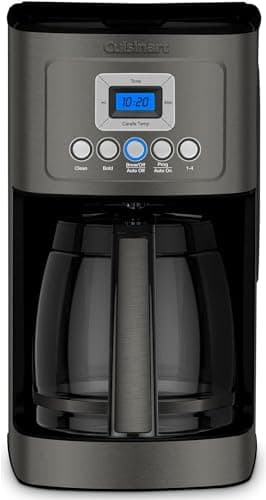
Cuisinart Cuisinart PerfecTemp 14-Cup (DCC-3200)

Best overall

Cuisinart PerfecTemp 14-Cup (DCC-3200)

14-cup glass carafePerfecTemp hotter-brewing systemBrew strength control (regular / bold)1-4 cup small-batch setting24-hour programmable, 0-4 hour auto shutoff
8.3/10

The default Cuisinart and the one most people should buy: PerfecTemp heating, brew-strength control, a proper 1-4 cup mode for small batches, and a decalcify indicator that tells you when the machine needs attention.

Brew quality
8
Temperature
8
Ease of use
9
Build
7.5
Value
9

Pros

  • The 1-4 cup setting is genuinely useful and rare — small batches on a big machine normally brew weak because the water passes through too quickly
  • Brew strength control slows the cycle for a bolder cup, which is a real extraction change rather than a marketing setting
  • The decalcify indicator removes the guesswork from the maintenance that actually determines how long the machine lasts
  • Brew pause lets you pour mid-cycle without flooding the basket
  • Includes a gold-tone permanent filter and a charcoal water filter, so there is nothing extra to buy

Cons

  • Glass carafe on a hot plate, which cooks the coffee within about half an hour
  • 14 cups is a lot of machine if two people drink two cups
  • Cuisinart publishes PerfecTemp as a system rather than a certified temperature figure
  • The carafe lid design dribbles when pouring slowly, a long-running complaint on this model line

Don't buy this if…

you brew a pot and drink it over two hours. The hot plate will ruin it — buy the thermal version instead.

$98.58View on Amazon

$119.9518% off

Price as of Sep 2, 2026. Prices change — Amazon's at checkout is the one that counts.

#ad · we may earn a commission from this link to Cuisinart PerfecTemp 14-Cup (DCC-3200)

02
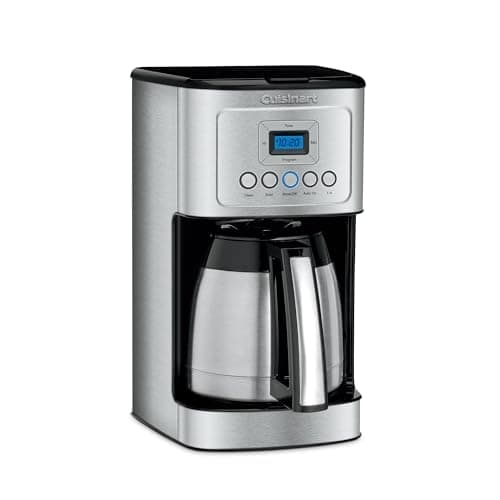
Cuisinart Cuisinart PerfecTemp 12-Cup Thermal Carafe

Best thermal carafe

Cuisinart PerfecTemp 12-Cup Thermal Carafe

12-cup insulated thermal carafePerfecTemp heating, brew strength control1-4 cup setting24-hour programmable
8.2/10

The same machine with the fault removed: a double-walled thermal carafe means no hot plate, so the last cup of the pot tastes like the first instead of like burnt coffee.

Brew quality
8.5
Temperature
8.5
Ease of use
8
Build
8
Value
8

Pros

  • No hot plate is the single biggest quality upgrade available in drip coffee — heat keeps extracting and degrading coffee long after brewing stops
  • Coffee stays drinkable for a couple of hours rather than half an hour
  • Same PerfecTemp system and brew controls as the glass model
  • Stainless carafe survives a household better than glass

Cons

  • Thermal carafes pour more slowly and can dribble
  • Harder to clean than glass — you cannot see what is inside, and coffee oils build up unnoticed
  • More expensive than the glass version for the same brewing
  • 12 cups rather than 14, though the practical difference is small

Don't buy this if…

you drink the pot immediately. The premium buys you time you are not using, and the glass version brews identically.

$128.49View on Amazon

$149.9514% off

Price as of Sep 2, 2026. Prices change — Amazon's at checkout is the one that counts.

#ad · we may earn a commission from this link to Cuisinart PerfecTemp 12-Cup Thermal Carafe

03
Cuisinart Cuisinart Coffee Center (12-Cup + Single Serve)

Best hybrid

Cuisinart Coffee Center (12-Cup + Single Serve)

12-cup carafe plus single-serve sideHot and iced brewingBrew strength controlTakes ground coffee on both sides
7.9/10

The two-households-in-one machine: a full 12-cup drip brewer on one side and a single-serve brewer on the other, sharing a chassis and covering both hot and iced.

Brew quality
7.5
Temperature
7.5
Ease of use
8
Build
7.5
Value
8.5

Pros

  • Both sides take ground coffee, so unlike pod hybrids there is no expensive consumable attached to the single-serve half
  • Solves the real household split — a pot for the morning, one cup at 4pm without brewing a full carafe
  • Iced setting brews stronger so the drink survives the ice
  • Cheaper than buying a drip machine and a single-serve brewer separately

Cons

  • Wide chassis — this is the biggest machine here by counter footprint
  • Two brewing paths, two sets of parts to clean
  • Neither side is quite as good as a dedicated machine at the same money
  • Glass carafe and hot plate on the pot side

Don't buy this if…

counter space is limited. The versatility costs about eighteen inches of worktop.

$114.66View on Amazon

Price as of Sep 2, 2026. Prices change — Amazon's at checkout is the one that counts.

#ad · we may earn a commission from this link to Cuisinart Coffee Center (12-Cup + Single Serve)

04
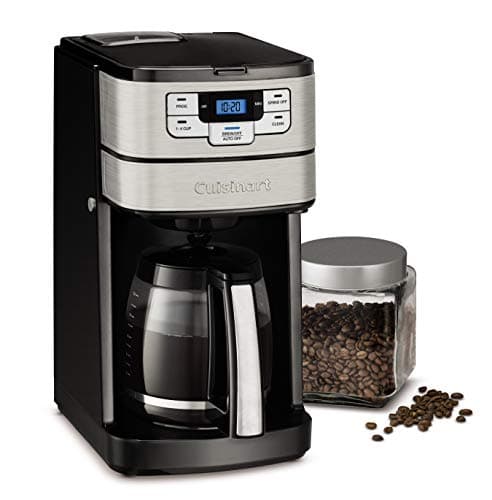
Cuisinart Cuisinart Burr Grind & Brew (DGB-950BCC)

Best with a grinder

Cuisinart Burr Grind & Brew (DGB-950BCC)

Integrated burr grinder (not blade)Thermal carafeGrind control by cup countCharcoal water filter, permanent gold-tone filter
7.8/10

The only grind-and-brew here with an actual burr grinder rather than a blade — which is the difference between a machine that helps your coffee and one that chops it up unevenly on a timer.

Brew quality
8
Temperature
8
Ease of use
7.5
Build
7.5
Value
8

Pros

  • A burr grinder, which is the whole point — Cuisinart also sells blade grind-and-brew machines, and those chop rather than grind
  • Grinding immediately before brewing is a bigger flavor upgrade than any other feature on this page
  • Thermal carafe, so the pot is not sitting on a burner
  • One appliance, one power outlet, one thing to clean

Cons

  • Grinder chutes in combination machines clog with oily beans, and cleaning inside one is genuinely awkward
  • Grinding by cup count is by volume rather than weight, so dose drifts as beans age
  • The internal grinder is basic compared with even an entry standalone burr grinder
  • More mechanical complexity means more that can fail on a machine used every day

Don't buy this if…

you already own a burr grinder. A standalone grinder plus the thermal PerfecTemp will grind better, cost about the same and be far easier to clean.

$399.99View on Amazon

Price as of Sep 2, 2026. Prices change — Amazon's at checkout is the one that counts.

#ad · we may earn a commission from this link to Cuisinart Burr Grind & Brew (DGB-950BCC)

Glass or thermal: the decision that matters most

A hot plate does not preserve coffee, it continues to cook it. Coffee left on a burner keeps losing aromatics and developing bitter, papery notes, and thirty minutes is enough to notice. A thermal carafe removes the heat source entirely and keeps the coffee hot by insulation instead. If you drink the pot within twenty minutes, glass is cheaper and easier to clean. If the pot sits, thermal is not a luxury — it is the difference between a good second cup and a bad one.

Why brew temperature is the spec behind everything

The SCA specifies brewing between 195 and 205°F. Below that range, extraction is incomplete: you pull out the sour acids and not the sweetness that balances them, which is exactly why cheap drip coffee tastes thin and sharp. Cuisinart’s PerfecTemp system exists to address this and is the main technical reason its machines outperform their price. When someone tells you a drip machine makes bad coffee, the cause is usually temperature, not beans. The mechanism is explained in coffee brewing methods.

The 1-4 cup setting is not marketing

Brewing two cups in a fourteen-cup machine normally produces weak coffee, because the small volume of water passes through the bed too quickly and the machine cannot hold temperature across such a short cycle. A proper small-batch mode slows the flow and adjusts the cycle. If you regularly brew less than half a pot, this feature matters more than anything else on the spec sheet.

Grind and brew: burr, or do not bother

Cuisinart sells grind-and-brew machines with both blade and burr grinders, and the difference is total. A blade grinder chops beans into a mix of dust and boulders; the dust over-extracts into bitterness while the boulders stay sour, in the same pot. A burr grinder crushes to a roughly even size. Check which one you are buying — the model numbers do not make it obvious — and if it is a blade, buy a plain brewer plus a separate burr grinder instead. The full argument is in burr vs blade grinder.

Maintenance, and the light that tells you

Every Cuisinart in this range has a decalcify indicator, and it is the most useful light on the machine. Scale coats the heating element and drops brew temperature — the exact spec these machines are built around — so a descaling schedule is not optional housekeeping, it is how you keep the feature you paid for. Use a proper descaler rather than vinegar, which is harsh on seals and leaves a smell that takes several cycles to clear. The routine is in our descaling guide.

How we picked

We did not lab-test this gear

Everyone in this category says they tested twenty machines. We have not lab-tested any of these, and we say so. What we did instead: compiled the published manufacturer specifications, read the manuals, ran the math where there was math to run (heat-up time, pressure, dose capacity, grind range, cost per cup), and scored each pick against a published rubric. The scores are judgments from documented research — not measurements we took, because we do not have a lab and we will not pretend we do. Where a number came from someone else's work, we name them in Sources.
Questions

Frequently asked

Which Cuisinart coffee maker is best?
The PerfecTemp 14-cup (DCC-3200) for most people — it has the brew controls, the small batch mode and the decalcify indicator at a low price. Choose the thermal-carafe version instead if the pot ever sits for more than half an hour.
What is Cuisinart PerfecTemp?
Cuisinart’s heating system, marketed as brewing hotter without sacrificing flavor. It addresses the most common fault in drip machines: brewing below the 195–205°F window the SCA specifies, which produces sour, thin coffee.
Is a thermal carafe better than glass?
For coffee quality, clearly yes — there is no hot plate cooking the pot. Glass is cheaper, easier to clean and easier to see into. Choose on how long your coffee sits, not on price.
Do Cuisinart grind and brew machines use burr grinders?
Some do and some use blades, and the model numbers do not make it obvious. The DGB-950BCC is a burr model. A blade grind-and-brew is worse than a plain brewer plus a cheap burr grinder, so check before buying.
How often should I descale a Cuisinart coffee maker?
When the decalcify light comes on, which is typically every few months depending on water hardness. Scale lowers brewing temperature before it causes any visible fault, so gradually weaker coffee usually means it is overdue.
Why does my Cuisinart coffee taste weak?
Three usual causes, in order: brewing a small amount without using the 1-4 cup setting, a machine that needs descaling, and grind that is too coarse. Try the bold setting and a finer grind before blaming the beans.

Keep reading

Receipts

Sources

We do not run a testing lab, and we do not pretend to. Where a measured number came from someone else's work, we name them and link them. Where we could not verify something, we say so on the page rather than quietly leaving it out. Read our full method.