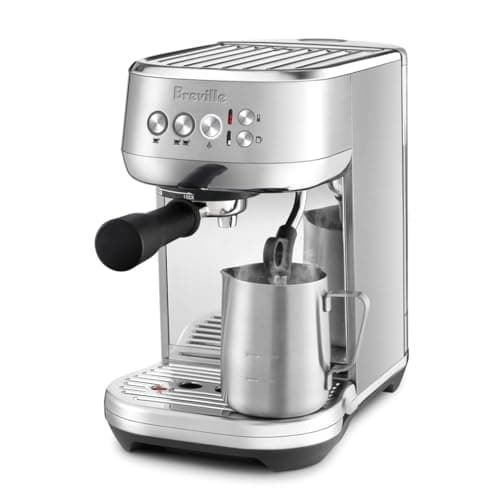
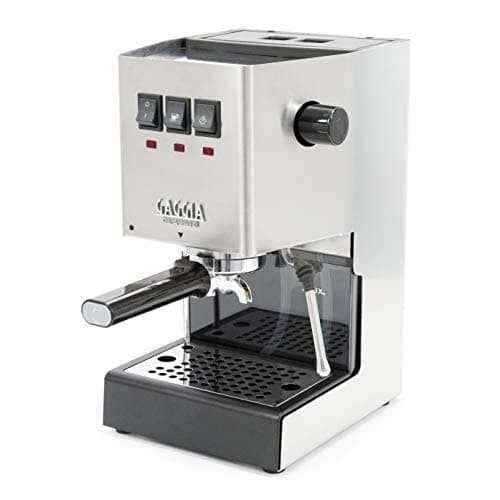
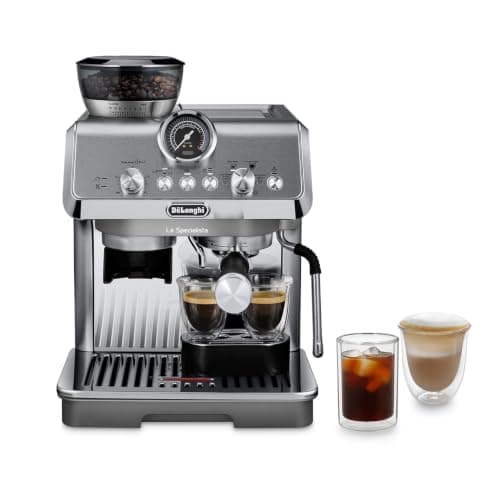
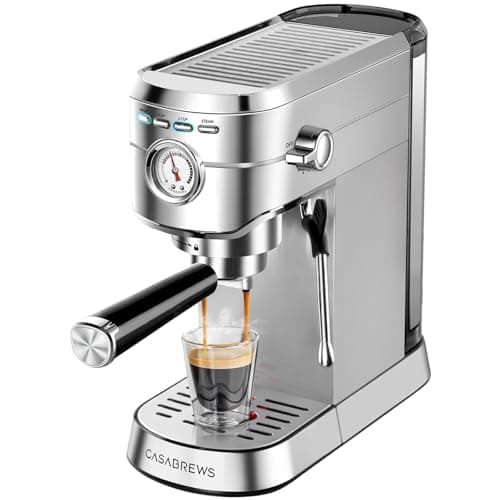
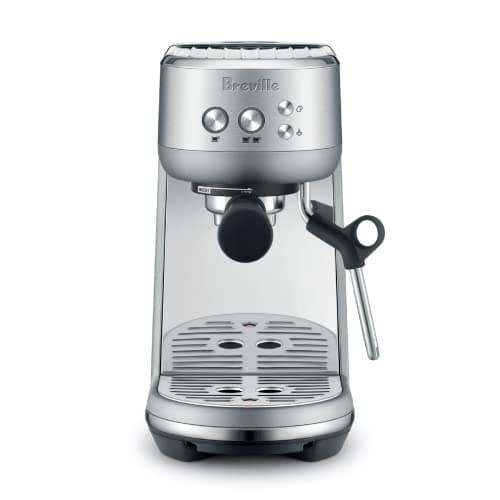
The verdict: the Breville Bambino (BES450) is the best De'Longhi Dedica alternative, because it is the only machine that keeps both of the Dedica's signature virtues — a genuinely slim body and a heat-up measured in seconds — while moving you onto a 54mm single-wall basket, which is the upgrade people leave the Dedica looking for. If the frother is your complaint rather than the shot, buy the Breville Bambino Plus and let the wand texture milk for you. The budget pick is the CASABREWS CM5418, which costs less than the Dedica and adds a pressure gauge and a bare steam wand.
First, credit where it is due, because knowing what the Dedica is good at is the only way to replace it properly. The De'Longhi Dedica is one of the narrowest real espresso machines ever sold — around six inches wide, which is why it ends up in apartments and offices where nothing else fits. It heats up on a thermoblock almost instantly, so there is no waiting ritual. And it ships with a pressurized 51mm basket plus an adjustable panarello frother, which together mean it produces a crema-topped shot and a cappuccino-style foam without demanding a good grinder or any milk technique. That combination of footprint, readiness and forgiveness is genuinely rare, and it is the reason the machine has sold for years. Our full De'Longhi Dedica review goes through it in detail.
People look for an alternative for one of three reasons, and they lead to different machines. Most commonly it is the ceiling: a pressurized basket makes its own back-pressure, so improving your grind or your technique does not improve the shot much, and at some point that stops being reassuring and starts being a wall. Sometimes it is the milk: a panarello sleeve aerates automatically, which is right for a cappuccino and cannot make the wet microfoam a latte or flat white wants. Occasionally it is the accessory market: 51mm is the thinnest of the three home portafilter sizes, so tampers, bottomless portafilters and precision baskets are harder to find than in 54mm or 58mm.
So the criteria, in the order they decide this page: shot ceiling first, because raising it is the main reason anyone is reading this; how much of the six-inch footprint you keep second; how much of the instant readiness you keep third; milk control fourth; and total cost to switch fifth, counting the grinder where the machine needs one. Every pick already appears elsewhere on this site, and key specifications, pros and cons are carried over unchanged from those entries with the source named in each pick. The metric labels are re-cut for this page's axes; the scores are judgments from published specifications and documented owner reports rather than lab measurements, because we do not have a lab. Prices are live from the price layer with the date they were read.
The three virtues, and why nothing keeps all of them
The Dedica is unusual because it is simultaneously narrow, instantly ready and forgiving. Those three properties come from three separate design decisions, and every alternative trades at least one of them away.
The width comes from a vertical layout and a small thermoblock; a machine with a real boiler or an internal grinder cannot be six inches wide. The readinesscomes from that same thermoblock having almost no thermal mass to heat — which is also why a boiler machine, with better steam and steadier shot temperature, needs a warm-up. And the forgivenesscomes from the pressurized basket, which has a single small hole that creates back-pressure on its own, so the coffee does not have to. That is why a pressurized machine still makes crema from supermarket pre-ground coffee — and also why a better grinder barely changes the cup. Our pressurized vs non-pressurized portafilter page is the full mechanism.
The five criteria, in the order they matter here
1. Shot ceiling
Can the machine get better as you get better? A single-wall basket means the coffee creates the resistance, so grind, dose and distribution all start to matter — which is both the upgrade and the obligation. A pressurized basket means they mostly do not.
2. How much of the footprint you keep
Measure before you shop. The Dedica is about six inches wide; the Bambino is 7.7; the Gaggia and the La Specialista are full-size appliances. Depth and the height needed to lift the water tank lid matter as much as width under a wall cabinet. This criterion is ranked second because for many Dedica owners it was the reason they bought a Dedica.
3. How much of the readiness you keep
A thermoblock or ThermoJet machine is ready in seconds. A boiler machine wants several minutes, and really wants longer than it says. If espresso is a weekday-morning habit rather than a weekend ritual, this is a bigger quality-of-life factor than any spec on the box.
4. Milk control
A panarello sleeve aerates for you and makes stiff foam; a bare wand makes whatever you are skilled enough to make; an automatic wand makes microfoam without the skill. If your complaint about the Dedica was the foam, the question is which of those you want rather than which is best. We rank the field on best espresso machines with a milk frother, and the technique is in how to froth milk.
5. Cost to switch
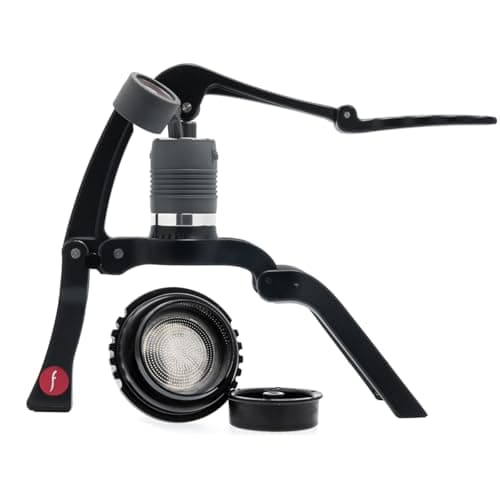
Count the grinder. Three of these six picks have a single-wall basket and no grinder, which means the real price is the machine plus a grinder that can be dialed in; one has the grinder built in; one keeps the forgiving basket and needs nothing; and the lever needs a grinder and a kettle. A bare machine that looks cheaper than an all-in-one often is not.
The 51mm accessory question
If accessories rather than the machine are your frustration, it may be worth knowing the Dedica is better served than it used to be: there are 51mm bottomless portafilters, non-pressurized baskets and matched tampers available now, and we collect them on 51mm espresso accessories and De'Longhi espresso accessories. Swapping to a non-pressurized 51mm basket turns the Dedica into a machine that rewards a good grinder, which is the cheapest version of this whole upgrade — with the honest caveat that it also removes the forgiveness, so it is only an improvement if a grinder comes with it.
What none of these alternatives will do
Three things, named plainly. None of them is narrower than the Dedica while plugged in and working — only the folding lever beats it, and only when it is put away. None of them raises the shot ceiling without also requiring a grinder you can dial in; that is not a marketing choice, it is how a single-wall basket works. And none of them makes two milk drinks back to back quickly, because they are all single-heater machines — if that is the actual problem, a super-automatic with a milk carafe is a different category and solves it.
How we picked
We did not lab-test this gear
Everyone in this category says they tested twenty machines. We have not lab-tested any of these, and we say so. What we did instead: compiled the published manufacturer specifications, read the manuals, ran the math where there was math to run (heat-up time, pressure, dose capacity, grind range, cost per cup), and scored each pick against a published rubric. The scores are judgments from documented research — not measurements we took, because we do not have a lab and we will not pretend we do. Where a number came from someone else's work, we name them in Sources.