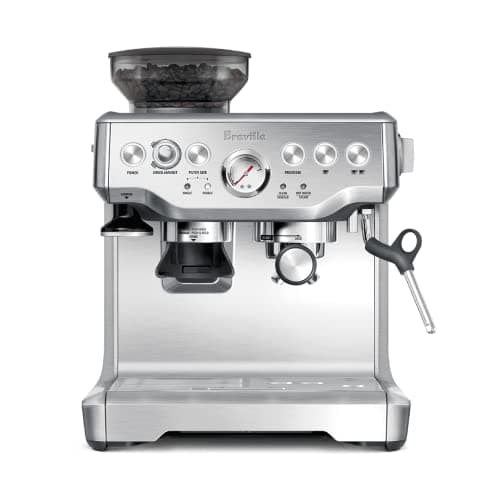
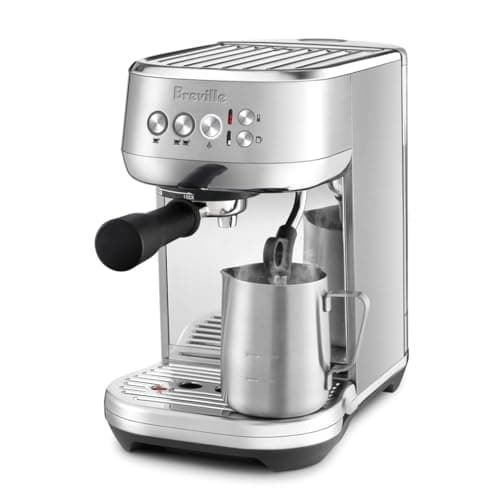
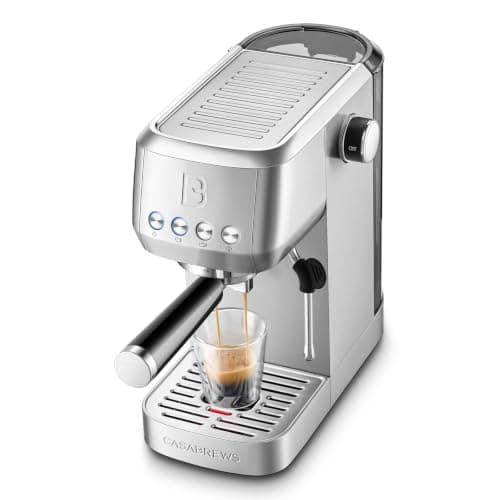
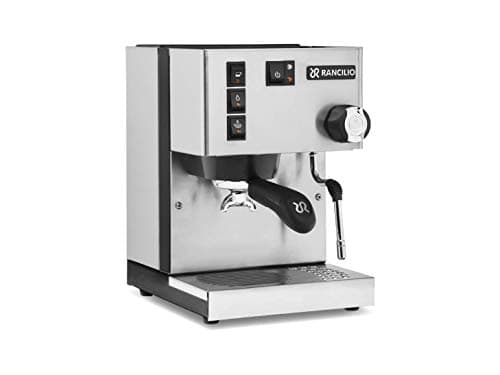
The verdict: if you want what the Classic Pro is and more of it, the Rancilio Silvia is the upgrade — the same 58mm commercial fitment and brass-group philosophy with noticeably stronger steam, built to be rebuilt rather than replaced. If the Classic Pro's missing grinder is what stopped you, the Breville Barista Express puts a grinder and a PID in the same box, which is the honest like-for-like on total cost. The budget pick is the CASABREWS 3700, the cheapest machine here with a real steam wand rather than a frothing sleeve.
Start with what the Gaggia Classic Pro actually is, because every alternative keeps some of it and drops the rest. It is a single-boiler machine with a lead-free brass boiler, a full-size 58mm commercial portafilter, a 3-way solenoid valve that releases pressure after the shot so the puck comes out dry, and a rotary steam wand. It has no PID from the factory, so you either learn to time the heating cycle or fit a kit later. It has no grinder. And it is the most modified machine in home espresso, because Gaggia built it simply enough that parts are available and the enthusiast market filled in the rest.
That adds up to a specific proposition: buy a machine that is mediocre out of the box and excellent after you learn it, with a ceiling you can raise yourself. People look past it for four reasons. Convenience— several minutes of warm-up and temperature surfing is a lot to ask on a weekday. The grinder— the real budget is the machine plus a grinder that can be dialed in, which surprises people. Milk— the wand is manual and the steam is adequate rather than strong. Price— it is not a cheap machine, and there are real portafilter machines for a fraction of it.
The ranking below is by which of those four each alternative answers, then by what it costs, then by what it gives up on the Gaggia's own terms — 58mm fitment, thermal mass and the ability to modify. Two of the six give up all three, and their entries say so. Every pick is already in our registry; specifications, pros and cons are carried over unchanged from its entry elsewhere on this site, with the source page named in each pick's body. Nothing here is a criticism of the Classic Pro — it tops our best single boiler espresso machines ranking, and if the warm-up and the separate grinder do not bother you it remains the machine to beat.
What you give up when you leave 58mm
This is the least-discussed consequence of replacing a Classic Pro and the one that costs real money over time, so it goes first.
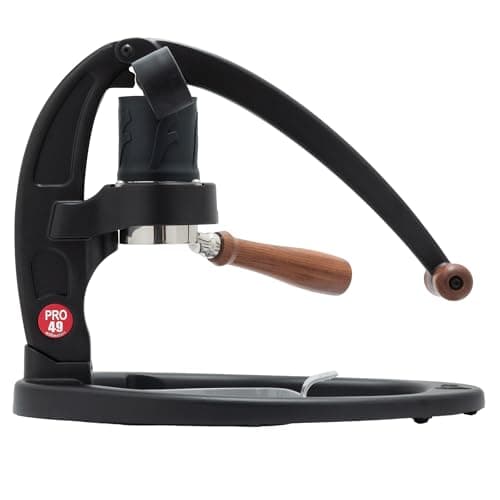
58mm is the commercial standard, which means precision baskets, tampers, bottomless portafilters, puck screens and distribution tools are abundant, competitively priced and interchangeable — our 58mm espresso accessories page is the shortlist. Only one alternative on this page keeps it: the Rancilio Silvia. Three of the others are 54mm, which is Breville's size — well served but proprietary and pricier, as 54mm espresso accessories sets out — and the Flair is 49mm, where almost nothing carries over. If you already own 58mm gear, factor replacing it into the price of every pick except the Silvia.
Pick your alternative by which limit you hit
If the warm-up and temperature surfing wore you down
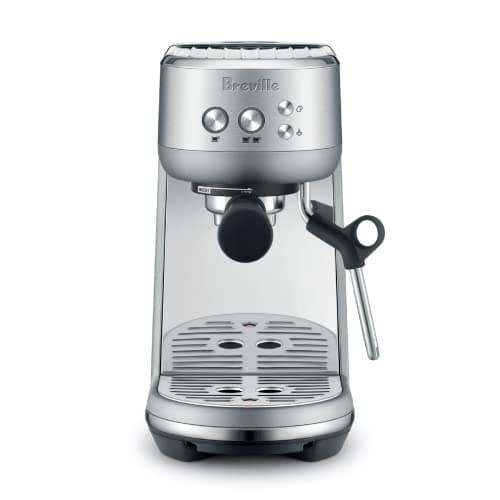
Two routes. A machine with a factory PID — the Barista Express — holds brew temperature electronically so the guesswork disappears while you keep a real portafilter. Or a flow heater — either Bambino — which is ready in about three seconds because there is almost no mass to warm, at the cost of the thermal stability a brass boiler gives you through a long shot. Worth knowing before you shop: the Silvia does not fix this. It has the same factory arrangement, so you would be buying the same learning curve at twice the price.
If the separate grinder is the problem
Only one pick solves it: the Barista Express, which has a conical burr grinder built in. Everything else on this page, including the Silvia, assumes you bring your own. Do the sum honestly before deciding — a Classic Pro plus a grinder that reaches espresso fineness is a different number from the Classic Pro's sticker price, and once you add it the all-in-one looks much more competitive. Our best grinder for the Gaggia Classic Pro page is the specific shortlist, and best coffee grinders under $200 is the wider bracket.
If milk is the problem
The Classic Pro's wand is a real wand, which is more than most machines at its price offer, but the steam is adequate rather than abundant and a single boiler makes you wait between brewing and steaming. The Silvia is the genuine upgrade here: a brass boiler feeding an unsleeved wand will texture jug after jug. The Bambino Plus solves it a different way by doing the milk for you. The Flair does not solve it at all, because it has no wand. If latte art is the goal, best espresso machines for latte art is the page built around exactly that, and how to froth milk covers the technique.
If it is simply the price
The Bambino at well under the Classic Pro keeps the thing that matters most — a real unpressurized basket — and the CASABREWS below it does not. That is the line worth understanding: a pressurized (dual-wall) basket creates its own back-pressure so almost any grind produces something crema-topped, which is forgiving and also a hard ceiling, because the coffee is no longer the thing shaping the shot. Pressurized vs non-pressurized portafilter explains how to tell which you have and what changes.
Three reasons to keep the one you have
A PID kit is cheaper than a new machine.The most common complaint about this machine — temperature drift you manage by timing — is the one with an established aftermarket fix, and fitting one is the whole reason the Classic Pro has outlived three generations of competitors. Replacing the machine to get a PID is the expensive way to solve that problem.
Gaskets and showerscreens are consumables. A Classic Pro that pours unevenly or drips after the shot is very often a tired group gasket rather than a failing machine, and parts are stocked. That is the practical payoff of buying a serviceable design, and it is worth exhausting before you shop.
The grinder may be the real weak link. If your shots are inconsistent rather than your machine, a new machine will not fix it. A single-boiler machine with a non-pressurized basket gives you nowhere to hide a grind that cannot be dialed in, and that is a grinder problem wearing a machine costume. Our best single boiler espresso machines page makes the same point across the category.
How we picked
We did not lab-test this gear
Everyone in this category says they tested twenty machines. We have not lab-tested any of these, and we say so. What we did instead: compiled the published manufacturer specifications, read the manuals, ran the math where there was math to run (heat-up time, pressure, dose capacity, grind range, cost per cup), and scored each pick against a published rubric. The scores are judgments from documented research — not measurements we took, because we do not have a lab and we will not pretend we do. Where a number came from someone else's work, we name them in Sources.