Skip to content
Tamp & Pour

Roundups & reviews · Espresso Machines

The best Gaggia espresso machines, ranked

Gaggia sells two completely different machines under one badge: a manual 58mm lever-era classic and a line of bean-to-cup automatics. Which badge you want decides everything else.

By Stephen V.Updated How we review
#ad

We earn a commission when you buy through our Amazon links, at no extra cost to you. It never changes a verdict, and we say so when the cheaper product is the better buy. How this works.

Buy the Gaggia Classic Pro (E24). It is the right Gaggia for the person who wants to learn espresso properly: a commercial-size 58mm portafilter, a brass boiler and a real steam wand, on a machine that takes practice and rewards it. If you want coffee without learning anything, you want the other half of the range instead — the Cadorna Prestige for a household where everyone orders a different drink, the Brera if counter space is the constraint and you are happy to froth milk by hand.

Gaggia is an unusually split brand, and most “best Gaggia espresso machine” searches are really two different questions wearing the same word. One half of the lineup descends from the original lever machines: a metal box with a 58mm group, no screen, no menu, and nothing between you and the shot. The other half is bean-to-cup — ceramic burrs, a drinks menu, automatic or semi-automatic milk — and shares a design language with the rest of the super-automatic market. The two halves barely compete with each other. A buyer who would love one would be frustrated by the other.

How we ranked them

Five axes, the same ones we use across the hub, scored from published manufacturer specifications and decoded feature lists rather than lab tests we did not run: coffee quality, milk system, ease and cleaning, drink range and value. Where a machine appears on another page of this site it keeps the same scores here, so two pages cannot contradict each other about the same hardware.

The one thing we weight heavily on this page that we do not on a general roundup is what the machine asks of you. The Classic Pro and the Cadorna Prestige both make good coffee; they ask for completely different amounts of attention, and choosing the wrong one is the most common way a Gaggia purchase goes wrong.

The three decisions, before the picks

1. Manual group or bean-to-cup. The Classic Pro needs a separate grinder, a tamper and a few minutes a morning. The automatics need beans, water and a wipe. There is no overlap: no automatic in the range gives you a 58mm basket, and the Classic Pro will never make a drink at the touch of a button.

2. Who steams the milk.This is the question that separates the two automatics. The Cadorna Prestige has a detachable auto-milk carafe that froths and cleans itself; the Brera has a pannarello wand, which means you texture milk by hand. People buy super-automatics specifically to stop doing that, so read the Brera’s entry carefully before you pick it on size alone.

3. Width and refill access. The Brera is about 12.4 inches wide and loads water and grounds from the front, which is why it survives in kitchens where nothing else fits. The Cadorna Prestige is a bigger body with more parts to manage. If your machine lives under a wall cabinet, measure before you read any further — our compact machine rankings make the same point for the rest of the market.

Below are the three Gaggia machines we would actually buy, ranked with the manual classic first because it is the machine the brand is known for and the one most of these searches are looking for.

The short answer

Quick picks

  • 01
    Gaggia Gaggia Classic Pro (E24)
    Gaggia Classic Pro (E24)

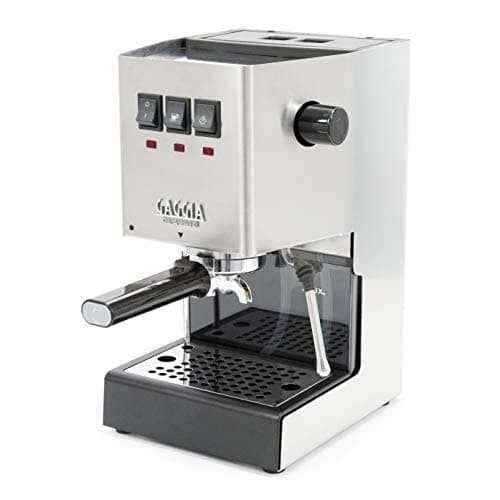
    The Gaggia people mean when they say Gaggia: a commercial 58mm portafilter, a lead-free brass boiler and a rotary steam wand on a simple, repairable single-boiler machine that mods beautifully as your skills grow.

    7.7Best overall Gaggia — for someone learning espresso properly
  • 02
    Gaggia Gaggia Cadorna Prestige
    Gaggia Cadorna Prestige

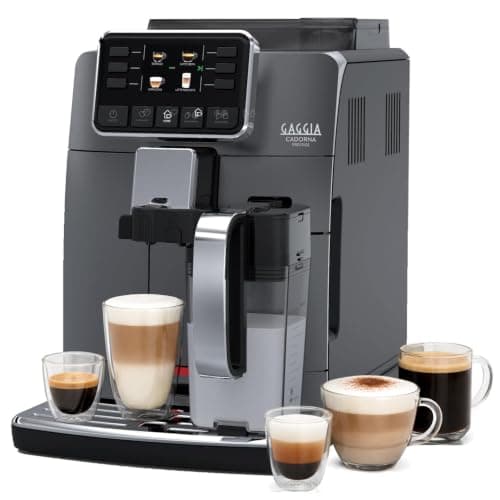
    The automatic end of the range done properly: fourteen one-touch drinks, a fridge-storable auto-milk carafe, a color screen and four saved profiles, for a household where nobody orders the same thing.

    8.0Best Gaggia automatic — for a multi-drink household
  • 03
    Gaggia Gaggia Brera
    Gaggia Brera

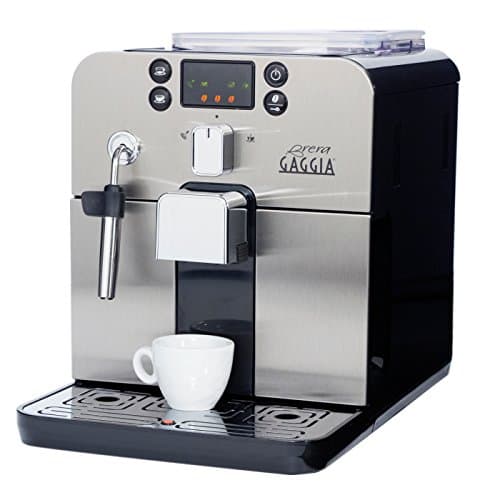
    The small one: a genuinely compact bean-to-cup with 100% ceramic burrs and front-loading refills, with a manual pannarello wand instead of an automatic milk system.

    7.2Best small-kitchen Gaggia — if you do not mind frothing milk yourself

#ad · Live prices from the Amazon Product API, as of October 18, 2026. Where we have no verified live price, we show none — a gap beats a number that has rotted.

In detail

The picks, in full

01
Gaggia Gaggia Classic Pro (E24)

Best overall Gaggia — for someone learning espresso properly

Gaggia Classic Pro (E24)

58mm commercial portafilterLead-free brass boiler3-way solenoid valveRotary steam wand
7.7/10

The Gaggia people mean when they say Gaggia: a commercial 58mm portafilter, a lead-free brass boiler and a rotary steam wand on a simple, repairable single-boiler machine that mods beautifully as your skills grow.

Shot quality
8
Steam power
7.5
Build
8.5
Ease of use
6.5
Value
8

Pros

  • Full-size 58mm portafilter shares accessories with commercial gear
  • Legendary modding platform — add a PID later for precise temperature
  • Simple, repairable, and built to last for years

Cons

  • No PID out of the box — temperature surfing takes practice
  • Single boiler; a pause between pulling and steaming

Don't buy this if…

…you want it to work perfectly out of the box with no learning curve — the reward here comes from practice (and, for many owners, mods).

Who it is for: the reader who wants to get better at espresso rather than skip it. The 58mm group is the practical reason to choose this over anything else Gaggia sells — every basket, tamper, puck screen and bottomless portafilter sized for commercial machines fits it, which is a different accessory world from the proprietary 54mm and 51mm sizes. Budget for a grinder in the same breath as the machine: a Classic Pro fed by a blade grinder is worse than a cheap pressurised machine, which is why our grinder pairings for the Classic Pro exist. It has no PID from the factory, so you manage temperature by timing your flush — a learnable habit, and the reason the modding community around this machine is as large as it is.

$458.19View on Amazon

Price as of October 18, 2026. Prices change — Amazon's at checkout is the one that counts.

#ad · we may earn a commission from this link to Gaggia Classic Pro (E24)

02
Gaggia Gaggia Cadorna Prestige

Best Gaggia automatic — for a multi-drink household

Gaggia Cadorna Prestige

14 one-touch drinksAuto-milk carafe (0.6L, fridge-storable)100% ceramic grinder, 10 settingsColor TFT screen, 4 profiles, twin-cup
8.0/10

The automatic end of the range done properly: fourteen one-touch drinks, a fridge-storable auto-milk carafe, a color screen and four saved profiles, for a household where nobody orders the same thing.

Coffee quality
8
Milk system
8
Ease & cleaning
7.5
Drink range
9
Value
7.5

Pros

  • Fourteen programmed drinks, including flat white, cortado and cafe au lait, all at one touch
  • The auto-milk carafe froths and cleans itself, and lifts out to live in the fridge between uses
  • Color screen with four user profiles saves each person's strength and size, and it brews two cups at once

Cons

  • You pay a clear step up in price for the breadth
  • The milk carafe and larger body mean more parts and a bigger footprint to manage
  • Overkill if the household really only drinks two or three of the fourteen

Don't buy this if…

…you only ever make espresso and cappuccino. You would be paying for a fourteen-drink menu and a color screen you won't use, when a simpler De'Longhi or Philips makes the same two drinks.

Who it is for:the house where one person drinks a flat white, one drinks a latte macchiato and one drinks a long black, and nobody wants to learn to steam milk. Note that its overall score sits above the Classic Pro’s while it ranks below it here: the five axes average out in its favour because it is easier and makes more drink types, and we still put the Classic Pro first because this page is about which Gaggia to buy and the manual machine is what most people searching for one actually want. We would rather show you that tension than quietly re-score a machine to tidy the order. If the drinks menu is the appeal but the price is not, the cheaper bean-to-cup bracket covers the same ground for less.

$1,102.96View on Amazon

Price as of October 18, 2026. Prices change — Amazon's at checkout is the one that counts.

#ad · we may earn a commission from this link to Gaggia Cadorna Prestige

03
Gaggia Gaggia Brera

Best small-kitchen Gaggia — if you do not mind frothing milk yourself

Gaggia Brera

100% ceramic burrs, 5 grind stepsPannarello manual steam wand~12.4in wide, front-access refills250g bean hopper, Rapid Steam
7.2/10

The small one: a genuinely compact bean-to-cup with 100% ceramic burrs and front-loading refills, with a manual pannarello wand instead of an automatic milk system.

Coffee quality
7.5
Milk system
6.5
Ease & cleaning
7.5
Drink range
6.5
Value
8

Pros

  • One of the smallest bean-to-cup machines, about 12.4 inches wide, with water and dregs loaded from the front
  • 100% ceramic burrs and Rapid Steam for quick back-to-back drinks
  • The manual pannarello gives a bit of hands-on control over milk that fully automatic carafes don't

Cons

  • Milk is manual: the pannarello wand is the opposite of one-touch, which is why many buy a super-auto
  • Only five grind steps, and an older platform with mixed long-term reliability reports
  • No color screen, user profiles or specialty-drink menu

Don't buy this if…

…you bought a super-automatic specifically to avoid steaming milk. The Brera hands that job back to you, so an automatic-milk De'Longhi or Philips is the better fit.

Who it is for: the person with no counter space who still wants beans-in, coffee-out convenience and does not mind texturing milk by hand. Front-loading water and dregs is the detail that makes a narrow machine usable, because a top-filling tank under a cabinet is how a compact machine stops being compact. Five grind steps is fewer than the rest of the range, and the platform is older with mixed long-term reliability reports, so weigh those honestly. Choose it for the width and the ceramic burrs, not for hands-free lattes.

$499.00View on Amazon

Price as of October 18, 2026. Prices change — Amazon's at checkout is the one that counts.

#ad · we may earn a commission from this link to Gaggia Brera

The Gaggia lineup side by side

MachineTypeGroup / basketMilkGrinderSeparate grinder needed?
Classic Pro (E24)Manual, single boiler58mm commercial portafilterRotary steam wand (you steam)NoneYes — and it is not optional
Cadorna PrestigeBean-to-cupInternal brew unitAuto-milk carafe, 0.6L, fridge-storable100% ceramic, 10 settingsNo
BreraBean-to-cupInternal brew unitPannarello wand (you steam)100% ceramic, 5 settingsNo

Why the 58mm group is the Classic Pro’s real feature

Entry machines mostly ship 51mm or 54mm portafilters, and the accessories for those sizes are a smaller, more proprietary market. 58mm is the commercial standard, which means a Classic Pro owner can fit precision baskets, a bottomless portafilter, a puck screen and a properly sized tamper from dozens of makers rather than a handful. It is also why the machine holds its value: the parts keep existing. We list the specific pieces worth owning on Gaggia Classic Pro accessories and 58mm espresso accessories.

The no-PID question, answered honestly

The Classic Pro has no PID temperature controller from the factory. It heats the boiler with a thermostat, which means brew temperature drifts within a band rather than holding a set point, and you compensate by timing a short flush before you pull. That is a habit, not a defect, and plenty of excellent coffee is made that way. If the idea of managing temperature by stopwatch sounds like the opposite of fun, that is useful self-knowledge: buy a machine with a PID instead, and our under-$1,000 rankings list the ones that have one.

Where Gaggia sits against Breville and De’Longhi

Breville’s equivalents bundle a grinder and automate dosing, which gets you to a drinkable shot faster and costs you the 58mm accessory ecosystem; De’Longhi’s bean-to-cup line generally beats Gaggia’s on milk automation at the same price. The honest summary is that Gaggia wins on the manual machine and is competitive rather than dominant on the automatics. We put the closest head-to-head side by side on Gaggia Classic Pro vs Breville Bambino Plus.

What to budget beyond the machine

For the Classic Pro: a burr grinder that can hold an espresso-fine setting, a 58mm tamper, a 0.1g scale and a knock box. That is the difference between a machine that makes espresso and a machine that makes disappointment, and it is why we treat the grinder as part of the purchase rather than an upgrade. For either automatic: a water filter or filtered water, descaler, and the discipline to run the cleaning cycle the machine asks for. Scale is the single biggest killer of bean-to-cup machines, which we go through in how long espresso machines last.

How we picked

We did not lab-test this gear

Everyone in this category says they tested twenty machines. We have not lab-tested any of these, and we say so. What we did instead: compiled the published manufacturer specifications, read the manuals, ran the math where there was math to run (heat-up time, pressure, dose capacity, grind range, cost per cup), and scored each pick against a published rubric. The scores are judgments from documented research — not measurements we took, because we do not have a lab and we will not pretend we do. Where a number came from someone else's work, we name them in Sources.
Questions

Frequently asked

Which Gaggia espresso machine is best?
For most people searching the term, the Gaggia Classic Pro (E24) — it has the 58mm commercial portafilter, brass boiler and steam wand that the brand is known for. If you want one-touch drinks instead of a learning curve, the Cadorna Prestige is the better buy, and the Brera is the choice when width is the constraint.
Is the Gaggia Classic Pro automatic?
No. It is a manual single-boiler machine: you grind, dose, tamp, start the pump and steam the milk yourself. Gaggia's automatic machines are a separate line — the Cadorna, Brera, Magenta and Anima families — which grind and brew internally.
Do I need a grinder for a Gaggia Classic Pro?
Yes, and it matters more than the machine. The Classic Pro has no grinder, and espresso needs a burr grinder that holds a fine, repeatable setting. See our grinder pairings for the Classic Pro.
What is the difference between the Gaggia Brera and the Cadorna Prestige?
Milk and menu. The Cadorna Prestige has an automatic milk carafe and fourteen one-touch drinks; the Brera uses a manual pannarello steam wand and has a much shorter menu. The Brera is the smaller machine, at about 12.4 inches wide with front-loading refills.
Does the Gaggia Classic Pro have a PID?
Not from the factory. Brew temperature is thermostat-controlled, so owners flush briefly before pulling to land in the right band. A PID is the most common aftermarket modification to the machine, which is part of why its platform has such a long life.

Keep reading

Receipts

Sources

We do not run a testing lab, and we do not pretend to. Where a measured number came from someone else's work, we name them and link them. Where we could not verify something, we say so on the page rather than quietly leaving it out. Read our full method.