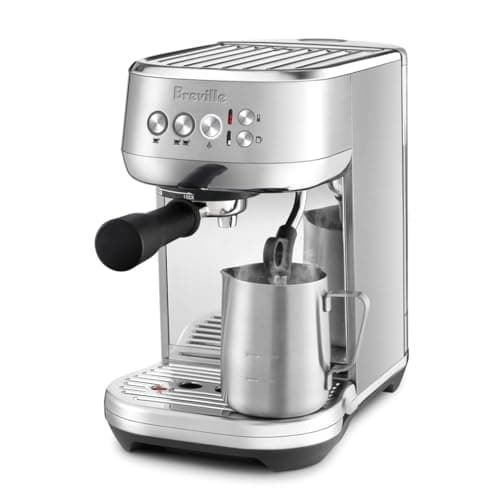
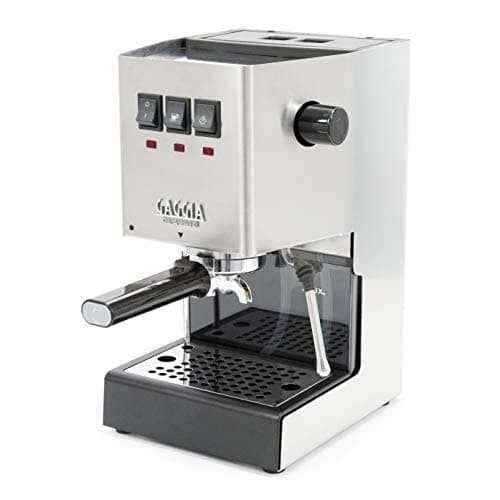
These two land in the same shopping cart constantly, and the reason is coincidence: they sit near each other on price and nowhere near each other on philosophy. The Gaggia Classic Pro is a 58mm commercial-fitment single boiler with a brass boiler and a three-way solenoid valve — a small cafe machine, shrunk. The Breville Bambino Plus is a 54mm thermoblock machine that is ready in about three seconds and steams your milk to a chosen temperature without you touching the wand. Neither is better. They are answers to different questions.
The short answer
Buy the Gaggia Classic Pro if espresso is going to be a hobby: you want to learn to steam by hand, you want 58mm parts that fit every commercial accessory and every future machine, and you are happy to wait for it to warm up. Buy the Bambino Plus if the drink is the point rather than the process: you mostly make lattes, your counter is tight, you want the machine ready before the kettle would have boiled, and you would rather the milk be handled.
One line settles it for a lot of people. If the thought of spending a month learning to texture milk sounds like the fun part, the Gaggia is your machine. If it sounds like a chore standing between you and a flat white, the Bambino Plus is.
Side by side
| | Gaggia Classic Pro (E24) | Breville Bambino Plus (BES500) |
|---|
| Portafilter | 58mm commercial, non-pressurized | 54mm Breville, non-pressurized baskets included |
| Heating | Lead-free brass single boiler | ThermoJet thermoblock |
| Heat-up | Minutes, and longer again for the group to stabilize | About 3 seconds |
| Milk | Rotary commercial-style wand — entirely your technique | Automatic wand, 3 temperatures and 3 textures |
| Spent puck | Dry — three-way solenoid valve releases pressure | Wet and loose |
| Temperature control | Thermostat; PID is an aftermarket mod | Digital control from the factory |
| Footprint | Around 9.5 inches wide, and heavy | Around 7.7 inches wide, and light |
| Grinder | None | None |
| Serviceability | Excellent — a mod and repair community with parts for everything | Limited — a sealed appliance |
58mm versus 54mm is the decision you are actually making
This is the most consequential row in that table and the one buyers most often skip. 58mm is the commercial standard: every bottomless portafilter, every precision basket, every puck screen, every tamper on the large end of the accessory market fits it, and if you ever buy an E61 machine, the gear you have already bought moves across with you. Breville’s 54mm is its own house size — well supported, cheaper to kit out, but a dead end the day you leave the brand. If you are the kind of buyer who ends up with a drawer of espresso tools, the Gaggia’s fitment is worth real money over five years. The size question in general is in our tamper size guide, and the 58mm shopping list is in 58mm espresso accessories.
Milk: the honest trade
The Gaggia’s steam is strong and the wand is a bare commercial-style rotary wand, which means it can make genuinely excellent microfoam and will make genuinely awful foam for your first week. Steam arrives after a switch and a wait, because a single boiler has to come up to steam temperature after brewing. The Bambino Plus puts a temperature sensor on the jug, injects air automatically and stops when it reaches your setting — consistently good microfoam on the first morning, every morning, with no learning and no plateau to climb.
The catch is symmetrical. The Gaggia rewards practice and can be taken further than the Bambino ever goes, including latte art that depends on how you move the jug. The Bambino hands you a finished texture and quietly removes the reason to learn. If you want to learn anyway, the method is in how to froth milk; if you do not, that is a legitimate preference rather than a failing, and the Bambino Plus is built for it.
The thing nobody mentions: the three-way valve
The Gaggia has a three-way solenoid valve. When the shot stops, the valve dumps the residual pressure in the group into the drip tray, so the puck comes out as a dry disc that knocks straight into a knock box. The Bambino Plus does not have one, so the puck stays wet and sloppy and needs a rinse or a scoop. It is a tiny thing that happens twice a day for years, and it is the single most common thing Gaggia owners cite when asked what they would miss.
Speed, and whether you care
Three seconds versus minutes sounds decisive, and for some households it is. The Gaggia is slower than the clock suggests, too: the pump is ready in a few minutes, but the heavy brass group needs longer than that to stop stealing heat from your shot, which is why experienced owners leave it on for twenty minutes or run a blank shot first. The Bambino Plus genuinely is ready the moment you are. If one person makes one drink at a predictable time, the Gaggia’s warm-up is just part of the ritual. If four people want drinks across ninety minutes, the Bambino wins that morning every single day.
What each becomes in five years
The Gaggia Classic Pro has the most active modification and repair community of any machine at this price. Owners fit PID kits for stable brew temperature, adjust the over-pressure valve down to nine bars, swap in silicone gaskets and better shower screens, and keep the machines running for a decade or more because every part is available. That is a real asset if you like owning a machine you can open.
The Bambino Plus is an appliance. It will serve you well and quietly, and when something inside it fails, the realistic answer is a new machine. Neither path is wrong — but if the idea of a machine you tinker with appeals at all, only one of these two offers it. The upgrade ladder past both is in machines under $1,000.
Budget for the grinder, because neither includes one
Both machines are half a setup. A great machine fed by a bad grinder makes bad espresso, and at this price the grinder is where the next few hundred dollars should go rather than into a nicer machine. Our ranked list is best espresso grinders; if you would rather spend less, a good hand grinder genuinely beats a cheap electric one at the fine end. If you do not want to buy a separate grinder at all, that is an argument for a different machine entirely — the Barista Express bundles one, and the whole Breville ladder is ranked in best Breville espresso machines.
If you are torn, these three questions settle it
Do you want to learn to steam milk? Yes means Gaggia. No means Bambino Plus. That is the cleanest split between these two machines and it decides most purchases on its own.
Will you still own this machine in eight years? If yes, the Gaggia’s brass boiler, 58mm fitment and parts availability are worth the patience. If you expect to replace it when something better comes along, the Bambino Plus costs you nothing in lost investment.
How many drinks, at how many different times? One or two at a predictable hour suits the Gaggia. A household of staggered requests suits the three-second machine.
The modded Gaggia question
A great deal of advice online assumes you will fit a PID kit and adjust the over-pressure valve to nine bars. Both mods are real improvements and both are well documented, and a modded Classic Pro is a better espresso machine than a Bambino Plus. But be honest with yourself about whether you will do it: an unmodded Classic Pro is a thermostat machine whose brew temperature drifts, and if you were never going to open it, you are buying the harder machine without the payoff. If a soldering iron sounds like a nice weekend, buy the Gaggia. If it sounds like a reason to procrastinate, do not price the mod into your decision.
What to buy alongside either one
Both need a grinder, and that is the big one. After that, a 0.1g scale and a WDT tool do more for your shot than any other accessory at this level, on both machines. For the Gaggia, a 58mm tamper that actually matches your basket is worth getting right the first time — the sizes are laid out in our tamper size guide. For the Bambino Plus, buy a 12oz pitcher rather than a large one: the automatic wand handles small volumes best, and the reasons are in best milk frothing pitchers.
The machines that beat both, and what they cost
If this comparison has convinced you that you want the Gaggia’s fitment and the Bambino’s convenience in one box, that machine exists and it costs considerably more — you are describing a dual boiler with a PID, which is a different budget entirely and is ranked in best dual boiler espresso machines. If instead you want a grinder included and are happy to stay at 54mm, that is the Barista Express. And if you have realized you do not want a portafilter in your life at all, read semi vs super-automatic before you spend anything.