Skip to content
Tamp & Pour

Roundups & reviews · Espresso Machines

Breville Bambino alternatives, ranked

The Bambino's pitch is a real 54mm shot from a machine six inches wide that is ready in three seconds. Five machines that match it on footprint, on build, on price, or on taking the work away.

By Stephen V.Updated How we review
#ad

We earn a commission when you buy through our Amazon links, at no extra cost to you. It never changes a verdict, and we say so when the cheaper product is the better buy. How this works.

The verdict: the Gaggia Classic Pro is the alternative most Bambino shoppers should look at hardest: it gives up the three-second heat-up and gains a brass boiler, a commercial 58mm portafilter and the ability to add PID temperature control later, for a bracket more. If the Bambino appealed because of its footprint, the De'Longhi Dedica Deluxe is narrower and costs well under half as much. The budget pick is the CASABREWS 3700, the cheapest machine here with a genuine steam wand rather than a frothing sleeve.

First, what the Bambino is. Breville publishes it as a 54mm portafilter machine dosing 18g, driven by a 15-bar Italian pump that does a low-pressure pre-infusion before extracting at 9 bar, with a manual microfoam steam wand and one-touch 1- and 2-cup volumetric shot control. The heating system is Breville's ThermoJet — a digitally printed heating circuit rather than a boiler — which Breville states reaches extraction temperature in about three seconds. The machine measures 11.9 x 6.1 x 13.5 inches. It ships with single- and dual-wall baskets, a portafilter, a tamper, a milk jug, a steam-wand cleaning tool and descaling powder. It has no grinder.

That spec sheet is a specific set of choices, and it tells you what to look for in an alternative. The Bambino is excellent at being fast, small and simple, and genuinely good at dosing 18g into a real portafilter — which is more than most machines at its price do. What it is not is thermally massive, repairable, or part of the commercial accessory ecosystem. People search for alternatives for four reasons: they want something better built, something cheaper, something smaller, or something that does the work for them. Each pick below is matched to one of those and says which.

We rank by how well each machine answers a stated Bambino strength or beats it on price, not by which machine is objectively best. Nothing here disparages the Bambino — it is a well-specified machine and we have reviewed it favourably in our Breville Bambino review. If what you are really choosing between is the Bambino and the Bambino Plus, that is a different question and it is answered in Breville Bambino vs Bambino Plus; the Plus is not on this page because it is the same machine line rather than an alternative to it. Each pick's specifications, pros and cons are carried over unchanged from its entry elsewhere on this site.

The short answer

Quick picks

  • 01
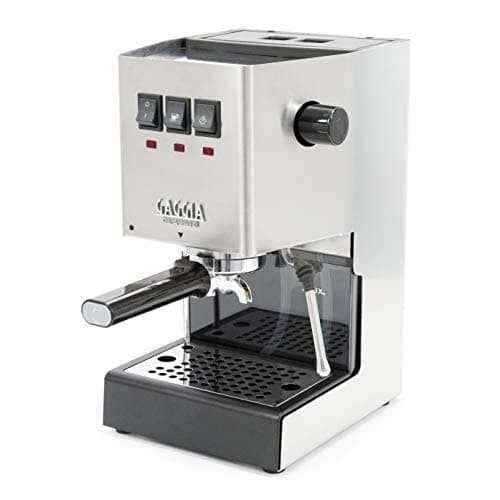
    Gaggia Gaggia Classic Pro (E24)
    Gaggia Classic Pro (E24)

    The alternative for someone who wants to keep the machine for a decade: a brass boiler, a commercial 58mm portafilter and a 3-way solenoid valve, with a PID upgrade available later.

    7.8Best if you want better build
  • 02
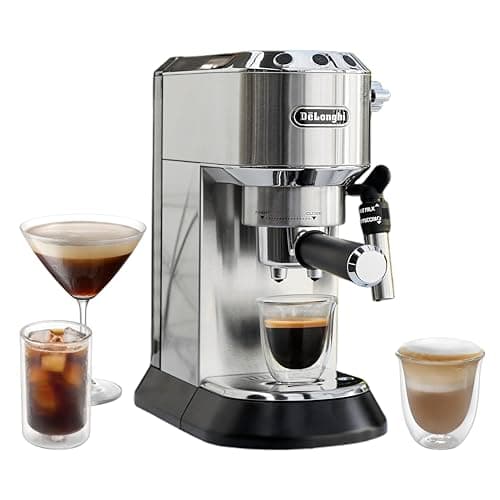
    De'Longhi De'Longhi Dedica Deluxe (EC685)
    De'Longhi Dedica Deluxe (EC685)

    The cheaper small machine: six inches wide, stainless, fast-heating, with simple one- and two-cup buttons — the footprint argument for the Bambino at well under half the price.

    7.3Best cheaper machine with the same footprint
  • 03
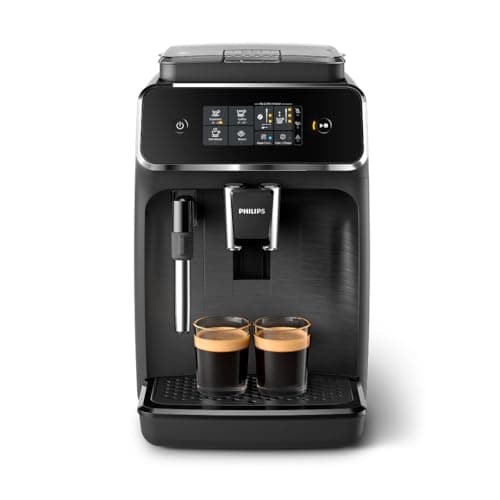
    Philips Philips 2200 Series (EP2220/14)
    Philips 2200 Series (EP2220/14)

    The alternative that removes the work: a genuine bean-to-cup machine with a ceramic grinder built in, so there is no dose, no tamp and no second purchase — though the milk is still your job.

    7.1Best if you don't want to grind and tamp
  • 04
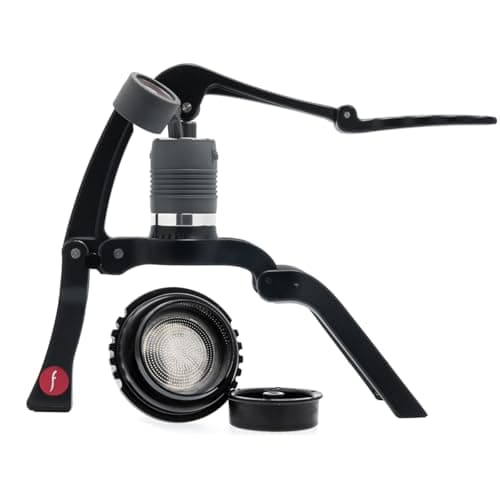
    Flair Flair 2GO (collapsible lever)
    Flair 2GO (collapsible lever)

    The alternative that beats the Bambino on footprint outright: a real lever with a pressure gauge that folds into a case, so it takes no permanent counter space at all.

    7.3Best for no counter space at all
  • 05
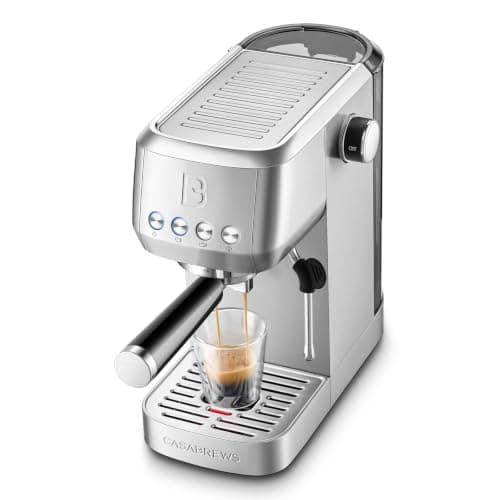
    CASABREWS CASABREWS 3700 Essential Espresso Machine
    CASABREWS 3700 Essential Espresso Machine

    The budget pick: a stainless-bodied machine with a genuine steam wand rather than a frothing sleeve, for a fraction of the Bambino — the cheapest thing here that does the job.

    6.2Budget pick

#ad · Live prices from the Amazon Product API, as of November 7, 2026. Where we have no verified live price, we show none — a gap beats a number that has rotted.

In detail

The picks, in full

01
Gaggia Gaggia Classic Pro (E24)

Best if you want better build

Gaggia Classic Pro (E24)

58mm commercial portafilterLead-free brass boiler3-way solenoid valveRotary steam wand
7.8/10

The alternative for someone who wants to keep the machine for a decade: a brass boiler, a commercial 58mm portafilter and a 3-way solenoid valve, with a PID upgrade available later.

Answers a Bambino strength
7
Build & repairability
9
Shot ceiling
8.5
Ease of use
6.5
Value
8

Pros

  • A real brass boiler with thermal mass, so brew temperature is held by a heated vessel rather than tracking the flow rate through a circuit
  • Full-size 58mm portafilter shares accessories with commercial gear, so precision baskets, tampers and bottomless portafilters are cheap and abundant
  • Can be fitted with a PID controller later, which no ThermoJet machine can accept
  • The 3-way solenoid valve releases pressure after the shot, so the puck comes out dry
  • Simple, repairable, and built to last for years

Cons

  • Takes several minutes to come to temperature where the Bambino takes seconds
  • No PID out of the box — temperature surfing takes practice
  • Heavier and deeper than the Bambino, and it costs a bracket more
  • Manual steam wand with no automatic milk option at all

Don't buy this if…

…you want it to work perfectly out of the box with no learning curve — the reward here comes from practice (and, for many owners, mods). The Bambino is the easier machine on day one and we would not pretend otherwise.

Who it is for: the reader who was drawn to the Bambino because it makes a real 18g shot, and then started wondering how far that goes. Specifications, pros and cons are carried over unchanged from our Gaggia Classic Pro review. The trade is clean enough to state in one sentence: you give up near-instant heat-up and gain thermal mass, a commercial accessory standard and an upgrade path. Which side of that you land on depends on whether espresso is a hobby or a routine. The head-to-head against the Bambino's automatic-milk sibling is in Gaggia Classic Pro vs Breville Bambino Plus, and the broader architecture question is in best single boiler espresso machines.

$457.21View on Amazon

Price as of November 7, 2026. Prices change — Amazon's at checkout is the one that counts.

#ad · we may earn a commission from this link to Gaggia Classic Pro (E24)

02
De'Longhi De'Longhi Dedica Deluxe (EC685)

Best cheaper machine with the same footprint

De'Longhi Dedica Deluxe (EC685)

Pressurized portafilter (51mm)Slim 6-inch widthFast thermoblock heat-upAdjustable cappuccino frother
7.3/10

The cheaper small machine: six inches wide, stainless, fast-heating, with simple one- and two-cup buttons — the footprint argument for the Bambino at well under half the price.

Answers a Bambino strength
8.5
Build & repairability
5
Shot ceiling
6
Ease of use
8.5
Value
8.5

Pros

  • One of the narrowest real espresso machines — essentially the same counter width as the Bambino
  • Quick heat-up and simple one/two-cup buttons, which is the Bambino's own interface idea
  • Costs well under half the Bambino, which leaves real money for the grinder the Bambino also requires
  • Nicer build and frother than the entry Stilosa

Cons

  • Pressurized basket, so the shot ceiling is lower than the Bambino's 18g non-pressurized basket
  • 51mm accessories, the thinnest of the three home portafilter markets
  • The frother is an adjustable sleeve rather than a bare wand, so true microfoam is harder than on the Bambino
  • No grinder, same as the Bambino

Don't buy this if…

…counter space isn't your constraint — if you have the room and the budget, the Bambino's non-pressurized 18g basket and bare steam wand have a meaningfully higher ceiling.

Who it is for:the reader whose reason for looking at the Bambino was "it is the only one that fits." Specifications, pros and cons are carried over unchanged from our De'Longhi Dedica review. It answers the footprint argument directly — it is the same six inches wide — and it answers the price argument hard. Be clear about what it costs you: the pressurized basket does some of the extraction work that a grind would otherwise do, which makes it forgiving of a mediocre grinder and caps how good the shot gets. If you own a grinder that can be dialed in, that cap is a real loss. If you do not, it is a feature for now. 51mm gear is listed in De'Longhi espresso accessories.

$199.99View on Amazon

Price as of November 7, 2026. Prices change — Amazon's at checkout is the one that counts.

#ad · we may earn a commission from this link to De'Longhi Dedica Deluxe (EC685)

03
Philips Philips 2200 Series (EP2220/14)

Best if you don't want to grind and tamp

Philips 2200 Series (EP2220/14)

100% ceramic burr grinder2 one-touch coffees plus hot waterClassic steam frother — not one-touch milkRemovable brew group; AquaClean filter
7.1/10

The alternative that removes the work: a genuine bean-to-cup machine with a ceramic grinder built in, so there is no dose, no tamp and no second purchase — though the milk is still your job.

Answers a Bambino strength
7.5
Build & repairability
6
Shot ceiling
5.5
Ease of use
8.5
Value
8

Pros

  • Genuinely complete — beans in, coffee out, nothing else to buy, where a Bambino is only half a setup until you add a grinder
  • The brew group lifts out and rinses under the tap, the maintenance step cheap machines usually seal away
  • Ceramic burrs, and an AquaClean filter Philips rates for up to 5,000 cups between descales
  • Touch display with adjustable strength and cup size, so it is not a single-button appliance

Cons

  • The milk system is a classic steam frother, not a one-touch carafe — you froth in a jug yourself, same as on the base Bambino
  • You cannot influence the shot beyond grind size and strength, where the Bambino lets you change dose, grind, tamp and basket
  • Only two coffee presets; the drink menu is short
  • Plastic-bodied and openly built to a price, and wider than the Bambino

Don't buy this if…

…you want one-touch cappuccinos. This is the model where the milk is still manual, which defeats the point for a lot of super-automatic buyers — step up to a LatteGo or LatteCrema machine instead.

Who it is for:the reader who added up the real cost of a Bambino — machine plus grinder — and asked whether a machine that includes the grinder is a better use of the money. Specifications, pros and cons are carried over unchanged from our semi vs super automatic comparison. That arithmetic is genuinely close: a Bambino plus a grinder from our best coffee grinders under $200 ranking lands near this machine's price. What you are really choosing is control versus convenience, and it is worth being honest that the Bambino's ceiling is higher: you can change dose, grind, distribution and tamp on it, and on a bean-to-cup you cannot. The full category is in best super-automatic espresso machines.

$369.99View on Amazon

$389.005% off

Price as of November 7, 2026. Prices change — Amazon's at checkout is the one that counts.

#ad · we may earn a commission from this link to Philips 2200 Series (EP2220/14)

04
Flair Flair 2GO (collapsible lever)

Best for no counter space at all

Flair 2GO (collapsible lever)

40mm bottomless portafilter, 12-18g60ml water, ~45ml yield6-9 bar with pressure gaugeCollapsible frame; 9.5 x 5.25 x 4in packed
7.3/10

The alternative that beats the Bambino on footprint outright: a real lever with a pressure gauge that folds into a case, so it takes no permanent counter space at all.

Answers a Bambino strength
7
Build & repairability
8
Shot ceiling
8.5
Ease of use
6
Value
7

Pros

  • Folds down to roughly 3.5 x 7 x 3.25in, so unlike any machine here it does not live on the counter
  • A pressure gauge and a lever give you control over the pressure profile that no pump machine on this page offers
  • Thin-walled no-preheat cylinder skips the warm-up step that other lever makers require
  • Bottomless 2-in-1 portafilter takes a 12-18g dose — a genuine double, not a token one
  • Stainless brewing components and a silicone sleeve, so nothing critical is plastic

Cons

  • 60ml water and a ~45ml yield is one shot per fill, full stop
  • No steam wand at all, so milk drinks need a separate frother
  • Still needs a kettle, a grinder and a flat surface to press against
  • Costs meaningfully more than a hand pump that also travels

Don't buy this if…

…milk drinks are most of what you make. There is no steam wand here, and that is the one Bambino feature a lever cannot replace.

Who it is for: the reader for whom even six inches of permanent counter is six inches too many, and who drinks espresso rather than lattes. Specifications, pros and cons are carried over unchanged from our best manual espresso makers ranking. It is the one pick here that beats the Bambino at its own headline game, because it does not occupy the counter at all. The honest cost is the steam wand: the Bambino makes microfoam, and a Flair makes espresso and nothing else. If you want milk, you are buying a separate frother from best milk frothers on top, and at that point the footprint advantage has partly evaporated.

$169.00View on Amazon

$199.0015% off

Price as of November 7, 2026. Prices change — Amazon's at checkout is the one that counts.

#ad · we may earn a commission from this link to Flair 2GO (collapsible lever)

05
CASABREWS CASABREWS 3700 Essential Espresso Machine

Budget pick

CASABREWS 3700 Essential Espresso Machine

Manual steam wand20-bar pumpStainless steel housingPressurized portafilter
6.2/10

The budget pick: a stainless-bodied machine with a genuine steam wand rather than a frothing sleeve, for a fraction of the Bambino — the cheapest thing here that does the job.

Answers a Bambino strength
6
Build & repairability
4
Shot ceiling
5
Ease of use
7.5
Value
8.5

Pros

  • A real wand at a price where most machines fit a panarello sleeve, so milk practice is genuinely possible
  • Stainless housing rather than the all-plastic bodies common at this price
  • Pressurized basket keeps results drinkable while your grinder catches up
  • Leaves almost the whole Bambino budget free for a grinder, which changes the cup more than the machine does

Cons

  • Pressurized portafilter caps shot quality no matter what you grind — the Bambino's 18g non-pressurized basket is the real difference between the two
  • Steam power is modest, so texturing takes patience
  • 20 bar is a pump maximum, not a brew pressure — espresso is extracted at about 9 bar and the extra is marketing
  • Not a machine you keep once you get serious, and no meaningful repair path

Don't buy this if…

…you already know espresso is a long-term interest — you will outgrow the pressurized basket quickly, and the Bambino or the Gaggia is the better first purchase.

Who it is for: the reader who wants to find out whether they will actually use an espresso machine before committing Bambino money. Specifications, pros and cons are carried over unchanged from our CASABREWS espresso machine review. It is the budget pick because it is the cheapest machine here that brews and steams, and it is last because its ceiling is the lowest on the page. The strongest argument for it is not the machine, it is the arithmetic: a Bambino with a blade grinder makes worse coffee than this machine with a burr grinder, so if your budget only stretches to one good purchase, make it the grinder. That is the standing advice on home espresso setup and it applies here more than anywhere.

$98.99View on Amazon

$109.9910% off

Price as of November 7, 2026. Prices change — Amazon's at checkout is the one that counts.

#ad · we may earn a commission from this link to CASABREWS 3700 Essential Espresso Machine

Which Bambino strength are you trying to keep?

The Bambino does four things unusually well for its price, and each one points at a different alternative. Work out which you actually care about before you shop.

Speed: nothing here matches three seconds

Breville states the ThermoJet reaches extraction temperature in about three seconds, and that is a genuine engineering advantage of a flow heater over a boiler — there is almost no mass to warm. The Dedica and the CASABREWS are thermoblock machines and come up in well under a minute, which is close enough for most mornings. The Gaggia takes several minutes, and longer again if you want the group properly warm. If your real constraint is that you leave the house eight minutes after waking, the Bambino is hard to beat and you should weigh that honestly against everything else on this page.

Footprint: two picks match or beat it

The Bambino is 6.1 inches wide. The Dedica is about six, so it is a straight swap. The Flair 2GO beats both by not living on the counter at all. Everything else here is wider. Measure your gap before you shop — counter width is the constraint people discover after delivery, and it is the single most common reason a Bambino gets bought.

The 18g non-pressurized basket: this is the real spec

The most underrated thing about the Bambino is that Breville publishes it as dosing 18g into a 54mm portafilter with both single- and dual-wall baskets in the box. Eighteen grams is a proper double, and a non-pressurized (single-wall) basket means the coffee creates the resistance rather than a valve in the basket doing it. That is what gives the machine a ceiling. Two picks on this page — the Dedica and the CASABREWS — use pressurized baskets, which makes them forgiving and lowers the ceiling; the Gaggia and the Flair are non-pressurized and raise it. If you own a grinder that can be dialed in, this is the spec to shop on, and pressurized vs non-pressurized portafilter explains what you are choosing.

The steam wand: a bare wand beats a sleeve

The Bambino's wand is bare, which is what allows actual microfoam rather than stiff bubbles. The Dedica's is an adjustable sleeve, the CASABREWS' is bare but underpowered, the Philips' is a classic frother, and the Flair has none. If latte art is part of the point, the Gaggia and the Rancilio in our best espresso machines for latte art ranking are the serious alternatives, and the technique is in how to froth milk.

The cost nobody quotes: the Bambino has no grinder

This is the most important sentence on the page. A Bambino is half a setup. Its non-pressurized basket is the thing that gives it a high ceiling, and a non-pressurized basket requires a grind fine enough and even enough to build nine bars of resistance — which pre-ground supermarket coffee and blade grinders cannot deliver. So the real Bambino budget is the machine plus a grinder that can be dialed in, and that total is what you should be comparing against everything on this page. Once you do, the Philips bean-to-cup and the Gaggia-plus-grinder both look different than they do on sticker price alone. Our best coffee grinders under $200 ranking is the shortlist, and best grinders for Breville espresso machines is the Breville-specific version.

What we are not claiming about the Bambino

Two things, stated so you know where our numbers stop. Breville publishes a figure comparing ThermoJet's energy efficiency against a thermoblock system, attributed to its own internal benchmark testing; we are reporting that it is a manufacturer figure from internal testing rather than treating it as an independent measurement. And we have not lab-tested any machine on this page, including the Bambino — the scores here are judgments from published specifications, as how we review sets out. Where a spec is absent from a manufacturer's documentation, we say it is absent rather than filling it in.

How we picked

We did not lab-test this gear

Everyone in this category says they tested twenty machines. We have not lab-tested any of these, and we say so. What we did instead: compiled the published manufacturer specifications, read the manuals, ran the math where there was math to run (heat-up time, pressure, dose capacity, grind range, cost per cup), and scored each pick against a published rubric. The scores are judgments from documented research — not measurements we took, because we do not have a lab and we will not pretend we do. Where a number came from someone else's work, we name them in Sources.
Questions

Frequently asked

What is the best alternative to the Breville Bambino?
The Gaggia Classic Pro, if you want better build and a higher ceiling: a brass boiler, a commercial 58mm portafilter and a PID upgrade path, for a bracket more and several minutes of warm-up. If you liked the Bambino's footprint and price was the issue, the De'Longhi Dedica Deluxe is about the same width for well under half the money.
Is there a cheaper machine that does what the Bambino does?
Partly. The Dedica matches the footprint, the fast heat-up and the one/two-cup simplicity for much less, but it uses a pressurized basket rather than the Bambino's 18g non-pressurized one, so the shot ceiling is lower. Nothing meaningfully cheaper matches the Bambino on the basket.
Should I buy the Bambino or the Bambino Plus?
That is a different question from this page, because both are the same machine line. The short version: the Plus adds automatic milk texturing and a 3-way valve. The full comparison is in Breville Bambino vs Bambino Plus.
Is the Bambino's ThermoJet a boiler?
No. Breville publishes it as a digitally printed heating circuit that water flows through, reaching extraction temperature in about three seconds. That is a flow heater, not a vessel of water heated as a mass. It is why the Bambino is ready almost instantly and why it cannot be fitted with a PID controller the way a boiler machine can.
Do I need a grinder with a Bambino?
Yes, and it is the biggest hidden cost. The Bambino has no grinder, and its single-wall baskets need a grind fine and even enough to create nine bars of resistance — which pre-ground coffee and blade grinders cannot do. Budget for the machine plus a burr grinder when you compare it with anything else.
What if I don't want to tamp and dose at all?
Then a semi-automatic machine is the wrong category and a bean-to-cup is the right one. The Philips 2200 Series on this page is the entry point: beans in, coffee out, with the milk still manual. Our semi vs super automatic page frames the choice.

Keep reading

Receipts

Sources

We do not run a testing lab, and we do not pretend to. Where a measured number came from someone else's work, we name them and link them. Where we could not verify something, we say so on the page rather than quietly leaving it out. Read our full method.