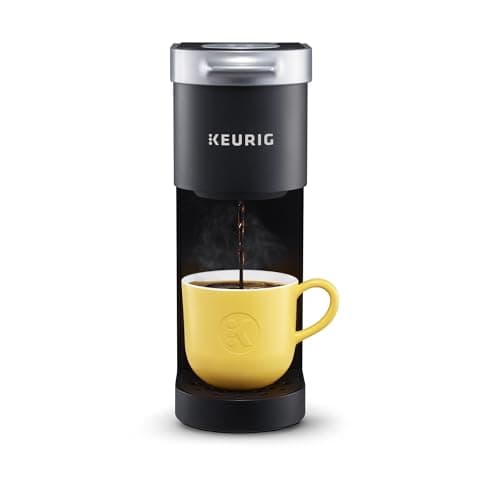
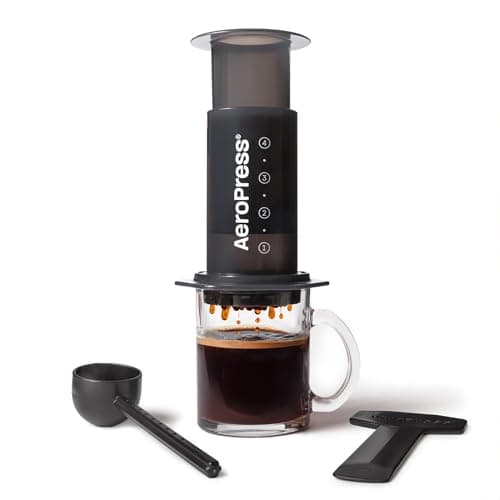
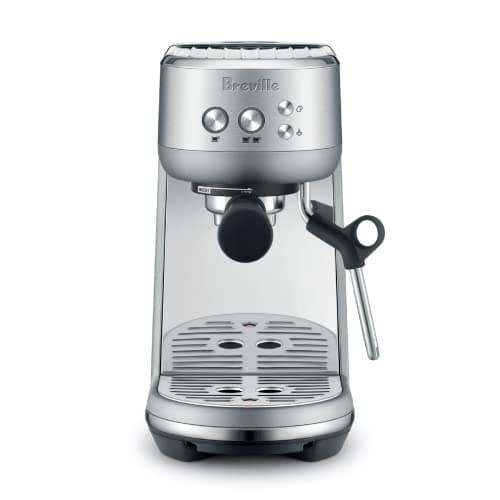
The verdict: if you want a genuine upgrade rather than a sideways move, the Breville Bambino is the alternative to buy — it makes a real 18g espresso with crema you can see forming and milk you texture yourself, in a footprint close to a Vertuo, and it ends the capsule bill permanently. If you want to stay on capsules and pay less per cup, the Keurig K-Mini is the cheaper pod machine with the wider catalogue. The budget pick is the AeroPress Original, the cheapest thing here that replaces what people actually use a Nespresso for: one strong cup, fast, with nothing to wash.
Start with what Nespresso does well, because an alternatives list that skips it is just a list. Nespresso is not a drip-through pod system: it brews under real pressure, which is why a Nespresso shot has a crema on top and a K-Cup does not. Nespresso publishes two incompatible lines, and the difference is the whole product. Original-line machines force water through a small capsule at high pressure and produce an espresso-style shot; Vertuo machines spin the capsule and read a barcode off its rim to set the volume, speed and temperature for that specific coffee, which is how one machine makes everything from an espresso to a large mug without you choosing a setting. Capsules are aluminum rather than plastic, and Nespresso publishes a capsule recycling program. The machines are small, they are ready in well under a minute, and there is nothing to clean.
People look for alternatives for three different reasons, and they do not have the same answer. Cost per cup: a capsule holds a small dose of coffee and a lot of engineering, so the price per pound is many times what beans cost, and over a year that is real money. Lock-in:Vertuo capsules come from Nespresso, because the barcode system is theirs — the Original line is the one where patents lapsed and dozens of third-party roasters now compete, which is why Original pods are much cheaper than Vertuo ones. Ceiling: a capsule is a fixed dose of coffee ground and sealed months ago, so there is no grind, dose or ratio for you to change, and the cup is as good as it will ever be on day one.
So the ranking is by how close the swap is, then by running cost, then by how much work the machine asks of you. Every pick either matches Nespresso on a stated strength — real pressure, crema, one-touch speed, a small footprint — or costs meaningfully less to buy or to run, and each entry says which. Nothing here is a criticism of Nespresso: if one-touch convenience with no decisions is the thing you want, Nespresso is good at it and our best Nespresso machines ranking is the better page for you. Facts about Nespresso here are limited to what Nespresso publishes about its own system. Each pick's specifications, pros and cons are carried over unchanged from its entry elsewhere on this site, with the page it came from named in the pick's own body.
Work out which Nespresso complaint is yours
The three reasons people leave have three different answers, and buying the wrong one is how a machine ends up in a cupboard.
If your complaint is cost per cup
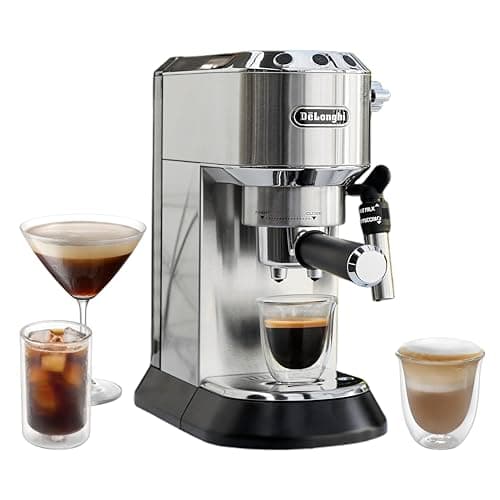
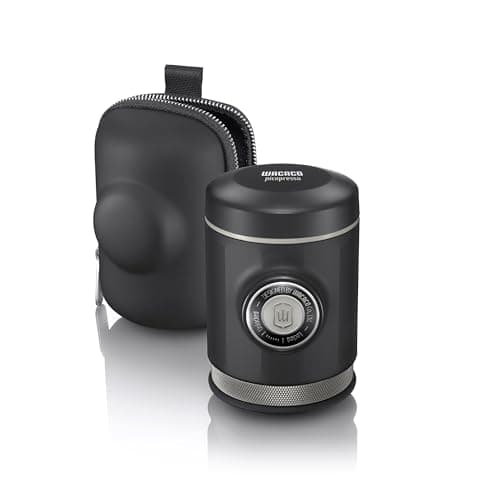
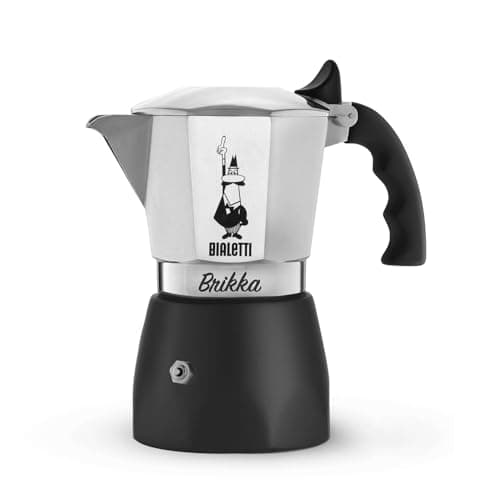
Then the only real fix is ground coffee, and three picks here deliver it: the Bambino, the Dedica and the Picopresso all run on beans, and the AeroPress and the Brikka do too. Moving between capsule systems does not fix this — it only reduces it. For what it is worth, the cheapest capsule route is not Vertuo but Nespresso's own Original line, because those patents lapsed and dozens of third-party roasters make compatible capsules that compete on price. If you own a Vertuo machine and your objection is purely the capsule bill, an Original-line machine is a smaller and cheaper change than anything on this page; our Nespresso Vertuo vs Original page sets out that fork.
If your complaint is the ceiling
A capsule is a fixed dose of coffee ground and sealed months before you drink it, and there is no grind, dose, ratio or temperature for you to change. That is the point of the format and it is also its limit. Raising the ceiling means taking control of the grind, which means a grinder, which is the cost nobody quotes when they recommend a Bambino. Budget for the machine plus a burr grinder from our best coffee grinders under $200 ranking, or buy the Dedica, whose pressurized basket means you can start with supermarket coffee and add a grinder later.
If your complaint is waste or lock-in
Nespresso capsules are aluminum and Nespresso publishes a recycling program, but a returned capsule is still a returned capsule, and most people do not keep that up. Pod-free is the only complete answer: the AeroPress produces grounds and a paper filter, both of which compost, and the Brikka and the Picopresso produce nothing but grounds. On lock-in specifically, note the asymmetry inside Nespresso's own range — Vertuo is a closed system because the barcode is proprietary, while Original is the open one. If your objection is that you can only buy capsules from one place, that objection applies to Vertuo and much less to Original.
The four things to check before you switch
Do you drink it short or long?This decides almost everything. If your Nespresso makes you an espresso or a short milk drink, the pressure picks — Bambino, Dedica, Picopresso, Brikka — are your list, and the AeroPress and the Keurig are not. If it makes you a mug of black coffee, invert that: the AeroPress or the Keurig is a straight swap and an espresso machine is an expensive detour. A Vertuo owner who uses the large cup sizes is, functionally, a drip drinker.
Will you buy a grinder? If yes, the Bambino is the best machine here and the Picopresso is the most interesting. If no, the Dedica and the Brikka tolerate pre-ground coffee and the AeroPress is actively forgiving of it. Buying a Bambino and feeding it supermarket pre-ground is the single most common way this switch goes wrong.
Do you need the machine to heat water?A Nespresso does. The AeroPress, the Picopresso and the Brikka do not — you need a kettle or a hob, and if you do not own one that is a hidden cost. Any kettle works for these three; a gooseneck is only needed for pour-over, and our best gooseneck kettles page covers that if you end up there.
How much milk do you drink?If the answer is a latte every morning, the Bambino's bare steam wand is a real upgrade over a Nespresso milk frother — a frother makes foam and a wand makes pourable microfoam, which is a different texture. If you do not want to learn that, a separate frother next to any of these brewers reproduces what you had; best milk frothers ranks those, and milk frother vs steam wand explains which one makes which drink.
What none of these replace
Two things, honestly. The first is the Vertuo barcode. Reading a recipe off the capsule and brewing each coffee to its own volume and temperature with no input from you is genuinely clever, and nothing on this page does it — every pick here either asks you to choose a volume or gives you one fixed size. The second is the sheer absence of effort. The worst morning on any pick here still involves more steps than pressing a button on a Nespresso, and if you are honest with yourself that the convenience is the product, the right move is to stay and pick a better machine from best Nespresso machines rather than to buy something from this page and stop using it in March.
If you want a pod machine, just not this one
Then the comparison you actually want is Keurig vs Nespresso, which sets the two systems against each other on pod cost, cup style and recycling, and best pod coffee makers, which ranks machines across both. If you want out of pods altogether and a Keurig is what you currently own, alternatives to Keurig is the page built for that.