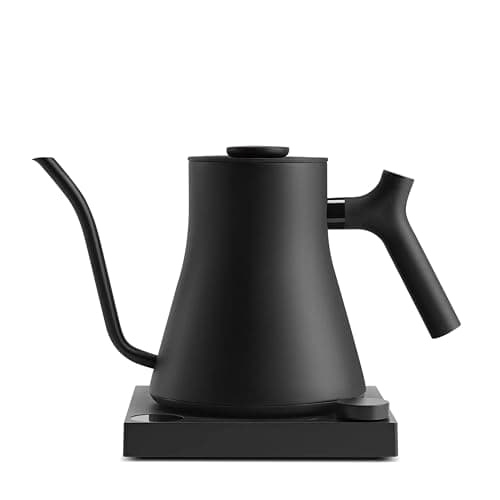
A gooseneck kettle does one thing an ordinary kettle cannot: it lets you place water exactly where you want it, at the rate you want, for as long as you want. In pour-over that is not a refinement, it is the whole method — the difference between wetting the bed evenly and blasting a hole through one side of it.
The physics is straightforward. A long, narrow, curved spout slows and straightens the flow, converting the kettle’s internal pressure into a thin, controllable stream instead of a wide gush. That lets you pour in slow concentric circles, keep the coffee bed level, and hit a target brew time consistently. A wide-spouted kettle pours faster than the filter can drain, which floods the bed, drags fines to the bottom and gives you a different extraction every morning.
Temperature is the second half. Coffee brews properly between about 195°F and 205°F; below that it under-extracts and tastes sour and thin, above it the water starts to strip harsher compounds. A variable-temperature electric kettle removes that variable entirely, which is why the electrics dominate the top of this list — but a stovetop gooseneck plus a thermometer does the same job for less money.
The spout does most of the work
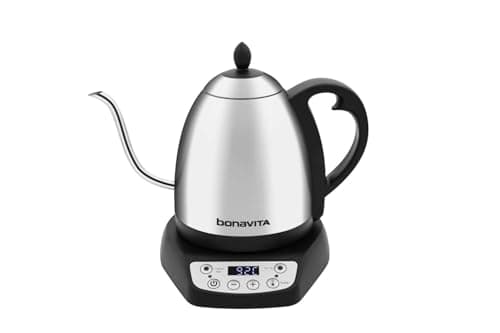
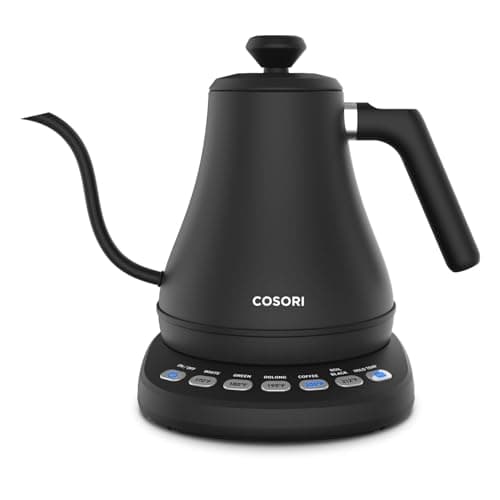
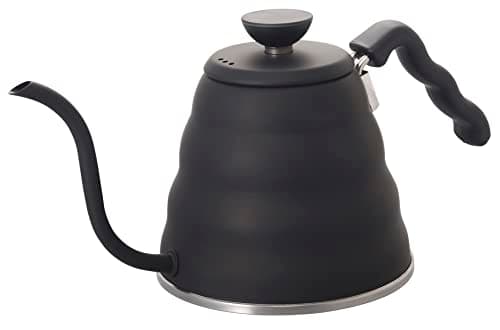
Gooseneck spouts differ more than they look. A long, narrow spout with a gentle taper gives the slowest, most controllable stream and starts and stops cleanly; a shorter or wider one pours faster and dribbles when you stop. Where the spout joins the body matters too — a low join draws water from the bottom of the kettle, so flow stays steady as the kettle empties, while a high join makes the last third of the water pour differently from the first. If you can only judge one thing from photographs, judge spout length and taper.
Temperature: presets, degrees, or a thermometer
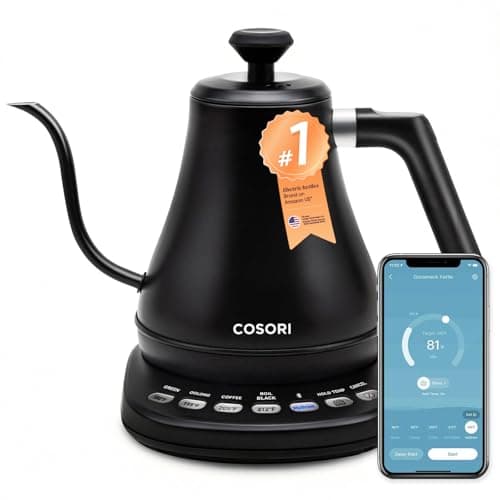
The target window for filter coffee is roughly 195–205°F. Three ways to hit it. A degree-settable electric is the easiest and most repeatable. Preset kettles give you a handful of fixed points, which in practice is plenty, since the difference between 200°F and 202°F is not something most palates resolve. A stovetop kettle needs either a thermometer or the old trick: bring to a boil, take it off the heat and wait about thirty seconds, which lands you near the top of the window in a normal kitchen.
Hold-temperature mode is the underrated feature. A pour-over recipe runs three to four minutes, and an unheld kettle drops several degrees across that time — so your last pour brews cooler than your first. A kettle that holds temperature makes the whole brew consistent and makes back-to-back brews identical.
Capacity, and why smaller is usually right
Most pour-over recipes use 300–500ml of water, so a 0.8–1L kettle is correct. A larger kettle takes longer to heat, is heavier to pour steadily, and encourages you to leave water sitting. If you also want a kettle for tea for a table of guests, buy a second cheap kettle rather than compromising the pour.
Balance matters more than weight
Pouring 300ml in slow circles takes 40 seconds or more, and a badly balanced kettle makes your hand tremble by the end — which shows up in the cup as an uneven bed. Look for a handle set back from the body with a counterweight feel rather than one mounted directly over the center of mass. This is the difference you notice most between a cheap and an expensive kettle, and it is the hardest thing to judge from a listing.
What else you need for good pour-over
A gooseneck kettle is one of three tools. The second is a scale with a timer, because pour-over is a ratio and a schedule, not a volume. The third is a burr grinder set to medium — a gooseneck kettle cannot rescue an uneven grind, it can only stop you making things worse. Add a V60, Kalita or Chemex and the setup is complete.
How we picked
We did not lab-test this gear
Everyone in this category says they tested twenty machines. We have not lab-tested any of these, and we say so. What we did instead: compiled the published manufacturer specifications, read the manuals, ran the math where there was math to run (heat-up time, pressure, dose capacity, grind range, cost per cup), and scored each pick against a published rubric. The scores are judgments from documented research — not measurements we took, because we do not have a lab and we will not pretend we do. Where a number came from someone else's work, we name them in Sources.