Skip to content
Tamp & Pour

Roundups · Coffee Beans

The best coffee beans for cold brew

Cold water extracts less, so the bean has to bring more. Ranked for long, cold immersion — with live prices, honest cons and the roasts that fall flat.

By Stephen V.Updated How we review
#ad

We earn a commission when you buy through our Amazon links, at no extra cost to you. It never changes a verdict, and we say so when the cheaper product is the better buy. How this works.

Cold brew is a low-efficiency extraction. Without heat, water pulls out far less of what is in the bean, and specifically pulls out much less of the acidic, aromatic, fruity material that makes a light roast exciting. What survives is the heavier stuff: chocolate, caramel, nut and body. So the bean selection logic is simple and slightly counterintuitive — the coffees that shine in a pour-over are usually the wrong choice here.

Buy medium to dark roasts with chocolate, caramel or nutty character. Buy coffees with body. Skip the bright, floral, light-roast single origins, not because they are worse but because cold water leaves the very qualities you paid for sitting in the grounds. The picks below are ranked on exactly that, plus value per bag — because cold brew uses roughly four times the coffee per finished cup of a drip machine, so cost per pound matters more here than anywhere else on this site.

If you have not chosen a brewer yet, our cold brew maker ranking covers the immersion systems and the ratios that go with them.

The short answer

Quick picks

#ad · Live prices from the Amazon Product API, as of Sep 2, 2026. Where we have no verified live price, we show none — a gap beats a number that has rotted.

In detail

The picks, in full

01
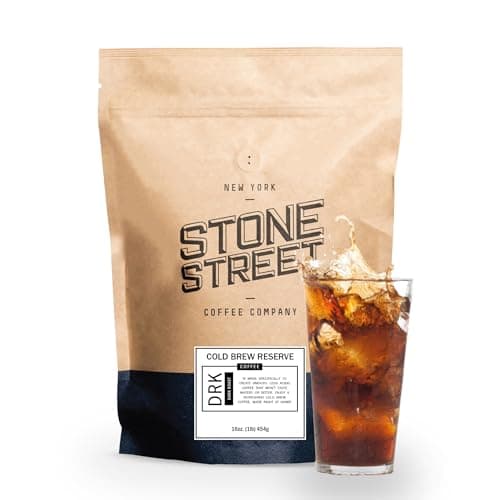
Stone Street Stone Street Colombian Cold Brew Coffee (dark roast, 1 lb)

Best purpose-made for cold brew

Stone Street Colombian Cold Brew Coffee (dark roast, 1 lb)

Dark roastColombiaCoarse ground for cold brew1 lb bag
8.4/10

The purpose-built option: a dark-roast Colombian ground coarse specifically for cold immersion, so the one variable most people get wrong is already handled.

Suits cold extraction
9.5
Body
8.5
Freshness policy
6
Convenience
9.5
Value
8.5

Pros

  • Ground coarse for immersion out of the bag — no grinder needed, and no fines to cloud the brew
  • Dark-roast Colombian is close to the ideal cold brew profile: chocolate, low acid, plenty of body
  • Sized and priced for the volume cold brew actually consumes
  • Consistent batch to batch, which matters when you are dialing a ratio

Cons

  • Pre-ground, so it stales faster than whole bean once the bag is open
  • You cannot adjust the grind if your filter or steep time wants something different
  • Not usable for any other brew method

Don't buy this if…

you own a burr grinder. Whole bean ground fresh will always beat pre-ground, and cold brew is not so forgiving that freshness stops mattering.

This is the one exception on this site to our whole-bean rule, and it is worth stating why: cold brew’s 12-to-24-hour extraction is far more forgiving of a slightly older grind than espresso is, and the coarse grind it needs is the one most home grinders struggle to produce evenly. If you already grind your own, buy one of the whole-bean picks below instead.

$22.49View on Amazon

Price as of Sep 2, 2026. Prices change — Amazon's at checkout is the one that counts.

#ad · we may earn a commission from this link to Stone Street Colombian Cold Brew Coffee (dark roast, 1 lb)

02
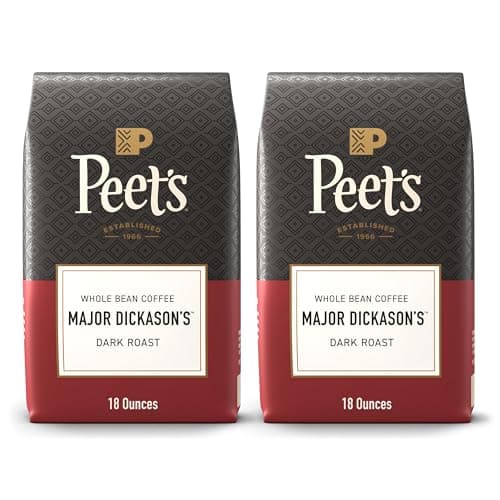
Peet's Peet's Major Dickason's Blend

Best whole bean overall

Peet's Major Dickason's Blend

Dark roastWhole beanMulti-region blendWidely stocked
8.4/10

The best whole-bean default: a deep, smooth dark roast with the chocolate and caramel weight that cold extraction concentrates rather than washes out.

Suits cold extraction
9
Body
9
Freshness policy
7.5
Convenience
8
Value
8.5

Pros

  • Full body and low acidity — precisely what a long cold steep rewards
  • Rich without the scorched edge that ruins cheaper dark roasts in concentrate form
  • Blend consistency means your ratio stays dialed from bag to bag
  • Easy to buy fresh, which matters more than a rare origin

Cons

  • Dark roast means no origin character to speak of
  • Oily beans build up in a grinder faster
  • No printed roast date

Don't buy this if…

you want your cold brew to taste of a specific place — a dark blend is engineered for consistency, not terroir.

$29.98View on Amazon

$31.986% off

Price as of Sep 2, 2026. Prices change — Amazon's at checkout is the one that counts.

#ad · we may earn a commission from this link to Peet's Major Dickason's Blend

03
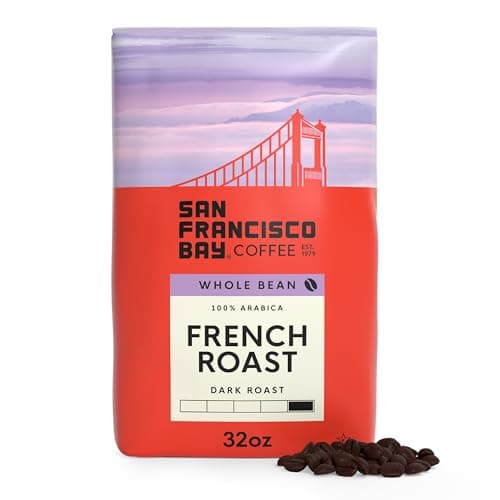
San Francisco Bay Coffee San Francisco Bay Coffee French Roast (2 lb)

Best value big bag

San Francisco Bay Coffee French Roast (2 lb)

French (very dark) roastWhole bean2 lb bagCentral and South American arabica blend
8.1/10

The value answer to cold brew's appetite: two pounds of proper French roast, which matters because a batch of concentrate eats coffee four times faster than a drip pot.

Suits cold extraction
8.5
Body
8.5
Freshness policy
5.5
Convenience
8
Value
9.5

Pros

  • By far the cheapest per ounce here, and cold brew uses a lot of ounces
  • Very dark roast profile is exactly what cold extraction flatters
  • Two pounds is roughly four large batches of concentrate

Cons

  • Very dark roasting removes origin character entirely
  • A 2 lb bag stales after opening if you are a light drinker
  • No printed roast date

Don't buy this if…

you make one small batch a month — buy a smaller bag you will finish while it is fresh.

$30.99View on Amazon

Price as of Sep 2, 2026. Prices change — Amazon's at checkout is the one that counts.

#ad · we may earn a commission from this link to San Francisco Bay Coffee French Roast (2 lb)

04
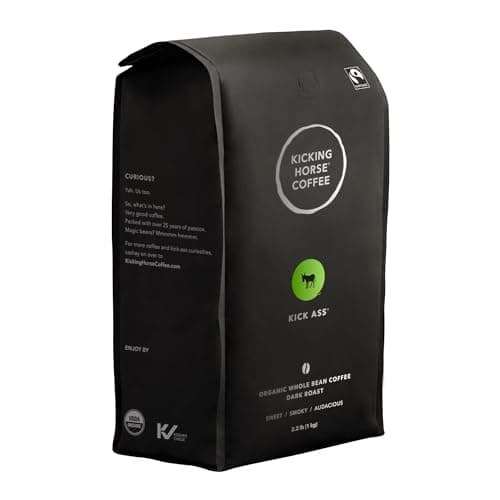
Kicking Horse Kicking Horse Kick Ass

Best bold & certified

Kicking Horse Kick Ass

Dark roastUSDA Organic & fair tradeWhole beanChocolate malt and licorice notes
8.1/10

The bold, certified pick: an organic fair-trade dark roast with enough smoky depth that the concentrate still tastes like something after you cut it with milk and ice.

Suits cold extraction
8.5
Body
9
Freshness policy
6.5
Convenience
8
Value
8

Pros

  • Stands up to heavy dilution better than milder roasts — important for an iced latte
  • Organic and fair-trade certified, unusual at this price in a dark roast
  • Distinct enough that the cold brew has a character rather than just strength

Cons

  • Assertively smoky — there is no subtlety on offer
  • Very oily beans; clean your grinder more often
  • No printed roast date

Don't buy this if…

you drink your cold brew black and want it smooth — this stays punchy even at concentrate dilution.

$43.99View on Amazon

Price as of Sep 2, 2026. Prices change — Amazon's at checkout is the one that counts.

#ad · we may earn a commission from this link to Kicking Horse Kick Ass

05
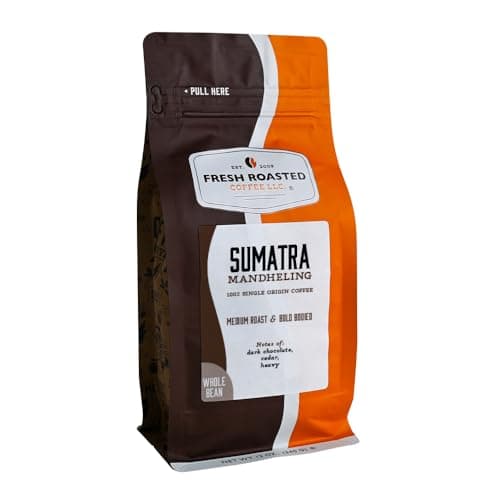
Fresh Roasted Coffee Fresh Roasted Coffee Sumatra Mandheling (medium roast, 12oz)

Best for body & low acid

Fresh Roasted Coffee Sumatra Mandheling (medium roast, 12oz)

Medium roastSumatra, MandhelingWet-hulled processing12oz whole bean
8.2/10

The interesting one: wet-hulled Sumatran brings syrupy body and an earthy, cedar-like depth that cold brewing preserves beautifully, without needing a heavy roast to get there.

Suits cold extraction
8.5
Body
9.5
Freshness policy
8
Convenience
7
Value
8

Pros

  • Naturally low in acid from origin and processing, not from being roasted dark
  • The heaviest, most syrupy body on this page, which cold brew concentrates wonderfully
  • Distinctive enough that black cold brew is genuinely interesting
  • Medium roast keeps a sweetness that French roasts lose

Cons

  • The earthy, herbal profile divides people sharply
  • 12oz is a small bag for a method this thirsty
  • Not the pick if you want a clean, classic iced coffee flavor

Don't buy this if…

you want your cold brew to taste like a chocolatey coffee-shop iced latte — this is earthier and more unusual than that.

$17.99View on Amazon

Price as of Sep 2, 2026. Prices change — Amazon's at checkout is the one that counts.

#ad · we may earn a commission from this link to Fresh Roasted Coffee Sumatra Mandheling (medium roast, 12oz)

Why cold brew changes which beans work

Solubility is temperature-dependent. At brewing temperature, hot water dissolves a wide range of compounds including the delicate aromatics and bright organic acids that give a light-roast Ethiopian its jasmine-and-lemon character. At room temperature or in a fridge, a large share of those compounds simply never make it into the water — which is exactly why cold brew tastes smoother and less acidic.

The corollary is the useful part: if you cold brew a delicate light roast, you are paying for qualities that stay in the grounds. What does come through is the heavier, less temperature-sensitive material — the chocolate, caramel, nut and body of medium and darker roasts. That is not a compromise; it is choosing the right instrument.

Ratio, grind and time

Grind coarse— French press coarse or a shade coarser. Fine grounds do not make cold brew stronger, they make it muddy and hard to filter, and they over-extract at the edges while the middle is still going. This is the one grind setting most home grinders find hardest to produce evenly, which is why a purpose-ground bag is a legitimate shortcut.

Ratio: start at 1:5 by weight for a concentrate you dilute, or 1:12 for ready-to-drink. Time:12–18 hours at room temperature, 18–24 in the fridge, since colder water extracts more slowly. Then filter and stop — coffee left on the grounds past your target keeps extracting and turns woody.

Budget for the volume

This is the practical reason big bags appear on this page. A drip machine uses roughly 60g of coffee per liter of finished coffee; cold brew concentrate at 1:5 uses around 200g per liter of concentrate. Even after dilution you are typically using two to three times the coffee per finished cup. A $25 specialty bag that lasts three weeks in a drip machine lasts about one batch here. Factor that in before you commit to an expensive bean.

Roast date matters, but less than usual

Cold brew is the most forgiving method on this site for slightly older coffee. A long, gentle extraction does not depend on the CO2 behavior that makes stale beans pull badly under espresso pressure, and the compounds that fade first are largely ones cold water was not going to extract anyway. Fresher is still better — but a three-week-old bag makes perfectly good cold brew, and that is why a pre-ground purpose-made option earns its place here when it would not on any other page.

What to avoid

Light, floral single origins — you will not taste what you paid for. Very oily, aggressively charred beans— the ashiness concentrates unpleasantly over 16 hours. Pre-ground drip coffee— it is ground far too fine, which clogs every filter and produces a silty, bitter brew. And flavored coffees tend to taste synthetic when concentrated. If you want your cold brew sweet or vanilla-flavored, add it afterwards.

How we picked

We did not lab-test this gear

Everyone in this category says they tested twenty machines. We have not lab-tested any of these, and we say so. What we did instead: compiled the published manufacturer specifications, read the manuals, ran the math where there was math to run (heat-up time, pressure, dose capacity, grind range, cost per cup), and scored each pick against a published rubric. The scores are judgments from documented research — not measurements we took, because we do not have a lab and we will not pretend we do. Where a number came from someone else's work, we name them in Sources.
Questions

Frequently asked

What roast is best for cold brew?
Medium to dark. Cold water extracts less overall and pulls very little of the bright, fruity material that makes light roasts exciting, so the chocolate, caramel and nut character of darker roasts is what actually reaches the cup.
Can I use pre-ground coffee for cold brew?
It is the one method where a purpose-ground bag is genuinely reasonable, because cold brew needs a coarse grind and its long extraction is forgiving. Do not use pre-ground dripcoffee, though — it is far too fine and will produce a silty, bitter brew.
How much coffee do I need for cold brew?
About 1 part coffee to 5 parts water by weight for a concentrate, or 1:12 for ready-to-drink. That is roughly three to four times what a drip machine uses per finished cup, so buy larger bags.
Do light roast beans work for cold brew?
They work, but they waste their strengths — the floral and citric qualities you paid for largely stay in the grounds. If you want to try it, extend the steep and expect a subtler, tea-like result.
How long does cold brew keep?
Concentrate keeps about two weeks sealed in the fridge; ready-to-drink is best within a week. Filter it off the grounds first — coffee left sitting on grounds keeps extracting and goes bitter.

Keep reading

Receipts

Sources

We do not run a testing lab, and we do not pretend to. Where a measured number came from someone else's work, we name them and link them. Where we could not verify something, we say so on the page rather than quietly leaving it out. Read our full method.