Skip to content
Tamp & Pour

Roundups · Accessories

Espresso distributor vs WDT tool: which stops channeling?

Both are sold as a distribution tool, and they do different things. One spins on the surface; the other reaches the clumps underneath.

By Stephen V.Updated How we review
#ad

We earn a commission when you buy through our Amazon links, at no extra cost to you. It never changes a verdict, and we say so when the cheaper product is the better buy. How this works.

The confusion here is a naming problem before it is a buying problem, and it is worth thirty seconds to clear. A WDT tool is a handle full of fine needles that you stir through the dry grounds to break up clumps. A distributor — also called a leveler, or an OCD-style tool — is a weighted disc with angled blades that you rest on the basket and spin. Both are listed on Amazon as “espresso distribution tools”, which is why people end up comparing them, and why some people buy one believing they bought the other.

The physical difference decides the answer. A distributor's blades ride at a set depth below the rim, so they rearrange the top few millimetres of the dose. A WDT tool's needles go to the base of the basket. Channeling starts wherever the coffee is denser or looser than the coffee next to it — and clumps out of a grinder are distributed through the whole depth of the dose, not just across its surface. A tool that only touches the top cannot reach most of them.

So if you are buying one: buy the WDT tool. It costs less, and it is the only one of the two that addresses the actual cause. The distributor is a real tool that does a real job — it flattens and settles the bed, which helps if you grind straight into the portafilter and end up with a mound — but it is a finishing step, not a fix. The related question of whether you need a tamper as well as either of these is answered in WDT tool vs tamper.

The short answer

Quick picks

#ad · Live prices from the Amazon Product API, as of Sep 7, 2026. Where we have no verified live price, we show none — a gap beats a number that has rotted.

In detail

The picks, in full

01
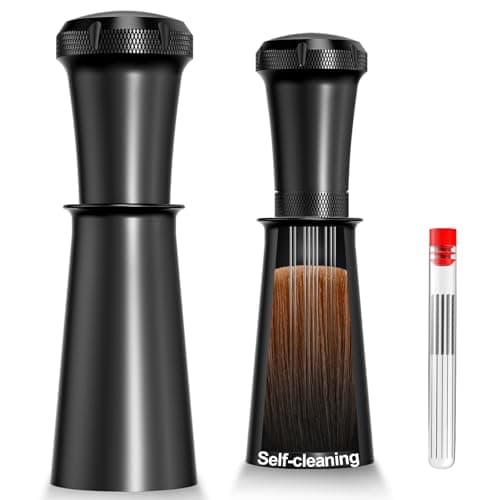
Nessus Nessus WDT Espresso Distribution Tool

Buy this one first

Nessus WDT Espresso Distribution Tool

Fine distribution needlesReaches the full depth of the doseAny basket sizeBuilt-in stand and brush
8.4/10

The one to buy first: fine needles that reach the bottom of the basket and break up the clumps that actually cause channeling, for less than the price of a bag of coffee.

What it fixes
9
Reach into the puck
9.5
Build
5.5
Value
9.5

Pros

  • Reaches through the entire dose rather than the top layer, which is the whole reason it beats a spinning distributor at the job both claim to do
  • Size-agnostic — the same tool works on 58mm, 54mm and 51mm baskets and survives a machine upgrade, which a 58mm distributor does not
  • Costs a fraction of a distributor, so if the answer is 'one of them', this is the cheap one and the effective one at the same time
  • Adds around ten seconds once it becomes habit

Cons

  • Budget construction — the needles are the working part and they bend with rough handling, and a bent needle drags its own channel
  • Easy to overdo: over-stirring fluffs the bed and can make distribution worse rather than better
  • Does nothing useful behind a pressurized dual-wall basket, where the hardware makes the pressure instead of the puck
  • Leaves the surface uneven, which is exactly the job the distributor exists to finish

Don't buy this if…

you use pressurized dual-wall baskets. The basket is generating the pressure rather than your puck, so distribution barely registers — switch to single-wall baskets first and then this becomes the best few dollars you can spend.

Espresso grounds leave a grinder as a mix of loose particles and compacted clumps, and a clump is a dense obstruction with loose coffee around it. Water under nine bars goes around the dense part, which is channeling. Needles are the only thing in a home workflow that physically reaches into the middle of the dose and takes those clumps apart. The wider ranking, including sturdier and better-finished tools, is in best WDT tools.

$9.99View on Amazon

Price as of Sep 7, 2026. Prices change — Amazon's at checkout is the one that counts.

#ad · we may earn a commission from this link to Nessus WDT Espresso Distribution Tool

02
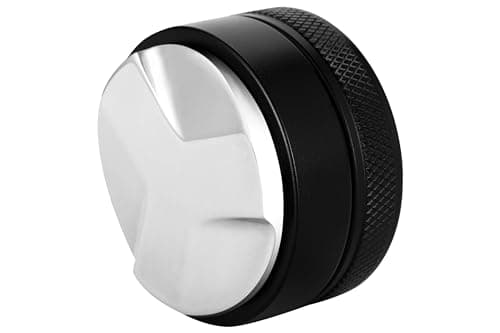
Apexstone Apexstone 58mm Coffee Distributor / Leveler

The surface finish, if you want it

Apexstone 58mm Coffee Distributor / Leveler

58mm baseAngled distribution bladesAdjustable depthStainless steel
6.6/10

A competent, cheap version of a tool that only ever touches the top of the puck — worth having as a finishing step, not worth buying instead of needles.

What it fixes
6
Reach into the puck
3.5
Ease of use
9
Value
8

Pros

  • Genuinely useful if you grind straight into the portafilter and get a mound — one spin turns that into a flat bed in a second
  • Faster and tidier than needles, and much harder to get wrong
  • Adjustable depth means it can be set to just skim the surface rather than compact the dose
  • One of the cheaper dedicated distributors, at a point where the premium ones cost several times as much for the same geometry

Cons

  • Reaches only the top few millimetres, so the clumps deeper in the dose are untouched — and those are the ones causing channeling
  • Some of what it appears to fix is cosmetic, because you are about to flatten the surface with a tamper anyway
  • 58mm only, so it does not fit a Breville 54mm or De'Longhi 51mm basket
  • Adds a step and a purchase for a benefit we would not promise you will taste

Don't buy this if…

you already stir with a WDT tool and dose from a cup rather than straight from the grinder chute. In that workflow the bed is already even and level and this is solving nothing.

We are scoring a perfectly well-made tool at 6.6 and it is worth saying why. A distributor does exactly what it claims — it levels and lightly settles the bed — and it does it quickly and pleasantly. The problem is the size of the job. Once you tamp, the surface is flat regardless, so the value has to come from the settling, and the settling only reaches the depth the blades reach. It is a nice tool. It is not the channeling fix it gets sold as.

$17.99View on Amazon

Price as of Sep 7, 2026. Prices change — Amazon's at checkout is the one that counts.

#ad · we may earn a commission from this link to Apexstone 58mm Coffee Distributor / Leveler

03
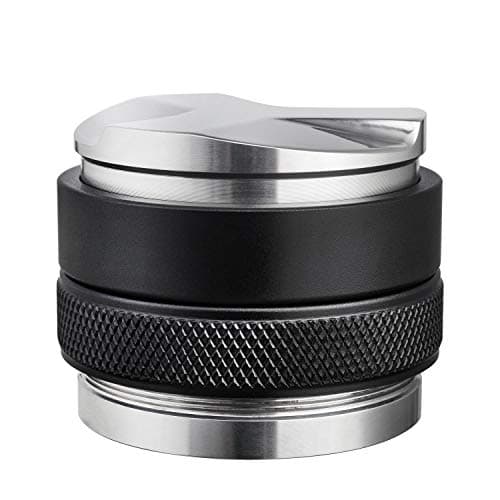
MATOW MATOW 58mm Coffee Distributor and Tamper Dual Head

Both jobs in one handle

MATOW 58mm Coffee Distributor and Tamper Dual Head

58mmDistributor head and tamper headReversible baseStainless steel
6.3/10

Distributor on one end, tamper on the other, one thing on the counter — convenient, but you are buying the tamper as part of a bundle rather than choosing it on its merits.

What it fixes
6.5
Reach into the puck
3.5
Ease of use
8.5
Value
6.5

Pros

  • One purchase and one item on a small counter, which is a real benefit in a home kitchen
  • The tamper half is solid and flat, so this is not a toy — it is two competent tools sharing a handle
  • Removes the ordering mistake of distributing after tamping, since you physically flip the same tool
  • Cheaper than buying a good distributor and a good tamper separately

Cons

  • The tamper is the item where fit and flatness matter most, and here you take the one that comes attached rather than choosing it
  • 58mm nominal, so the same edge-gap caveat applies as with any 58mm tamper in a 58mm basket
  • Still a surface tool on the distributor side — it does not reach clumps any better than the single-purpose version
  • Swapping heads is one more small ritual, and the unused head has to live somewhere

Don't buy this if…

you already own a tamper you like. You would be paying for a second tamper to get a distributor, when the single-purpose distributor costs less.

Combination tools usually involve a compromise and this one is unusually mild — both halves are competent. The reason it ranks last here is not quality, it is that the comparison on this page is about reaching clumps, and no distributor does. If you want one object instead of two and you do not already own a tamper, it is a sensible buy. The full tamper field is in best espresso tampers.

$35.99View on Amazon

Price as of Sep 7, 2026. Prices change — Amazon's at checkout is the one that counts.

#ad · we may earn a commission from this link to MATOW 58mm Coffee Distributor and Tamper Dual Head

Why one phrase describes two different products

“Distribution tool” entered home espresso as a description of the palm-sized leveler, then got applied to WDT tools because they also distribute coffee, and the listings never untangled. Today you can search the phrase and get both on the same results page at similar prices, described in nearly identical marketing language, with no indication that one reaches the bottom of the basket and the other does not. If you are trying to work out which you own: needles means WDT, blades on a disc means distributor.

What each one physically reaches

A distributor sits on the rim and its blades hang a fixed distance below it — on adjustable models, typically a few millimetres. Spin it and the blades sweep coffee from the high spots into the low ones and press the surface down slightly. Everything below that depth is untouched. A WDT tool has no depth limit: the needles go wherever you push them, and the technique that testing has favoured is stirring right down to the base rather than raking the top.

That difference maps directly onto the fault. Clumping happens as coffee leaves the burrs, so clumps are scattered through the dose from top to bottom. A dense clump three quarters of the way down is invisible, survives a distributor untouched, gets compressed in place by the tamper, and then sends water around it. That is the shot that sprays sideways out of a bottomless portafilter.

What nobody has actually measured

We will be straight about the state of the evidence, because the internet is not. There is no rigorous published head-to-head that we could find of a distributor against a WDT tool on extraction yield or channeling frequency. Prima Coffee's comparison of distribution tools walks through both mechanisms and recommends using them together, but presents no measured results — and on a related question they say plainly that they “have not noticed a difference in performance”. So the argument on this page is a mechanical one about what each tool can physically reach, not an appeal to a study we are pretending exists. We do not have a lab and we will not invent one.

The order to buy them in

Correctly sized tamper first — it is not optional, and diameter beats everything. Then the WDT tool, because it is cheap and it addresses the cause. Then, if you grind straight into the portafilter and dislike the mound, a distributor as a finishing step. If you are on pressurized dual-wall baskets, skip both until you have switched to single-wall baskets, because until then the hardware is making the pressure and none of this reaches the shot. The wider buying sequence is in the starter accessory kit, and the way to actually see whether any of it worked is a bottomless portafilter.

How we picked

We did not lab-test this gear

Everyone in this category says they tested twenty machines. We have not lab-tested any of these, and we say so. What we did instead: compiled the published manufacturer specifications, read the manuals, ran the math where there was math to run (heat-up time, pressure, dose capacity, grind range, cost per cup), and scored each pick against a published rubric. The scores are judgments from documented research — not measurements we took, because we do not have a lab and we will not pretend we do. Where a number came from someone else's work, we name them in Sources.
Questions

Frequently asked

Is a distribution tool the same as a WDT tool?
No, though both are sold under that name. A WDT tool uses fine needles that reach the full depth of the dose to break up clumps. A distributor is a bladed disc that spins on the rim and only affects the top few millimetres. They are not interchangeable, and the needles do the more useful job.
Do I need a distributor if I already use a WDT tool?
No. The WDT tool has already evened out the bed, including the surface. A distributor after WDT is a tidiness step, not a correction, and plenty of people who take espresso seriously skip it entirely.
Which comes first, distributor or WDT?
WDT first, then the distributor, then the tamp. Stirring after levelling undoes the levelling, and anything after tamping destroys the puck you just made.
Does a distributor replace tamping?
No. A distributor settles and levels; it does not generate anything like the compression a shot needs. Without a tamp the bed offers too little resistance and the shot gushes through in seconds.
Will a 58mm distributor fit a Breville?
No. Breville and Sage machines use 54mm baskets, so a 58mm distributor will not enter them. This is the practical advantage of a WDT tool: needles do not care about basket diameter, so the same tool follows you across machines.
Are the expensive distributors better?
Better made, not better at the job. The premium models buy machining, finish and finer depth adjustment. The geometry that decides what the tool does is the same, and it still only reaches as far as the blades hang.

Keep reading

Receipts

Sources

We do not run a testing lab, and we do not pretend to. Where a measured number came from someone else's work, we name them and link them. Where we could not verify something, we say so on the page rather than quietly leaving it out. Read our full method.