The verdict: Stumptown Hair Bender is the best coffee under $25, because it is a genuine specialty blend with a printed roast date that works in espresso, pour-over and drip without being re-dialed for each — which is exactly what a single bag in a normal kitchen has to do. If you want to taste one place rather than a house style, buy Volcanica Guatemala Antigua. The budget pick is Illy Classico, the cheapest bag here that is still consistently good coffee — it just will not tell you when it was roasted.
Twenty-five dollars is where most coffee is actually bought, and it is a more interesting bracket than enthusiast writing admits. It includes genuine specialty roasters at their entry price, serious single origins, and large-format supermarket bags whose cost per cup is a fraction of everything else. What it mostly does not include is anything rare: no microlots, no competition lots, no Kona at a sane volume.
So the ranking is built on three things, and none of them is a tasting note we invented. First, cost per cup, because a 12oz bag and a 2lb bag at the same price are not the same purchase — a pound of coffee is roughly 30 cups at a standard ratio, which turns price per bag into something comparable. Second, whether the bag prints a roastdate rather than a best-before date, because coffee is at its best in the weeks after roasting and a best-before date tells you nothing about that. Third, how much the roast level is doing: a darker roast is more forgiving and more uniform, which is a real benefit and also a way of hiding a bean's origin character.
Two things we will not do. We have not cup-tested these bags side by side, so you will not find a scored flavor verdict here — what you will find is what each roaster publishes about origin, roast level and processing, and a judgment about who each bag suits. And we do not quote prices in prose, because they move; the live price and the date it was read sit on every row below. Every bag here already appears elsewhere on this site, and each pick says where it came from.
The short answer
Quick picks
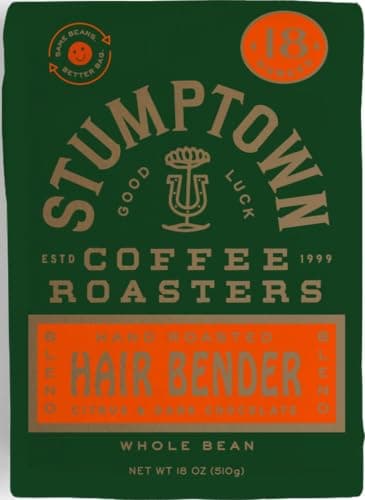
01Stumptown Hair BenderThe specialty blend that works in everything: built as an espresso blend, good enough in a drip machine and a V60 that one bag covers a whole household's brewers.
8.0Best overall under $25 04Lavazza Gran Crema (Barista)The espresso workhorse: an Italian blend with robusta in it, which is why it builds a thick crema and why it forgives a grinder that is not quite dialed in.
6.0Best for espresso machines 05Death Wish CoffeeThe high-caffeine dark roast, sold on strength and honest about it: a robusta-heavy blend that delivers what the label promises and tastes the way that implies.
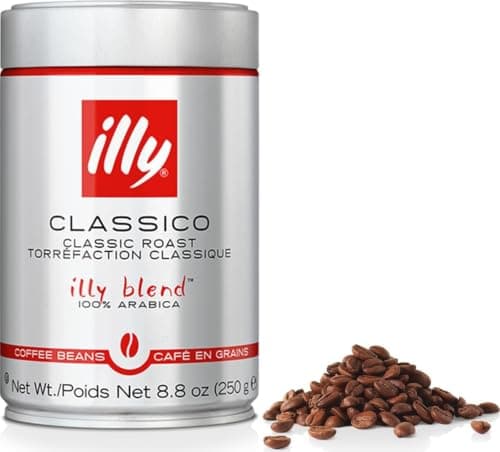
6.1Best high-caffeine bag 06Illy ClassicoThe budget pick: the cheapest bag here that is reliably good coffee rather than merely cheap coffee - a 100% arabica medium roast that tastes the same every time.
| # | Product | Best for | Score | Price |
|---|
| 01 | Stumptown Hair BenderThe specialty blend that works in everything: built as an espresso blend, good enough in a drip machine and a V60 that one bag covers a whole household's brewers. | Best overall under $25 | | $21.48·Amazon |
| 02 | | Best single origin | | $18.39·Amazon |
| 03 | | Best for full-bodied brewing | | $17.99·Amazon |
| 04 | Lavazza Gran Crema (Barista)The espresso workhorse: an Italian blend with robusta in it, which is why it builds a thick crema and why it forgives a grinder that is not quite dialed in. | Best for espresso machines | | $16.49·Amazon |
| 05 | Death Wish CoffeeThe high-caffeine dark roast, sold on strength and honest about it: a robusta-heavy blend that delivers what the label promises and tastes the way that implies. | Best high-caffeine bag | | $13.28·Amazon |
| 06 | Illy ClassicoThe budget pick: the cheapest bag here that is reliably good coffee rather than merely cheap coffee - a 100% arabica medium roast that tastes the same every time. | Budget pick | | $11.89·Amazon |
#ad · Live prices from the Amazon Product API, as of November 22, 2026. Where we have no verified live price, we show none — a gap beats a number that has rotted.
In detail
The picks, in full
Best overall under $25
Stumptown Hair Bender
Blend - Latin America, Africa, IndonesiaMedium roastPrinted roast dateWhole bean, 12oz
The specialty blend that works in everything: built as an espresso blend, good enough in a drip machine and a V60 that one bag covers a whole household's brewers.
- Cost per cup
- 6.5
- Roast-date transparency
- 9.5
- Versatility
- 9.5
- Origin clarity
- 6
- Value
- 8.5
Pros
- +A real specialty roaster's flagship blend at an everyday price, with a printed roast date rather than a best-before
- +Designed as an espresso blend but genuinely good in filter brewers, which is rare and makes it the practical choice for a mixed household
- +Medium roast keeps origin character without being so light that it needs technique to extract
- +Widely stocked, so repeat buying is easy and the bag you get is usually fresh
Cons
- −A 12oz bag, so cost per cup is higher than the big supermarket bags lower down this page
- −Blends by design taste of the roaster rather than a place, which is the opposite of what some drinkers want
- −At the top of this bracket, so it is the bag most at risk of drifting over $25
- −A fairly busy flavor profile - if you want something clean and simple it is the wrong bag
Don't buy this if…
…you want to taste a specific farm or region. A blend is a deliberate composition and the Guatemala Antigua below is the opposite approach at a similar price.
Who it is for: the household with an espresso machine and a drip machine that wants to buy one bag. Specifications, pros and cons are carried over unchanged from its entries on our best coffee beans and best coffee brands rankings. It wins this bracket on the combination this page ranks: a printed roast date, a roast level that does not need a technique to extract, and genuine range across brewers. If you only ever make espresso, our best coffee beans for espresso page is the narrower question.
Best single origin
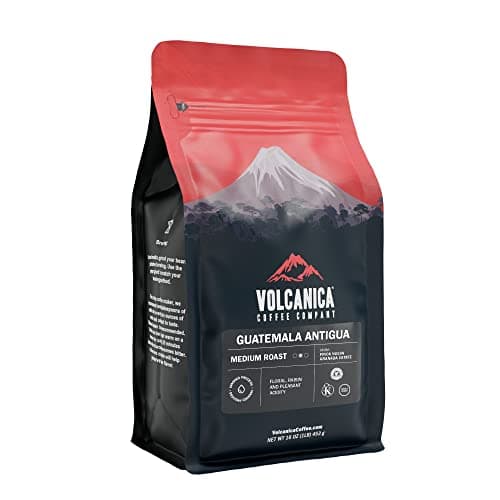
Volcanica Guatemala Antigua (organic, medium roast)
Single origin - Antigua, GuatemalaOrganic certifiedMedium roastWhole bean
A named-region single origin, organic certified, at a price where most coffee is a blend - the bag to buy if you want to taste a place rather than a house style.
- Cost per cup
- 7
- Roast-date transparency
- 7
- Versatility
- 6.5
- Origin clarity
- 9.5
- Value
- 8.5
Pros
- +A specific named growing region rather than a country or a blend, which is the level of provenance that usually costs more than this
- +Organic certification is a documented third-party claim rather than a marketing word
- +Medium roast keeps the region's character legible instead of roasting it out
- +Works well in pour-over and drip, where single-origin clarity is the point
Cons
- −Not built for espresso - a medium single origin can read thin and sharp as a shot without re-dialing
- −Roast-date practice is less consistent than a flagship specialty roaster's
- −Smaller roaster, so a given bag's exact profile varies more between lots
- −Less forgiving than a dark roast if your grinder is not adjustable
Don't buy this if…
…espresso is what you make. A medium single origin is the harder bag to dial in, and a blend built for espresso is the easier and better buy.
Who it is for: the pour-over or drip drinker who wants to learn what a region tastes like. Specifications, pros and cons are carried over unchanged from its entry on our best single origin coffee beans ranking. It sits second because a single origin is a narrower purchase than a well-constructed blend, not a lesser one — if provenance is what you care about, it is the first pick on this page.
$18.39·View on Amazon$22.9920% off
Price as of November 22, 2026. Prices change — Amazon's at checkout is the one that counts.
#ad · we may earn a commission from this link to Volcanica Guatemala Antigua (organic, medium roast)
Best for full-bodied brewing
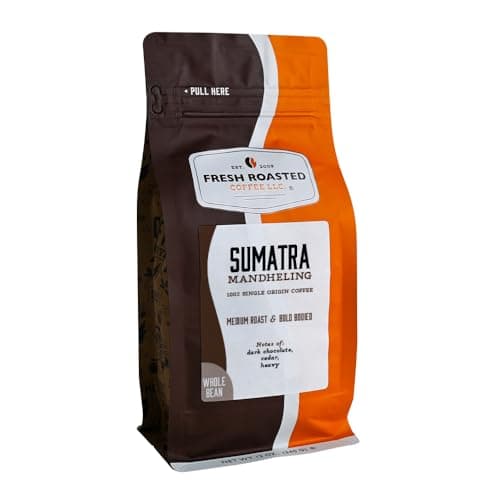
Fresh Roasted Coffee Sumatra Mandheling (medium roast, 12oz)
Single origin - Sumatra MandhelingMedium roastWet-hulled processingWhole bean, 12oz
The heavy-bodied option: a wet-hulled Sumatra that brings weight and low acidity, which is exactly what a French press or a moka pot wants.
- Cost per cup
- 7
- Roast-date transparency
- 8.5
- Versatility
- 6
- Origin clarity
- 8.5
- Value
- 8.5
Pros
- +Wet-hulled Sumatras are structurally heavy and low in acidity, which suits immersion brewing better than almost anything else at this price
- +Low acidity makes it one of the easier bags here on a sensitive stomach
- +Roaster prints roast dates and roasts to order, which is unusual in this bracket
- +A documented processing method rather than a vague roast descriptor
Cons
- −The earthy, heavy profile wet-hulling produces is genuinely divisive - it is not a clean cup and is not trying to be
- −The wrong bag for pour-over if you want clarity and separation
- −12oz bag, so cost per cup is mid-pack here
- −Lot-to-lot variation is more noticeable than with a large blend
Don't buy this if…
…you brew pour-over and value clarity. A heavy, earthy Sumatra works against everything a V60 is for.
Who it is for: the French press or moka pot drinker who wants body rather than brightness. Specifications, pros and cons are carried over unchanged from its entries on our best coffee beans for French press and best low acid coffee pages.
Best for espresso machines
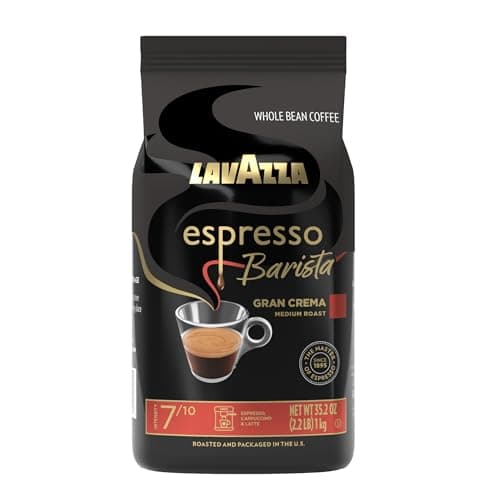
Lavazza Gran Crema (Barista)
Arabica and robusta blendMedium-dark roastBuilt for espressoWhole bean, large format
The espresso workhorse: an Italian blend with robusta in it, which is why it builds a thick crema and why it forgives a grinder that is not quite dialed in.
- Cost per cup
- 8.5
- Roast-date transparency
- 3.5
- Versatility
- 5
- Origin clarity
- 4
- Value
- 9
Pros
- +Robusta in the blend genuinely produces more crema, which is a mechanical fact rather than a marketing claim
- +Forgiving in espresso - the roast level and blend construction tolerate a grind that is slightly off
- +Large-format bags keep cost per cup low for a daily espresso habit
- +Extremely consistent between bags, which matters more than peak quality when you are learning to dial in
Cons
- −Best-before dating rather than a printed roast date, so freshness is unknowable at purchase
- −Robusta brings a rubbery edge some drinkers dislike, and it is the reason specialty roasters avoid it
- −Medium-dark roasting flattens origin character by design
- −Mediocre in filter brewers - this is a bag built for one job
Don't buy this if…
…you brew pour-over or drip. A robusta-containing espresso blend is the wrong tool, and the single origins above are the right one.
Who it is for: the espresso drinker learning to dial in, who wants a bag that tolerates mistakes and costs little per shot. Specifications, pros and cons are carried over unchanged from its entry on our best coffee brands ranking. It ranks here rather than higher because of the roast-date problem: there is no way to know how old the coffee is, and on this page that is the second criterion. As a practical espresso bag, it is better than its placement suggests — and the reason it is on the page at all.
Best high-caffeine bag
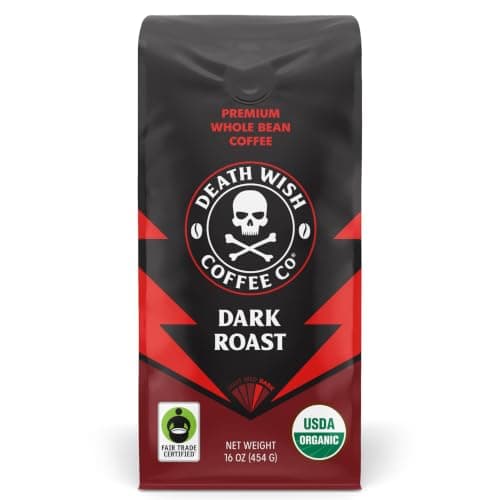
Death Wish Coffee
Arabica and robusta blendDark roastHigher caffeine contentWhole bean
The high-caffeine dark roast, sold on strength and honest about it: a robusta-heavy blend that delivers what the label promises and tastes the way that implies.
- Cost per cup
- 8.5
- Roast-date transparency
- 3.5
- Versatility
- 7
- Origin clarity
- 3
- Value
- 8.5
Pros
- +Robusta contains more caffeine than arabica, so the strength claim has a real mechanism behind it rather than being marketing
- +Dark roasting makes it very forgiving - it extracts acceptably across almost any brewer and grind
- +Consistent, widely available and cheap per cup
- +Works in a French press, a drip machine and a moka pot without adjustment
Cons
- −Dark roasting flattens everything origin-related, and the cup is about intensity rather than flavor
- −Dark roast has slightly less caffeine by weight than lighter roasts of the same bean, because roasting burns off mass - the robusta is doing the work here, not the roast
- −Not suited to pour-over, where a dark roast turns bitter quickly
- −Best-before dating rather than a printed roast date
Don't buy this if…
…you are sensitive to caffeine, or you want to taste the coffee rather than feel it. Both are good reasons to buy almost anything else on this page.
Who it is for: the drinker who wants the strongest cup in the cupboard and is not pretending otherwise. Specifications, pros and cons are carried over unchanged from its entry on our best dark roast coffee beans ranking, which is also where the caffeine-and-roast-level correction above is explained in full. On this page it is a specialist answer to a specific question rather than a general recommendation.
Budget pick
Illy Classico
100% arabica blendMedium roastPressurized tin packagingWhole bean
The budget pick: the cheapest bag here that is reliably good coffee rather than merely cheap coffee - a 100% arabica medium roast that tastes the same every time.
- Cost per cup
- 8.5
- Roast-date transparency
- 4
- Versatility
- 8
- Origin clarity
- 4.5
- Value
- 9.5
Pros
- +100% arabica at the lowest price on this page, which is unusual - most cheap blends reach for robusta
- +Astonishing batch-to-batch consistency, because illy blends to a fixed target rather than to a harvest
- +The pressurized tin genuinely slows staling, which partly compensates for the missing roast date
- +Balanced medium roast that works in espresso and in a drip machine without adjustment
Cons
- −No printed roast date, so the age of the coffee is unknowable
- −Blended for consistency rather than character, so it is pleasant rather than interesting
- −Small tins mean more packaging per cup than a 2lb bag
- −A specialty drinker will find it flat next to the two bags at the top of this page
Don't buy this if…
…you want to taste origin character or you care about freshness dating. illy is built on repeatability, which is a different product promise.
Who it is for:the reader who wants dependable coffee at the lowest price on this page and does not want a project. It is the budget pick because it is the cheapest bag here that still does the job properly — 100% arabica, consistently roasted, good in more than one brewer — rather than the cheapest bag outright. Specifications, pros and cons are carried over unchanged from its entries on our best coffee brands and best coffee beans for latte pages.
How to compare bags that are not the same size
Price per bag is almost useless in this bracket, because it covers 12oz specialty bags and 2lb supermarket bags at the same number. Convert to cost per cup instead: a pound of coffee makes roughly thirty cups at a standard ratio, so a 12oz bag is about twenty-two cups and a 2lb bag about sixty. That single arithmetic step changes the ranking of almost every under-$25 list you will read, and it is why two bags on this page that look expensive per cup are here on quality rather than price. Our coffee to water ratio page has the ratios the arithmetic assumes.
Roast date, not best-before
Coffee does not spoil, it fades: carbon dioxide escapes, aromatics go, and a bag that was excellent a month ago is merely fine. A printed roastdate lets you judge that. A best-before date twelve months out tells you only that the roaster is not telling you. In this bracket the division is sharp — specialty roasters print roast dates and the big consistent brands do not — and it is the main reason the top of this page looks different from a supermarket aisle.
What roast level is actually doing
Darker roasting makes coffee more forgiving: the beans are more soluble, extraction is easier, and the cup is more uniform across brewers and grind settings. It also removes origin character, which is sometimes the point and sometimes a way of making an undistinguished bean acceptable. Lighter roasting keeps more of the bean and asks more of your grinder and your water. Neither is better. Our light vs dark roast coffee page covers the trade, including the caffeine correction most articles get backwards.
Robusta, and when it is a feature
Two bags here contain robusta, which specialty roasters avoid for flavor reasons. It is on the page because robusta does two measurable things: it contains more caffeine than arabica, and it produces more crema in espresso. If either of those is what you want, a robusta blend is the honest answer rather than a compromise. If neither is, buy arabica. Our arabica vs robusta page is the mechanism.
The two things worth more than a better bag
A grinder and buying smaller bags more often. Pre-ground coffee is stale and the wrong size for whatever you own, and no bag on this page survives that. And a 12oz bag you finish in three weeks tastes better than a 2lb bag you work through over two months, even if the 2lb bag was better coffee on day one. Store whichever you buy somewhere airtight and dark — our best coffee storage containers page covers that, and whole bean vs ground coffee makes the freshness case properly.
What under $25 cannot buy
Named microlots, competition lots and genuine Kona at any usable volume. Anything advertising those at this price is either a tiny bag or a blend with a small percentage of the named coffee in it. The honest ceiling of this bracket is excellent everyday coffee from a real roaster, which is what the top of this page is — and that is further than most people expect.
How we picked
We did not lab-test this gear
Everyone in this category says they tested twenty machines. We have not lab-tested any of these, and we say so. What we did instead: compiled the published manufacturer specifications, read the manuals, ran the math where there was math to run (heat-up time, pressure, dose capacity, grind range, cost per cup), and scored each pick against a published rubric. The scores are judgments from documented research — not measurements we took, because we do not have a lab and we will not pretend we do. Where a number came from someone else's work, we name them in Sources.
Questions
Frequently asked
What are the best coffee beans under $25?+
Stumptown Hair Bender, for most people - a genuine specialty blend with a printed roast date that works in espresso and in filter brewers, so one bag covers a mixed household. For a single origin at the same money, Volcanica's Guatemala Antigua. The cheapest bag here that is still reliably good coffee is Illy Classico.
Is expensive coffee actually better?+
Up to a point that is well below $25 a bag, yes - paying for a real roaster with roast dates buys noticeably fresher, more interesting coffee than a best-before blend. Beyond that the gains get smaller and more specific, and a grinder is the better place for the next dollar.
How do I compare a 12oz bag with a 2lb bag?+
Work out cost per cup. A pound of coffee is roughly thirty cups at a standard ratio, so a 12oz bag is about twenty-two cups and a 2lb bag about sixty. The big bag is usually far cheaper per cup, and it is also older by the time you finish it.
Why does roast date matter more than best-before?+
Because coffee fades rather than spoils. Most of what makes fresh coffee taste good leaves in the first few weeks after roasting, so a roast date is information you can act on. A best-before date a year out only tells you the coffee will still be safe to drink.
Are supermarket beans worth buying?+
Some genuinely are, and this page includes two of them. The trade is always the same: great consistency and low cost per cup, no roast date, and a blend built to taste identical every year rather than to taste of anywhere. If that is what you want, it is not a compromise.
Should I buy whole bean or ground at this price?+
Whole bean, every time, provided you own a burr grinder. Ground coffee starts staling within minutes and is sized for an average brewer rather than yours. If you have no grinder, buy a grinder before you buy a better bag - it is the bigger upgrade.
Receipts
Sources
We do not run a testing lab, and we do not pretend to. Where a measured number came from someone else's work, we name them and link them. Where we could not verify something, we say so on the page rather than quietly leaving it out. Read our full method.