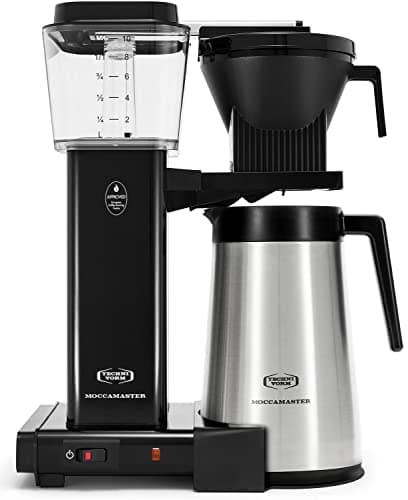
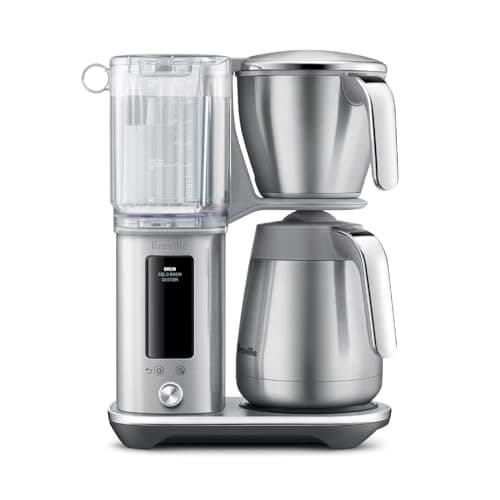
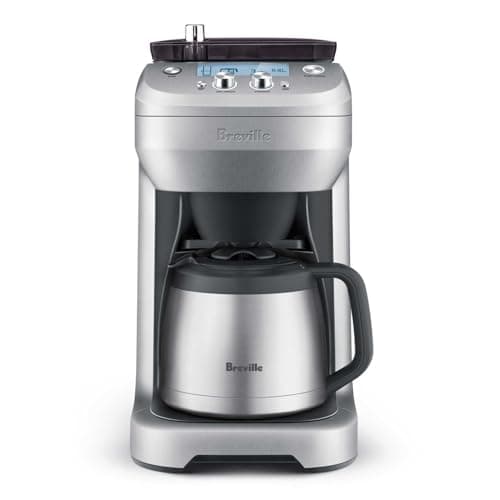
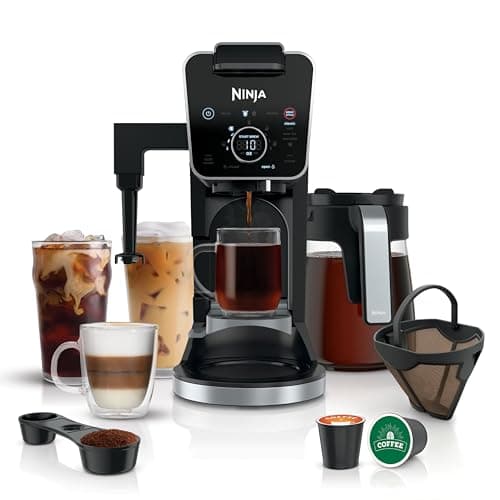
The verdict: the Technivorm Moccamaster KBGV Select is the best coffee maker under $500 for anyone whose question is "which of these makes the best coffee" — it is SCA Golden Cup certified, Technivorm publishes the 195-205°F brew window and the copper element that holds it, and it is built from replaceable parts. If you want that cup in a carafe with no hot plate anywhere near it, buy the Moccamaster KBGT. The budget pick is the Ninja DualBrew Pro, the cheapest machine in this bracket and the only one here that brews from both grounds and pods — it is the cheapest thing on the page that does the job for a household that wants two kinds of coffee from one machine.
Five hundred dollars buys one of three things, and you have to pick. It buys the best cup a drip machine can produce, from a hand-built brewer with a published temperature window and a certification behind it. It buys adjustment — bloom time, brew temperature, flow rate — which one machine in this bracket exposes and nothing cheaper does. Or it buys a genuine burr grinder inside the brewer, so the coffee is ground seconds before the water hits it. What it will not buy is all three in one machine, and any ranking that implies otherwise is hiding a trade-off.
We ranked on published brew-temperature evidence first, then carafe behaviour, then grinding and adjustment. That order puts the two Moccamasters on top and a very capable grind-and-brew fourth, which is a defensible result rather than an obvious one: freshly ground coffee is a bigger improvement than most people expect, and if you are currently buying pre-ground, picks four and five will change your mornings more than picks one and two will. The difference is that the Moccamasters publish numbers and carry marks, and the grinders do not.
Every machine here appears elsewhere on this site, and its specifications, pros and cons are carried over unchanged from that entry — each pick says which one. The bracket below is best coffee makers under $200, where certified brewing first appears and grinding does not come with it. One note on what is deliberately absent: Breville's Precision Brewer is discontinued per Breville's own product documentation, so it is not a pick on this page even though it still shows up on other sites' under-$500 lists.
How to choose a coffee maker under $500
Four questions, and the first one eliminates about half the field for most readers.
1. What kind of temperature evidence does the machine carry?
Brew temperature is the variable the machine controls and you cannot, and it is the one that decides whether good beans taste good. In this bracket there are three tiers of evidence. A machine that publishes a numeric window and carries a third-party certification — both Moccamasters. A machine that says it brews to a standard, which is the manufacturer describing its own product — the Breville Luxe Brewer. And a machine that publishes nothing about temperature at all, which is the two grind-and-brews and the Ninja. All three tiers can make good coffee. Only the first gives you a reason to believe it before you buy.
2. Grind inside or outside the machine?
This bracket is the first where grind-and-brew machines are worth owning: both of the ones here use real burrs, not blade choppers. The case for them is strong — fresh grind is the biggest single improvement available to most drip drinkers. The case against is maintenance and repairability. A built-in grinder has to be cleaned on the machine's schedule, not yours; Breville's own manual asks for a rinse after every brew and a burr clean every few weeks. And when the grinder fails, the brewer fails with it. A separate grinder is the opposite trade: more counter space, better grind, independently replaceable.
3. Thermal carafe, hot plate, or straight into a cup?
A warming plate continues cooking finished coffee and flattens it within about half an hour. Insulation removes the element from the design. But notice the third option in this bracket: the De'Longhi brews into whatever cup you put under it, which sidesteps the carafe question entirely and is the right answer for one or two people. Match this to how your coffee is actually consumed. A pot that is poured out in twenty minutes does not need insulation; a pot that sits until ten o'clock needs it badly.
4. Do you want to adjust the brew, or receive it?
One machine here exposes bloom volume, bloom time, brew temperature and flow rate. If that sentence excites you, buy it — nothing else in this bracket lets you move those variables, and the ability to bloom a light roast longer is a real tool rather than a menu. If it reads as homework, buy a Moccamaster and press the switch. Paying for adjustment you will never use is the most common way to overspend in this bracket.
What $500 still cannot buy
A certified machine with a built-in grinder. It does not exist in this bracket: the grind-and-brews publish no temperature figures and carry no marks, and the certified machines do not grind. If you want both, the honest route is a certified brewer plus a separate grinder, which fits inside $500 together — for instance a machine from best coffee makers under $200 and a grinder from best coffee grinders under $200. That combination grinds better than any machine on this page and brews to a certification, and it costs less than picks four and five.
Beans, grind and water
A $400 brewer does not rescue stale coffee. The ranking order that actually improves cups is fresh beans, then a burr grinder, then the brewer, then water treatment — and a $500 machine sits third on that list for a reason. Start from the working ratio in coffee to water ratio, pick beans that suit a flat or cone basket from best coffee beans for drip coffee, and set the grind using the coffee grind size chart. If the cup is thin and sour, the problem is almost never the machine in this bracket.
How we picked
We did not lab-test this gear
Everyone in this category says they tested twenty machines. We have not lab-tested any of these, and we say so. What we did instead: compiled the published manufacturer specifications, read the manuals, ran the math where there was math to run (heat-up time, pressure, dose capacity, grind range, cost per cup), and scored each pick against a published rubric. The scores are judgments from documented research — not measurements we took, because we do not have a lab and we will not pretend we do. Where a number came from someone else's work, we name them in Sources.