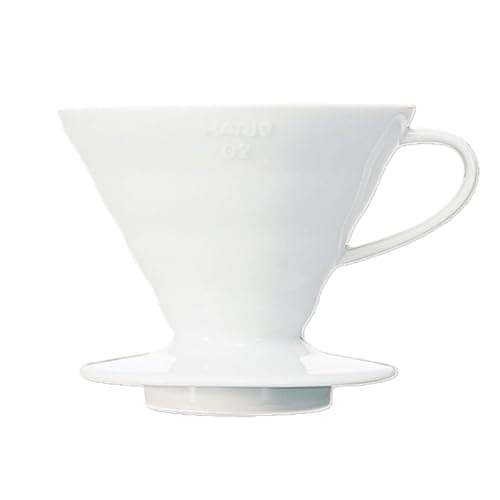
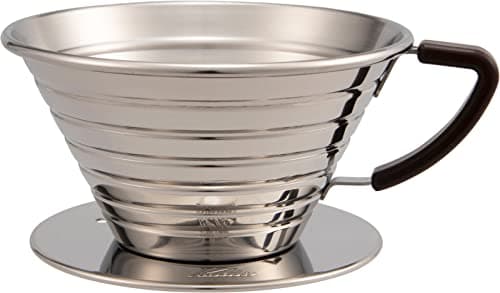
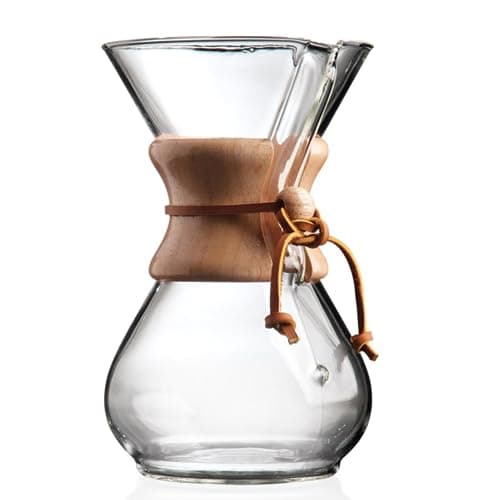
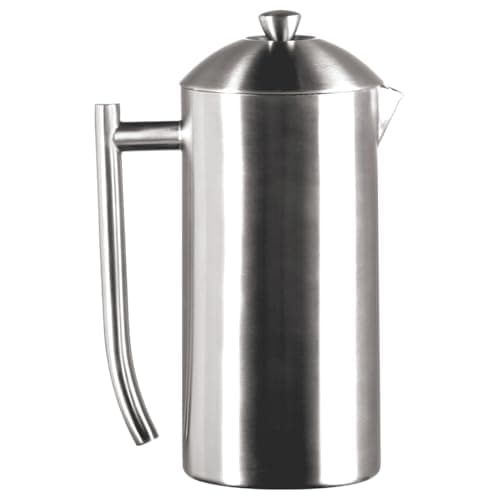
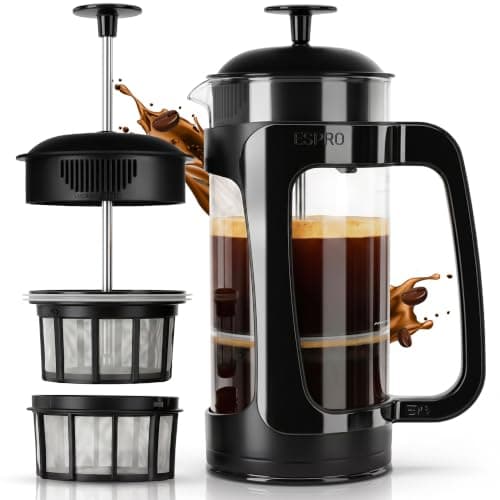
The verdict: the Espro P3 French Press is the closest alternative to an AeroPress that is not made of plastic — it is immersion brewing like the AeroPress, its double micro-filter gets close to AeroPress clarity, and plunging seals the grounds so extraction stops, which is the AeroPress's "press it and you are done" behavior in a glass-and-steel body that also makes 32 ounces. If you only want to lose the plastic and spend less, the Hario V60 Ceramic is the cheap no-plastic answer. The budget pick is the OXO Brew Pour Over with Water Tank, the cheapest brewer here that keeps the AeroPress's best quality — being hard to get wrong.
First, what the AeroPress actually does, because the alternatives all keep some of it and drop the rest. It steeps coffee in water the way a French press does, then forces that water through a paper microfilter under hand pressure. That combination is unusual: immersion gives you forgiveness, because the coffee is sitting in water rather than depending on how you pour, and the paper filter gives you a clean cup with none of the sediment a press leaves behind. It brews roughly a mug at a concentrated ratio you dilute afterwards, takes about ninety seconds, and cleans up in about five because the puck ejects dry into the bin. It is also effectively unbreakable, which is why it travels so well.
People look for an alternative for two specific reasons, and the autocomplete bears this out — "no plastic," "glass" and "metal" are the most common qualifiers after the bare query. Material: the AeroPress is a plastic tube, and plenty of people would rather not brew hot water in one. Volume: one cycle is one mug, so a household means repeat rounds. A third, quieter reason is the consumable: it needs paper filters, and running out means no coffee.
So the ranking is by how many of the AeroPress's four strengths each alternative keeps — immersion forgiveness, filtered clarity, fast cleanup, portability — then by material, then by price. One honest warning up front: the no-plastic requirement and the cheapest option pull in opposite directions, and the budget pick below has plastic in it. The page says so rather than quietly ranking around it. Every pick is already in our registry; specifications, pros and cons are carried over unchanged from its entry elsewhere on the site, with that page named in the pick's own body. Nothing here is a criticism of the AeroPress — it tops our best travel coffee makers ranking and our best coffee maker for beginners ranking, and if neither the plastic nor the volume bothers you, it is still the one to buy.
Which AeroPress strength are you trying to keep?
The AeroPress does four things at once, and no single alternative keeps all four. Decide which one you actually care about and the list shortens immediately.
Forgiveness: the Espro, the OXO, then the Kalita
This is the most underrated reason people love an AeroPress and the easiest to lose by accident. Because the coffee steeps in water rather than depending on how you pour, grind size and technique matter far less than they do in any pour-over. If that is what you value, you want another immersion brewer — a press — or a dripper that removes the pour from your hands. Buying a V60 because it is the famous one is the single most common way an ex-AeroPress owner ends up disappointed.
A clean, paper-filtered cup: the Chemex, the V60, the Kalita
Paper traps oils and fines that metal screens let through, which is why an AeroPress cup is clean rather than heavy. Any paper-filtered brewer reproduces that; a French press by default does not. The Espro is the middle ground, because its double micro-filter catches far more than a single mesh. If you move to the Frieling you are deliberately choosing a heavier, sedimented cup — a legitimate preference, but a change.
A five-second cleanup: nothing here matches it
Worth being blunt. The AeroPress ejects a dry puck straight into the bin and needs a rinse. Every alternative on this page is slower: a press has to be emptied and scrubbed, a dripper means binning a wet filter and washing a cone, and the Chemex has to be cleaned by hand through a narrow neck. If cleanup is genuinely the thing you like most, the honest answer is that you should keep the AeroPress.
Portability: only the Frieling and the Kalita survive a bag
Glass and ceramic are liabilities in luggage, which rules out the Espro, the Chemex and the V60 for travel even though all three are excellent at home. Our best travel coffee makers ranking covers that case properly — and the AeroPress tops it, which is not a coincidence.
The no-plastic question, honestly
This is the most common qualifier attached to the search and it deserves a straight answer rather than a marketing one. Five of the six picks here have no plastic in the brew path: the Espro is borosilicate glass and steel, the V60 is ceramic, the Kalita and the Frieling are stainless, and the Chemex is glass. The budget pick has plastic and its entry says so.
What we are not going to do is tell you what that is worth, because we have not measured anything and neither has anyone quoting figures at you. The AeroPress is made from BPA-free polypropylene and the manufacturer publishes that; whether brewing in food-grade plastic at brewing temperature matters to you is a judgment call, not a spec. What we can say is that it is a common enough preference to shape a whole search query, that the registry has good answers for it at four different price points, and that choosing glass, ceramic or steel costs you durability, cleanup speed or both.
The volume question
One AeroPress cycle is one mug — AeroPress publishes it as roughly 10 oz, or one to two cups of the small kind. For one person that is the right size and for a household it is the reason people go looking. Only two picks here genuinely scale: the Chemex brews and serves six cups, and the two presses make 32 and 36 ounces respectively. The three single-cup drippers do not solve this at all. If volume is your only complaint and you like everything else, note that an electric drip machine solves it better than any manual brewer — best coffee makers under $200 is the relevant page, and a certified machine will brew a full carafe at the right temperature while you do something else.
What you will also need
Three of these need a kettle you can pour accurately from: the V60 especially, the Kalita and the Chemex to a lesser degree. That is a genuine extra cost and it is the thing most often left out of a cheap-looking pour-over recommendation — best gooseneck kettles covers it. All of them, like the AeroPress, want a burr grinder more than they want anything else; if you are grinding pre-ground coffee the brewer is not your limiting factor, and best budget coffee grinders is the cheaper fix. And the ratio does not change because the brewer did: about 1 gram of coffee to 16 grams of water, as set out in coffee to water ratio, except for the presses, which run a little stronger.