Skip to content
Tamp & Pour

Roundups & reviews · Espresso Machines

The best semi-automatic espresso machines

The format where the machine supplies pressure and heat and you supply everything else. Ranked on thermal behavior, steam, basket standard and repair path, with an honest 'don't buy if' on every pick.

By Stephen V.Updated How we review
#ad

We earn a commission when you buy through our Amazon links, at no extra cost to you. It never changes a verdict, and we say so when the cheaper product is the better buy. How this works.

The verdict: the Breville Bambino Plus is the best semi-automatic espresso machine for most people, because it heats in seconds, holds a steady brew temperature and textures milk automatically, which removes the one step beginners get wrong without removing the part that makes espresso espresso. If you want a machine you will still be improving in five years, buy the Gaggia Classic Pro instead — a commercial 58mm basket and the deepest modding ecosystem in home espresso. The budget pick is the De'Longhi Stilosa, the cheapest machine here with a real portafilter and a bare steam wand rather than a frothing sleeve.

"Semi-automatic" describes a division of labor, not a price bracket. The machine does two things: it heats water, and it pushes that water through a puck at roughly nine bar for as long as you hold the button. Everything else is yours — the grind, the dose, the tamp, when the pump stops, and the milk. A super-automatic takes all of that away behind a sealed brew group. A manual lever hands you the pressure curve as well. Semi-automatic sits in the middle, and it is the format almost every cafe in the world uses, which is the honest reason it is worth learning.

That division of labor sets the ranking. Thermal behavior comes first, because a machine whose brew temperature moves between shots makes your dialing-in meaningless. Steam comes second, because it is the capability most often undersold at this price. The basket standard comes third — 58mm buys you the professional accessory market, 54mm buys you Breville's, 51mm buys you a short shelf — and the repair path comes fourth, because these machines last long enough for it to matter. Convenience is ranked last on purpose: it is the thing this format deliberately trades away.

One warning before the picks, and it is the most useful sentence on this page: a semi-automatic machine with a non-pressurized basket gives a bad grind nowhere to hide. If one budget has to cover both, buy less machine and more grinder. Every pick here already appears elsewhere on this site; specifications, pros and cons are carried over unchanged from those entries and each pick names where it came from. What is new is the format question and the order. Prices are live from the price layer with the date they were read.

The short answer

Quick picks

  • 01
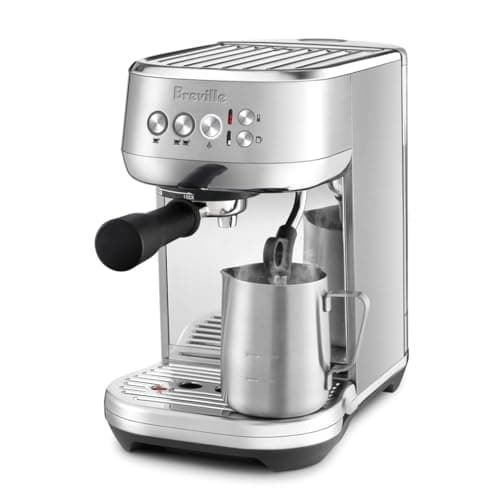
    Breville Breville Bambino Plus (BES500)
    Breville Bambino Plus (BES500)

    The semi-automatic that removes the one step beginners actually fail - milk - while keeping the shot entirely yours. Ready in about three seconds, with a stable brew temperature and a tiny footprint.

    7.5Best overall semi-automatic
  • 02
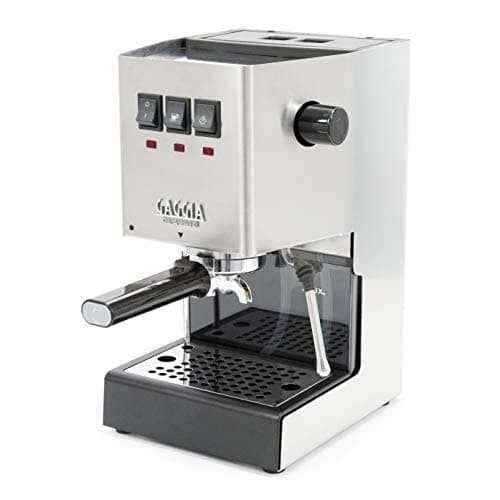
    Gaggia Gaggia Classic Pro (E24)
    Gaggia Classic Pro (E24)

    The machine you keep. A lead-free brass boiler, a commercial 58mm portafilter, a 3-way solenoid valve and the deepest modding ecosystem in home espresso - with no PID from the factory.

    8.4Best for upgrading over time
  • 03
    Breville Breville Barista Express (BES870XL)
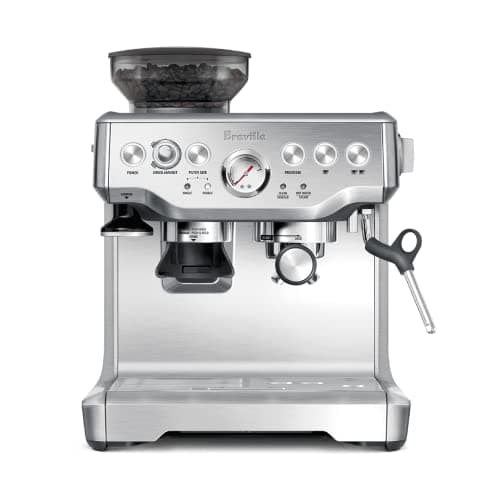
    Breville Barista Express (BES870XL)

    The semi-automatic that arrives complete: grinder, PID temperature and a 54mm portafilter in one box, so there is no second purchase before your first shot.

    7.3Best all-in-one
  • 04
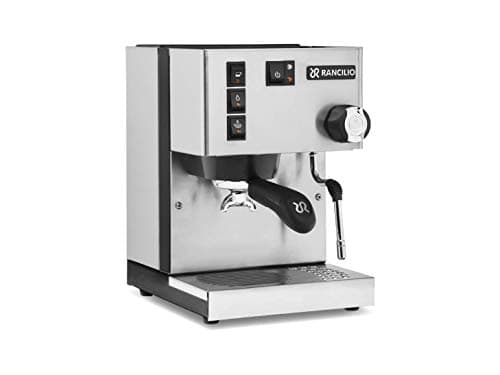
    Rancilio Rancilio Silvia
    Rancilio Silvia

    The commercial-build option: a brass commercial group with real thermal mass and the strongest steam here, in a stainless body heavy enough to stay put.

    8.5Best build and steam
  • 05
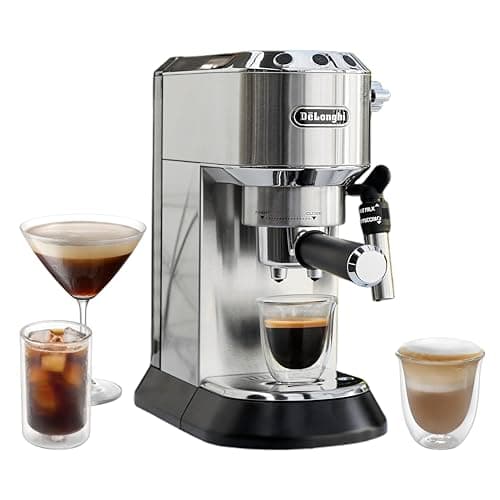
    De'Longhi De'Longhi Dedica Deluxe (EC685)
    De'Longhi Dedica Deluxe (EC685)

    The narrowest real espresso machine here: about six inches wide, fast to heat, with a 51mm pressurized basket that does some of the grind's work for you.

    5.9Best for a tiny counter
  • 06
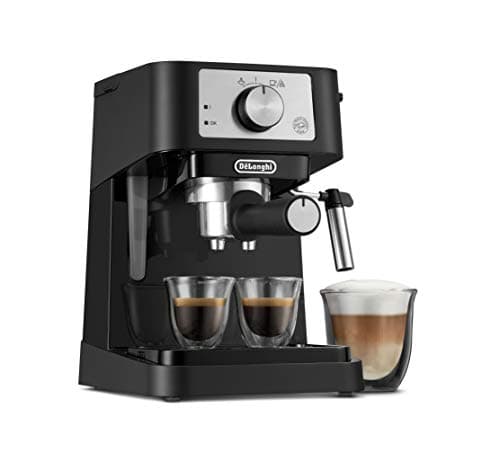
    De'Longhi De'Longhi Stilosa (EC260)
    De'Longhi Stilosa (EC260)

    The cheapest machine here with a real portafilter and a bare steam wand rather than a sleeve - the budget pick, with the compromises that price implies stated plainly.

    5.3Budget pick

#ad · Live prices from the Amazon Product API, as of November 22, 2026. Where we have no verified live price, we show none — a gap beats a number that has rotted.

In detail

The picks, in full

01
Breville Breville Bambino Plus (BES500)

Best overall semi-automatic

Breville Bambino Plus (BES500)

54mm portafilterThermoJet heating, ~3 second heat-upPID temperature control, low-pressure pre-infusionAutomatic milk texturing
7.5/10

The semi-automatic that removes the one step beginners actually fail - milk - while keeping the shot entirely yours. Ready in about three seconds, with a stable brew temperature and a tiny footprint.

Thermal behavior
8
Steam
7.5
Basket standard
7
Repair path
6.5
Value
8.5

Pros

  • Three-second heat-up changes how often a machine actually gets used - there is no waiting ritual to talk yourself out of
  • PID temperature control holds brew temperature shot to shot, which is most of what consistency needs
  • Automatic milk texturing reaches a repeatable microfoam without you learning to steam first
  • Low-pressure pre-infusion wets the puck before full pressure arrives, which reduces channeling on a slightly uneven tamp
  • One of the smallest footprints of any real espresso machine, so it fits kitchens that cannot host a Barista Express

Cons

  • No grinder, so budget for one on top - and its non-pressurized baskets demand a grinder that can genuinely be dialed in
  • A ThermoJet has almost no thermal mass, so output temperature tracks flow rate rather than being held by a body of water
  • 54mm is Breville's standard rather than the commercial one, so the accessory shelf is narrower than 58mm
  • The automatic milk wand is excellent at one job and offers less control than a bare wand if you want to learn texturing by feel

Don't buy this if…

…you want to texture milk by hand from day one, or you want a 58mm commercial basket and the option of fitting a PID later. The Gaggia Classic Pro below is that machine.

Who it is for: the reader who wants real espresso and one flat white in the morning, in a kitchen with no room to spare. Specifications, pros and cons are carried over unchanged from our Breville Bambino Plus review and its entry on our best single boiler espresso machines ranking, which explains why a ThermoJet is not a boiler. It wins this page rather than the Gaggia because the format's two failure points for a newcomer are temperature and milk, and this machine solves both at the factory. What it does not solve is the grind, which is why the honest budget is this plus a grinder, not this alone.

$499.95View on Amazon

Price as of November 22, 2026. Prices change — Amazon's at checkout is the one that counts.

#ad · we may earn a commission from this link to Breville Bambino Plus (BES500)

02
Gaggia Gaggia Classic Pro (E24)

Best for upgrading over time

Gaggia Classic Pro (E24)

58mm commercial portafilterLead-free brass boiler3-way solenoid valveRotary steam wand, no factory PID
8.4/10

The machine you keep. A lead-free brass boiler, a commercial 58mm portafilter, a 3-way solenoid valve and the deepest modding ecosystem in home espresso - with no PID from the factory.

Thermal behavior
7.5
Steam
7.5
Basket standard
9.5
Repair path
9.5
Value
8

Pros

  • A real brass boiler holds temperature through a shot as a heated mass rather than tracking flow rate
  • 58mm is the commercial standard, so every basket, tamper, puck screen and bottomless portafilter on the professional market fits
  • The 3-way solenoid releases pressure after the shot, so the puck comes out as a dry disc rather than a wet mess
  • The best-supported modding platform in home espresso - PID kits, OPV adjustment, baskets and shower screens are all documented
  • Serviceable with widely available parts, which is why decade-old units are still in daily use

Cons

  • No PID from the factory, so you either learn temperature surfing or fit a kit
  • Long warm-up compared with a ThermoJet machine, and longer again if you want the group itself hot
  • No grinder, and its non-pressurized baskets are the least forgiving of a bad grind on this page
  • Steam is adequate rather than strong until the boiler is fully up to temperature

Don't buy this if…

…you want to press one button and get a latte. This machine assumes you will learn a routine, and it rewards that rather than replacing it.

Who it is for: the reader who expects to care more about espresso in two years than they do today. Specifications, pros and cons are carried over unchanged from our Gaggia Classic Pro review and its entry on the single boiler ranking. It places second rather than first only because of the two things it asks of a newcomer on day one: a warm-up routine, and a grind good enough to survive a bottomless basket. Fitting a PID kit removes the first, which is the cheapest meaningful upgrade in home espresso — our Gaggia Classic Pro alternatives page makes that case in detail.

$449.76View on Amazon

Price as of November 22, 2026. Prices change — Amazon's at checkout is the one that counts.

#ad · we may earn a commission from this link to Gaggia Classic Pro (E24)

03
Breville Breville Barista Express (BES870XL)

Best all-in-one

Breville Barista Express (BES870XL)

54mm portafilterBuilt-in conical burr grinderDigital PID temperature1600W thermocoil, 2L tank
7.3/10

The semi-automatic that arrives complete: grinder, PID temperature and a 54mm portafilter in one box, so there is no second purchase before your first shot.

Thermal behavior
8
Steam
7
Basket standard
7
Repair path
6.5
Value
8

Pros

  • One purchase instead of two, which is the single biggest reason this machine is recommended so often
  • PID temperature control keeps brew temperature steady shot to shot
  • The built-in grinder is good enough that many owners never replace it
  • Dose, grind size and shot volume are all adjustable from the machine, so the whole loop sits in one place

Cons

  • The built-in grinder is a compromise against a dedicated grinder at the same total spend
  • A large footprint - the deepest and widest machine on this page
  • 54mm baskets rather than the commercial 58mm standard
  • Cleaning the integrated grinder is more involved than cleaning a standalone one

Don't buy this if…

…you already own a grinder that can be dialed in. You would be paying for a second one, and a Bambino Plus beside your existing grinder is the better machine for the money.

Who it is for: the reader who wants one box on the counter and one line on the receipt. Specifications, pros and cons are carried over unchanged from our Breville Barista Express review. It sits third because this page ranks the shot side first, and an integrated grinder is the feature most often regretted later — not because it is bad, but because the money spent on it buys less grind quality than the same money spent standalone. If the convenience is the point, that is a perfectly rational trade, and our Breville Barista Express alternatives page lays out what you give up either way.

$494.95View on Amazon

$699.9529% off

Price as of November 22, 2026. Prices change — Amazon's at checkout is the one that counts.

#ad · we may earn a commission from this link to Breville Barista Express (BES870XL)

04
Rancilio Rancilio Silvia

Best build and steam

Rancilio Silvia

58mm commercial portafilterBrass commercial group, 0.3L boiler2L tank, vibration pumpManual thermostat, no factory PID
8.5/10

The commercial-build option: a brass commercial group with real thermal mass and the strongest steam here, in a stainless body heavy enough to stay put.

Thermal behavior
8.5
Steam
9
Basket standard
9.5
Repair path
9
Value
6.5

Pros

  • A brass commercial group is the most thermally stable thing on this page once it is hot
  • The strongest steam here - an unsleeved wand fed by a brass boiler textures jug after jug
  • Commercial-lineage parts, so this is a machine you service rather than replace
  • Heavy stainless body that does not shift when you lock in a portafilter

Cons

  • Manual thermostat rather than a factory PID, so temperature surfing is part of the routine
  • Long warm-up, and the group wants longer still
  • Small drip tray with tight clearance under the group
  • No grinder, at a price where budgeting for one hurts

Don't buy this if…

…you want help from the machine. There is no screen, no guidance and no automation - it is a capable tool that assumes competence.

Who it is for: the reader who makes several milk drinks a morning and wants the steam to keep up, and who is happy to own a machine with no features. Specifications, pros and cons are carried over unchanged from our Rancilio Silvia review. It scores highest here on thermal behavior and steam and still places fourth, which needs explaining: this page ranks machines for the kitchen they end up in, and the Silvia costs roughly twice the Gaggia while asking the same warm-up routine and leaving the same grinder gap. If steam is the thing you keep running out of, move it to the top of your own list.

$995.00View on Amazon

Price as of November 22, 2026. Prices change — Amazon's at checkout is the one that counts.

#ad · we may earn a commission from this link to Rancilio Silvia

05
De'Longhi De'Longhi Dedica Deluxe (EC685)

Best for a tiny counter

De'Longhi Dedica Deluxe (EC685)

51mm pressurized basketAbout six inches wideFast-heating thermoblockAdjustable frothing sleeve
5.9/10

The narrowest real espresso machine here: about six inches wide, fast to heat, with a 51mm pressurized basket that does some of the grind's work for you.

Thermal behavior
6.5
Steam
5.5
Basket standard
5
Repair path
4.5
Value
8

Pros

  • Six inches wide is a genuinely different proposition - it fits where nothing else here will
  • Heats quickly, which suits a household that wants one coffee and no ceremony
  • The pressurized basket forgives a grinder that cannot go fine enough, which is the right call at this price
  • Stainless front and a solid feel for the money

Cons

  • 51mm has the narrowest accessory market of the three basket standards - tampers and baskets are a short shelf
  • A pressurized basket creates crema mechanically, so it hides grind problems rather than letting you fix them
  • A frothing sleeve rather than a bare steam wand, so texturing is harder to learn on it
  • No meaningful repair path

Don't buy this if…

…you want to learn espresso properly. A pressurized basket is a training-wheels design, and you will want a bottomless 51mm portafilter before long.

Who it is for: the reader whose counter is the binding constraint. Specifications, pros and cons are carried over unchanged from our De'Longhi Dedica review. It sits fifth because the pressurized basket is a real ceiling on what the machine can ever do, not because the machine is poorly made. If you buy it and then want more, the cheapest route is a non-pressurized 51mm basket and a bottomless portafilter — both are on our 51mm espresso accessories page, along with the dose that size of basket actually wants.

$348.00View on Amazon

Price as of November 22, 2026. Prices change — Amazon's at checkout is the one that counts.

#ad · we may earn a commission from this link to De'Longhi Dedica Deluxe (EC685)

06
De'Longhi De'Longhi Stilosa (EC260)

Budget pick

De'Longhi Stilosa (EC260)

51mm pressurized basketBare steam wand15 bar pumpManual controls, no electronics
5.3/10

The cheapest machine here with a real portafilter and a bare steam wand rather than a sleeve - the budget pick, with the compromises that price implies stated plainly.

Thermal behavior
4.5
Steam
5
Basket standard
5
Repair path
3.5
Value
8.5

Pros

  • A genuine portafilter machine at the lowest price on this page - it is espresso, not a pod
  • A bare steam wand rather than a frothing sleeve, so milk texturing is learnable on it
  • Simple manual controls with almost nothing to fail
  • Cheap enough that pairing it with a decent grinder still costs less than most single machines here

Cons

  • Pressurized basket only, so crema is produced mechanically rather than earned by the grind
  • No temperature control of any kind, and a small thermoblock that cools quickly between tasks
  • Light enough that locking in a portafilter moves the machine
  • No repair path worth planning around

Don't buy this if…

…you already know you want to dial shots in. The money is better spent on a grinder first and this machine second, or on a Bambino once the grinder exists.

Who it is for:the reader finding out whether home espresso is for them before committing real money. It is the budget pick because it is the cheapest product here that does the actual job of the category — pressurized water through a puck in a portafilter, plus a wand you can learn on. Specifications, pros and cons are carried over unchanged from our De'Longhi Stilosa review. The honest framing: everything above it on this page is better, and this is still a real espresso machine, which is not something every cheap product can claim.

$134.95View on Amazon

$149.9510% off

Price as of November 22, 2026. Prices change — Amazon's at checkout is the one that counts.

#ad · we may earn a commission from this link to De'Longhi Stilosa (EC260)

What makes a machine semi-automatic

One thing: the machine controls pressure and temperature, and you control the dose, the grind, the tamp and when the pump stops. A pump-driven machine with a portafilter you fill yourself is semi-automatic, whether it costs a hundred dollars or three thousand. Adding a grinder does not change the category — the Barista Express is still semi-automatic, because you still load and tamp the basket. Adding a sealed brew group does change it, and that is a super-automatic.

The four things that actually separate these machines

1. Does it have thermal mass, or does it have speed?

A brass boiler is a vessel of water heated as a mass. It takes minutes to get hot and it holds temperature through a shot. A thermoblock or ThermoJet heats water as it flows through, so it is ready in seconds and its output temperature depends on how fast the water is moving. Both are sold as single-heater machines and they do not behave the same. Boiler machines can be fitted with a PID later; thermoblocks cannot, because there is no vessel to regulate.

2. Which basket standard are you buying into?

58mm is the commercial standard and the whole professional accessory market fits it. 54mm is Breville's, and the market is good but Breville-shaped. 51mm is the De'Longhi size and the shelf is short. This matters more than it sounds, because tampers, baskets, puck screens and bottomless portafilters are where the next few hundred dollars go. Our 58mm, 54mm and 51mm pages are each built around one of them.

3. Pressurized basket or not?

A pressurized basket has a valve that creates back-pressure on its own, so it produces crema almost regardless of the grind. It is genuinely useful if your grinder cannot go fine enough, and it is also a ceiling: it hides the information you need in order to improve. A non-pressurized basket gives a bad grind nowhere to hide, which is why it is both the better basket and the harder one. Our pressurized vs non-pressurized portafilter page explains how to tell which one you have.

4. Can you still buy parts?

Gaggia and Rancilio are serviceable with widely available parts, and ten-year-old units are still pulling shots. Breville machines are reliable but closed. De'Longhi's cheapest machines have no repair path to plan around. Over a decade that difference is real money, and it is part of why the Gaggia ranks where it does despite asking more of you on day one.

What a semi-automatic machine will not do for you

It will not fix your grind. It will not dose for you. On every machine here except the Bambino Plus it will not texture milk for you. And it will not pull a good shot the first time you try — the first week is genuinely a learning curve, which is the whole reason bean-to-cup machines exist and sell well. If none of that appeals, this format is not a bargain, it is a hobby you have not agreed to yet.

Buy the grinder in the same breath

The grind creates the resistance a semi-automatic machine needs. A good machine fed pre-ground coffee makes bad espresso and there is no setting that rescues it. If the total budget is fixed, the split most people regret least is roughly even between machine and grinder — see best espresso grinders and best coffee grinders under $500, and home espresso setup for the order to buy things in.

How we picked

We did not lab-test this gear

Everyone in this category says they tested twenty machines. We have not lab-tested any of these, and we say so. What we did instead: compiled the published manufacturer specifications, read the manuals, ran the math where there was math to run (heat-up time, pressure, dose capacity, grind range, cost per cup), and scored each pick against a published rubric. The scores are judgments from documented research — not measurements we took, because we do not have a lab and we will not pretend we do. Where a number came from someone else's work, we name them in Sources.
Questions

Frequently asked

What is the best semi-automatic espresso machine?
The Breville Bambino Plus, for most people. It heats in about three seconds, holds brew temperature with PID control and textures milk automatically, so the two things a newcomer usually gets wrong are handled while the shot stays entirely yours. If you want a 58mm commercial basket and a machine you can modify for a decade, the Gaggia Classic Pro is the better long-term buy.
Is a semi-automatic machine hard to use?
The machine is simple; the grind is not. Locking in a portafilter and pressing a button takes a minute to learn. Reaching a repeatable 25-to-30-second shot takes a week or two of adjusting grind size, and it is impossible without a grinder that adjusts finely enough. That is the real learning curve, and it belongs to the grinder more than the machine.
Semi-automatic or super-automatic?
Semi-automatic if you want to make the coffee; super-automatic if you want to have the coffee. A bean-to-cup machine grinds, doses, brews and dumps the puck behind a sealed group and you never learn anything, which for a lot of households is the feature. Our semi vs super-automatic page walks through the trade in detail.
Do I need a 58mm machine?
No, but it is the standard with the deepest accessory market. 58mm is what commercial machines use, so baskets, tampers, puck screens and bottomless portafilters are all easy to find. 54mm is Breville's size and well supported. 51mm is the narrowest market of the three. Pick the machine first, then accept the shelf that comes with it.
Is a built-in grinder worth it?
It buys convenience, not grind quality. At the same total spend a separate grinder beats an integrated one, because the integrated one has to fit inside a machine's budget and its case. The Barista Express is on this page because one box and one receipt is a real benefit for a lot of people — just not a shot-quality benefit.
Can I add a PID to a semi-automatic machine later?
Only if it has a boiler. A PID regulates the temperature of a vessel of water, so the Gaggia Classic Pro and the Rancilio Silvia can take a kit and a thermoblock or ThermoJet machine cannot. If "I will upgrade it later" is part of your plan, that decides which two machines on this page you are choosing between. Our best espresso machines with PID page covers the machines that ship with one.

Keep reading

Receipts

Sources

We do not run a testing lab, and we do not pretend to. Where a measured number came from someone else's work, we name them and link them. Where we could not verify something, we say so on the page rather than quietly leaving it out. Read our full method.