Skip to content
Tamp & Pour

Roundups & reviews · Espresso Machines

The best espresso machine brands

Seven manufacturers, one representative machine each, ranked on the thing that outlives the spec sheet: whether you can get parts, which basket standard you are joining, and what the brand is actually built to do.

By Stephen V.Updated How we review
#ad

We earn a commission when you buy through our Amazon links, at no extra cost to you. It never changes a verdict, and we say so when the cheaper product is the better buy. How this works.

The verdict: Breville is the best espresso machine brand for most American kitchens, because it is the only manufacturer that ships factory PID temperature control, fast heating and a complete accessory ecosystem at a home price — and the Bambino Plus is the machine that proves it. If you want a machine you can still repair in ten years, buy Gaggia instead, which uses the commercial 58mm standard and has the deepest parts and modding ecosystem in home espresso. The budget pick is CASABREWS, the house brand that gets a real steam wand and a stainless body to the lowest price here, with no repair path and no pretence of one.

A brand is not a machine, so this page is careful about what it claims. What a manufacturer actually decides for you is narrow and important: which basket size you are buying into, whether parts will exist in five years, whether the machine is designed to be learned or to be ignored, and how much of the price goes into a grinder you did not choose. Those four things outlive any single model, and they are what this ranking is built on.

Each brand below is represented by one machine already on this site, chosen because it is the clearest expression of what that manufacturer is for — not necessarily its best or most expensive model. Specifications, pros and cons are carried over unchanged from those entries and each pick names where it came from. The brand-level judgment is the new part, and it is a judgment from published documentation and accessory availability, not from testing seven machines side by side, because we do not have a lab and will not pretend otherwise.

One thing worth saying before the list: there is no brand here that is wrong for everybody. The ranking is ordered for a reader who wants to pull espresso at home and keep the machine a long time. Change that goal to "a latte at the press of a button" and Jura moves to the top; change it to "the cheapest real espresso in the house" and the last pick becomes the first. The deep per-brand rankings are linked from each entry.

The short answer

Quick picks

  • 01
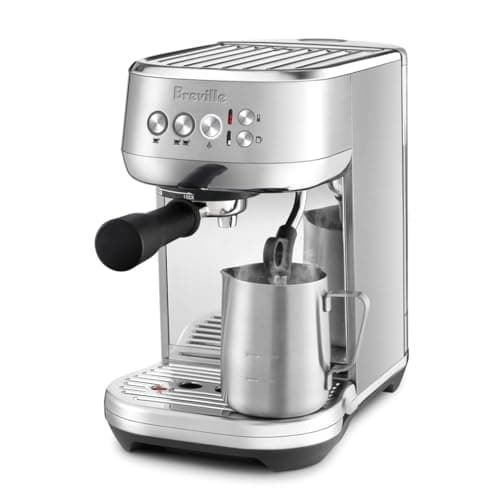
    Breville Breville Bambino Plus (BES500)
    Breville Bambino Plus (BES500)

    The brand that brought factory PID, three-second heating and a real accessory ecosystem to home prices. The Bambino Plus is the cheapest clear statement of all three.

    8.1Best brand for most kitchens
  • 02
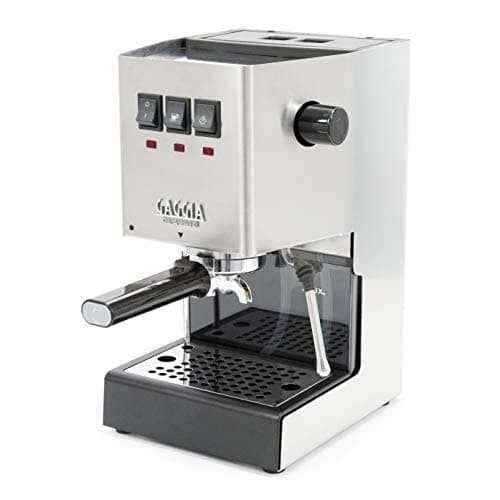
    Gaggia Gaggia Classic Pro (E24)
    Gaggia Classic Pro (E24)

    The brand you buy if the machine should outlive the warranty: a brass boiler, the commercial 58mm standard and the best-documented parts and modding ecosystem in home espresso.

    8.1Best brand for repair and upgrades
  • 03
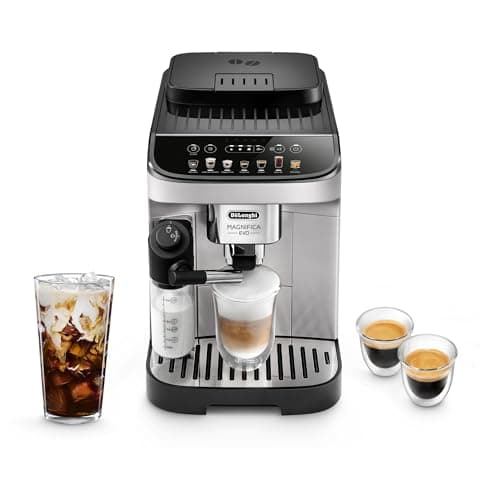
    De'Longhi De'Longhi Magnifica Evo
    De'Longhi Magnifica Evo

    The broadest range in espresso: six-inch manual machines at one end, automatic milk bean-to-cup at the other. The Magnifica Evo is where that breadth pays off.

    6.5Best brand for range and bean-to-cup
  • 04
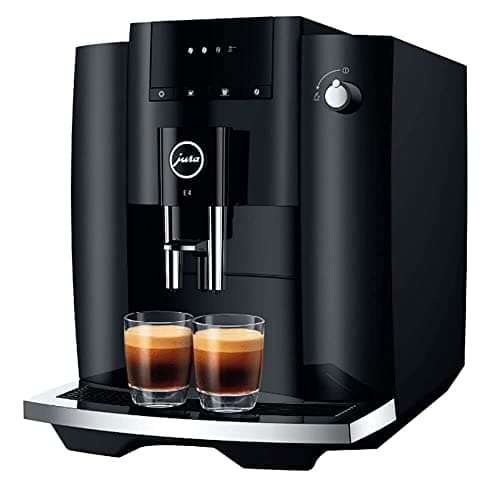
    Jura Jura E4
    Jura E4

    The brand that does one thing and does it better than anyone: a sealed bean-to-cup machine you press once, built to Swiss standards and priced accordingly.

    6.4Best brand for one-touch coffee
  • 05
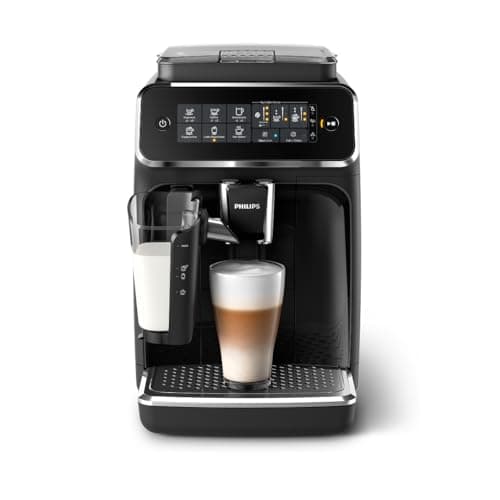
    Philips Philips 3200 Series LatteGo (EP3241)
    Philips 3200 Series LatteGo (EP3241)

    The brand that solved the worst chore in bean-to-cup: LatteGo is a two-part milk carafe with no tubes, so cleaning it takes seconds rather than a cycle.

    6.0Best brand for easy milk
  • 06
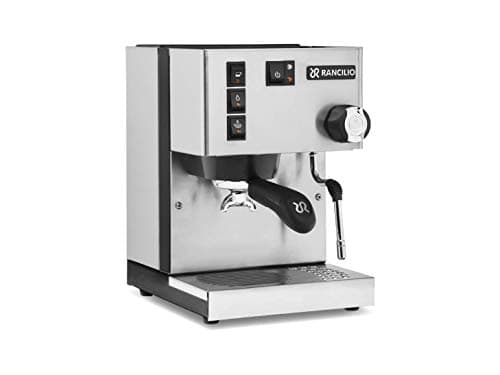
    Rancilio Rancilio Silvia
    Rancilio Silvia

    The commercial manufacturer that sells one home machine. Brass group, real steam, no features, and parts derived from equipment that runs in cafes.

    7.0Best brand for build and steam
  • 07
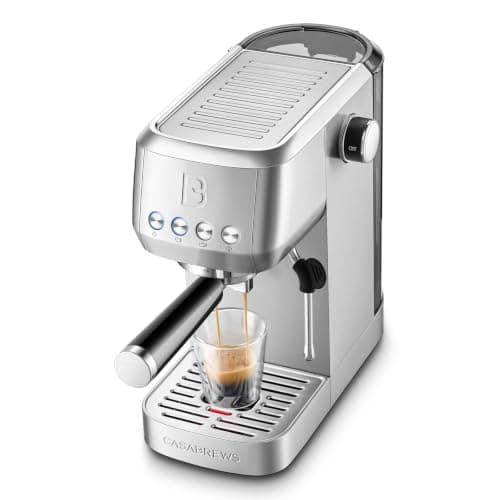
    CASABREWS CASABREWS 3700 Essential Espresso Machine
    CASABREWS 3700 Essential Espresso Machine

    The budget pick, and the honest version of what a house brand is: a stainless body, a real steam wand and a real portafilter at the lowest price here, with no repair path at all.

    4.3Budget pick

#ad · Live prices from the Amazon Product API, as of November 22, 2026. Where we have no verified live price, we show none — a gap beats a number that has rotted.

In detail

The picks, in full

01
Breville Breville Bambino Plus (BES500)

Best brand for most kitchens

Breville Bambino Plus (BES500)

54mm Breville basket standardThermoJet heating, ~3 second heat-upPID temperature controlAutomatic milk texturing
8.1/10

The brand that brought factory PID, three-second heating and a real accessory ecosystem to home prices. The Bambino Plus is the cheapest clear statement of all three.

Parts and repair
6
Accessory ecosystem
8.5
Documentation
8.5
Range coherence
9
Value
8.5

Pros

  • Breville is the only manufacturer shipping factory PID temperature control across an entire home range, which is the single spec that makes shots repeatable
  • A complete 54mm accessory ecosystem - baskets, bottomless portafilters, puck screens and tampers are all easy to buy
  • Documentation is unusually good for the category: brew temperature behavior and pre-infusion are described in the manuals rather than left to forums
  • The range is coherent, so moving up a tier keeps the baskets, the accessories and the muscle memory

Cons

  • 54mm is Breville's own standard rather than the commercial 58mm one, so you join a smaller market than Gaggia or Rancilio owners
  • Closed machines - reliable, but not designed to be opened or modified
  • ThermoJet and thermocoil heating means no PID can be retrofitted and no real thermal mass is stored
  • Breville's cheaper machines ship no grinder, and its machines with grinders put the money somewhere a standalone grinder would spend it better

Don't buy this if…

…you want to be able to repair and modify the machine for a decade. That is Gaggia's and Rancilio's territory, not Breville's.

Who it is for: the reader who wants the shortest path from box to drinkable espresso and does not plan to open the machine. Specifications, pros and cons are carried over unchanged from our Breville Bambino Plus review. The brand-level case is narrow and strong: PID at this price exists because Breville decided it should, and every rival at a home price either omits it or asks you to fit it yourself. The whole range is ranked on our best Breville espresso machines page.

$499.95View on Amazon

Price as of November 22, 2026. Prices change — Amazon's at checkout is the one that counts.

#ad · we may earn a commission from this link to Breville Bambino Plus (BES500)

02
Gaggia Gaggia Classic Pro (E24)

Best brand for repair and upgrades

Gaggia Classic Pro (E24)

58mm commercial portafilterLead-free brass boiler3-way solenoid valveNo factory PID, extensive PID kits available
8.1/10

The brand you buy if the machine should outlive the warranty: a brass boiler, the commercial 58mm standard and the best-documented parts and modding ecosystem in home espresso.

Parts and repair
9.5
Accessory ecosystem
9.5
Documentation
7
Range coherence
6.5
Value
8

Pros

  • 58mm is the commercial standard, so the professional accessory market fits without adapters
  • A brass boiler is a vessel that can be temperature-regulated, which is why PID kits exist for this machine and not for a ThermoJet
  • Parts availability is the best in home espresso - gaskets, shower screens, OPV springs and boilers are all sold
  • Decade-old units are still in daily service, which is a brand-level fact rather than a spec

Cons

  • No PID from the factory on the Classic Pro, so temperature surfing or a kit is part of ownership
  • The range is narrow next to Breville's or De'Longhi's
  • Gaggia's bean-to-cup machines are competent rather than class-leading
  • Long warm-up on the boiler machines, which is the cost of the thermal mass

Don't buy this if…

…you want the machine to help you. Gaggia's best machine is a tool, and its value is in what you can do to it over years.

Who it is for: the reader who intends to still own this machine in 2036. Specifications, pros and cons are carried over unchanged from our Gaggia Classic Pro review. It ties Breville on our scoring and sits second because the ranking is ordered for the median reader, who wants a good shot this week rather than a platform for a decade. If the decade is the point, this is the first pick and it is not close. The full range is on our best Gaggia espresso machines page.

$449.76View on Amazon

Price as of November 22, 2026. Prices change — Amazon's at checkout is the one that counts.

#ad · we may earn a commission from this link to Gaggia Classic Pro (E24)

03
De'Longhi De'Longhi Magnifica Evo

Best brand for range and bean-to-cup

De'Longhi Magnifica Evo

Sealed bean-to-cup brew groupIntegrated grinderLatteCrema automatic milk systemOne-touch milk drinks
6.5/10

The broadest range in espresso: six-inch manual machines at one end, automatic milk bean-to-cup at the other. The Magnifica Evo is where that breadth pays off.

Parts and repair
6
Accessory ecosystem
5.5
Documentation
7
Range coherence
6
Value
8

Pros

  • No other brand covers this much ground - the narrowest real espresso machine on the market and a one-touch latte machine come from the same catalogue
  • The automatic milk systems are genuinely good, and milk is where most households actually fail
  • Widely stocked and widely serviced, so a dead machine is less often a dead end than with a boutique brand
  • Bean-to-cup pricing is competitive against Jura and Philips for comparable drink menus

Cons

  • The cheap end of the range leans on 51mm pressurized baskets, which hide grind problems instead of letting you fix them
  • 51mm is the narrowest accessory market of the three standards
  • Sealed brew groups mean descaling and cleaning cycles are not optional and the machine will refuse to brew until they are done
  • Model naming is a thicket - the same name covers meaningfully different machines across years and regions

Don't buy this if…

…you want to learn espresso. De'Longhi's strength is removing the work, and its manual machines are the compromise part of the range rather than the point of it.

Who it is for: the household that wants milk drinks at the press of a button without Jura money. Specifications, pros and cons are carried over unchanged from our De'Longhi Magnifica Evo review. The brand-level reading: De'Longhi sells more espresso machines than anyone here and its best work is at the automatic end, not the manual one. The whole range is ranked on our best De'Longhi espresso machines page, and the brand-versus-brand question is on De'Longhi vs Breville.

$549.95View on Amazon

$899.9539% off

Price as of November 22, 2026. Prices change — Amazon's at checkout is the one that counts.

#ad · we may earn a commission from this link to De'Longhi Magnifica Evo

04
Jura Jura E4

Best brand for one-touch coffee

Jura E4

Sealed bean-to-cup brew groupIntegrated grinder and brewing unitNo milk system on the E4Automatic rinse and descale cycles
6.4/10

The brand that does one thing and does it better than anyone: a sealed bean-to-cup machine you press once, built to Swiss standards and priced accordingly.

Parts and repair
6.5
Accessory ecosystem
3
Documentation
8
Range coherence
9
Value
5.5

Pros

  • The most consistent one-touch coffee of any brand here, and the quietest grinders in bean-to-cup
  • Build quality and finish are a clear step above the mainstream bean-to-cup field
  • Maintenance is almost entirely automated, which is the actual reason these machines survive in busy households
  • A narrow, coherent range - every machine is the same idea at a different price

Cons

  • The most expensive brand here by a wide margin, and the entry machines omit the milk system most buyers assume is included
  • A sealed brew group means you cannot see, adjust or learn from the shot
  • No portafilter, so no accessory ecosystem and no path toward manual espresso
  • Servicing is specialist, which is the flip side of the engineering

Don't buy this if…

…you want to make espresso rather than have it. Nothing in this range lets you touch the puck, and that is the design, not an omission.

Who it is for: the reader who wants coffee without a hobby attached and has the budget to buy the good version of that. Specifications, pros and cons are carried over unchanged from its entry on our best Jura espresso machines ranking. It sits fourth on a page ordered for people who want to pull shots; on a page ordered for people who never want to think about coffee again it would be first. Note the E4 specifically has no milk system — that is the most common Jura buying mistake, and the per-brand page says which models fix it.

$1,299.00View on Amazon

$1,399.007% off

Price as of November 22, 2026. Prices change — Amazon's at checkout is the one that counts.

#ad · we may earn a commission from this link to Jura E4

05
Philips Philips 3200 Series LatteGo (EP3241)

Best brand for easy milk

Philips 3200 Series LatteGo (EP3241)

Sealed bean-to-cup brew groupLatteGo two-part milk carafe, no tubesCeramic burr grinderAquaClean filter support
6.0/10

The brand that solved the worst chore in bean-to-cup: LatteGo is a two-part milk carafe with no tubes, so cleaning it takes seconds rather than a cycle.

Parts and repair
6
Accessory ecosystem
3
Documentation
7.5
Range coherence
6
Value
7.5

Pros

  • LatteGo is a real engineering answer to a real problem - a milk system with no tubes cannot grow a biofilm inside tubes
  • Ceramic burrs rather than steel, which Philips rates for a long service life
  • Cheaper than Jura for a comparable drink menu, and widely available
  • Straightforward to live with: few settings, clear prompts, automatic rinsing

Cons

  • Sealed group, so no learning and no adjusting beyond grind coarseness and strength
  • Fewer drinks and less customization than the De'Longhi and Gaggia bean-to-cup machines at similar prices
  • No portafilter and no accessory ecosystem
  • Model numbering across the 2200, 3200 and 4300 ranges is confusing enough that buyers routinely get the wrong milk system

Don't buy this if…

…you want a steam wand, latte art, or any part of the process in your own hands. This is a push-button machine and nothing about it is semi-automatic.

Who it is for: the household that wants cappuccinos daily and refuses to clean a milk system daily. Specifications, pros and cons are carried over unchanged from our Philips 2200 vs 3200 LatteGo comparison, which is also the page to read before you choose a model number, because the cheaper machine's milk system is a different thing entirely.

$529.99View on Amazon

Price as of November 22, 2026. Prices change — Amazon's at checkout is the one that counts.

#ad · we may earn a commission from this link to Philips 3200 Series LatteGo (EP3241)

06
Rancilio Rancilio Silvia

Best brand for build and steam

Rancilio Silvia

58mm commercial portafilterBrass commercial group, 0.3L boilerStainless body, roughly 30.8 lbManual thermostat on the Silvia
7.0/10

The commercial manufacturer that sells one home machine. Brass group, real steam, no features, and parts derived from equipment that runs in cafes.

Parts and repair
9
Accessory ecosystem
9.5
Documentation
6.5
Range coherence
4
Value
6

Pros

  • A commercial-lineage group and boiler, which is a different class of hardware from anything else at a home price
  • The strongest steam of any machine on this page - it does not run out mid-pitcher
  • Serviceable for a very long time, with parts drawn from a commercial catalogue
  • 58mm commercial standard, so the professional accessory market fits

Cons

  • One home machine and one upmarket variant - there is no range to grow into or down from
  • The base Silvia has a manual thermostat rather than a factory PID, so the routine includes temperature surfing
  • Long warm-up and a small drip tray with tight group clearance
  • Expensive for what it does not include: no grinder, no screen, no automation of any kind

Don't buy this if…

…this is your first espresso machine and you want it to be easy. It is a bare tool, and that is the brand's entire proposition.

Who it is for: the reader who already knows what they are doing and wants hardware that will not be the limiting factor. Specifications, pros and cons are carried over unchanged from our Rancilio Silvia review. The brand sits sixth purely on breadth: one machine is not a range, and a brand ranking has to account for whether there is anywhere to go next. On hardware alone it would be second.

$995.00View on Amazon

Price as of November 22, 2026. Prices change — Amazon's at checkout is the one that counts.

#ad · we may earn a commission from this link to Rancilio Silvia

07
CASABREWS CASABREWS 3700 Essential Espresso Machine

Budget pick

CASABREWS 3700 Essential Espresso Machine

51mm pressurized basketGenuine steam wand, not a sleeveStainless housing20 bar pump maximum
4.3/10

The budget pick, and the honest version of what a house brand is: a stainless body, a real steam wand and a real portafilter at the lowest price here, with no repair path at all.

Parts and repair
2
Accessory ecosystem
3
Documentation
4
Range coherence
4
Value
8.5

Pros

  • The cheapest machine here with a genuine steam wand rather than a panarello frothing sleeve
  • A stainless housing at a price where plastic is the norm
  • Low enough cost that a decent grinder fits in the same budget as some single machines above
  • It does the actual job of the category: pressurized water through a puck in a portafilter

Cons

  • Its '20 bar' figure is a pump maximum, not a brewing pressure - espresso is extracted at about 9 bar, so a higher number is not a better machine
  • Pressurized basket only, so crema is produced mechanically
  • No parts, no service network and no accessory ecosystem - when it fails, it is finished
  • Documentation is thin compared with every established brand above

Don't buy this if…

…you expect to keep the machine more than a few years, or you want to grow into real espresso. Buy a grinder first and a Stilosa or Bambino second.

Who it is for:the reader who wants to find out whether home espresso is for them for the least money, and who is comfortable treating the machine as disposable. It is the budget pick because it is the cheapest product here that does the category's real job, and the brand entry is on the page because the house-brand tier is a genuine part of this market rather than something to pretend away. Specifications, pros and cons are carried over unchanged from our CASABREWS espresso machine review.

$93.49View on Amazon

$109.9915% off

Price as of November 22, 2026. Prices change — Amazon's at checkout is the one that counts.

#ad · we may earn a commission from this link to CASABREWS 3700 Essential Espresso Machine

What a brand actually decides for you

Four things, and they all outlast the model you buy.

1. The basket standard, which is a decade-long commitment

Gaggia and Rancilio use the commercial 58mm standard, so every tamper, basket, puck screen and bottomless portafilter made for cafes fits. Breville uses 54mm, well supported but Breville-shaped. De'Longhi's cheaper machines use 51mm, which has the shortest shelf. Jura and Philips have no portafilter at all, so the question does not apply — and neither does the upgrade path. We keep one page per size: 58mm, 54mm and 51mm.

2. Whether parts will exist

This is the single biggest difference between brands and it never appears in a feature comparison. Gaggia and Rancilio publish and sell parts; their machines are repaired rather than replaced. Breville and Philips machines are reliable and closed. House brands have no parts at all. Over ten years, a repairable machine at twice the price is often the cheaper machine.

3. Whether the machine is built to be learned or ignored

A sealed bean-to-cup group is a deliberate decision that you will never touch the coffee. That is the correct machine for a lot of households and the wrong one for anybody who wants to improve. A portafilter machine is the opposite bargain. Brands sit firmly on one side or the other, so choosing a brand mostly means choosing which bargain you want — our semi vs super-automatic page is the long version of that decision.

4. Whether a grinder is in the price

Every bean-to-cup machine contains a grinder you did not choose. Several semi-automatic machines do too. The grinder sets the ceiling on espresso quality, so a machine that includes one has spent part of your budget on a component you could have bought better separately. That is a brand-level pattern: De'Longhi, Jura and Philips almost always include one; Gaggia and Rancilio never do.

Which brand for which reader

If you want espresso to be easy and good: Breville. If you want to own the machine for a decade and tinker with it: Gaggia, then Rancilio. If you want milk drinks on one button: Philips for the cleaning, De'Longhi for the breadth, Jura if the budget is open. If you want the lowest possible price for a real portafilter: the house-brand tier, understanding what it is. Those are five different right answers, which is why a single "best brand" is a worse question than it looks.

The brand questions that do not matter

Country of manufacture tells you very little now; several brands here build in the same places. Bar ratings tell you nothing at all — a pump's maximum pressure is not the pressure espresso is brewed at, which is about nine bar, and our 15 bar vs 20 bar page goes through why. Drink-count menus on bean-to-cup machines mostly recombine the same three ingredients. Spend your attention on the four things above instead.

How we picked

We did not lab-test this gear

Everyone in this category says they tested twenty machines. We have not lab-tested any of these, and we say so. What we did instead: compiled the published manufacturer specifications, read the manuals, ran the math where there was math to run (heat-up time, pressure, dose capacity, grind range, cost per cup), and scored each pick against a published rubric. The scores are judgments from documented research — not measurements we took, because we do not have a lab and we will not pretend we do. Where a number came from someone else's work, we name them in Sources.
Questions

Frequently asked

What is the best espresso machine brand?
Breville, for most American kitchens, because it ships factory PID temperature control, three-second heating and a complete 54mm accessory ecosystem at a home price. Gaggia is the better answer if you want a machine you can repair and modify for a decade, and Jura is the better answer if you want one-touch coffee and nothing to learn.
Which espresso machine brand lasts the longest?
Gaggia and Rancilio, because parts are published and sold. Gaskets, shower screens, OPV springs and boilers are all available for the Classic Pro, and ten-year-old units are still in daily use. Closed machines from other brands are reliable but reach a point where a failure means replacement rather than repair.
Is De'Longhi or Breville better?
Breville for making espresso, De'Longhi for having it. Breville's strength is the shot side — PID temperature, fast heating, good baskets. De'Longhi's strength is automation and breadth, from six-inch manual machines to one-touch bean-to-cup. Our De'Longhi vs Breville page compares them model by model.
Are cheap house-brand espresso machines worth buying?
For finding out whether you want home espresso, yes. For keeping, no. A machine like the CASABREWS 3700 gets you a stainless body, a real portafilter and a real steam wand for less than a good grinder costs, and it has no parts, no service and no accessory ecosystem. Treat it as a trial, not an investment.
Does a higher bar rating mean a better brand?
No. Bar ratings are a pump's maximum pressure, and espresso is extracted at roughly nine bar. A 20-bar pump is not brewing at 20 bar, and brands that lead with the number are usually the ones with less to say about temperature and baskets.
Which brand should I buy if I want to learn latte art?
Gaggia or Rancilio, because both give you a bare steam wand fed by a brass boiler, and 58mm baskets to practice shots in. Breville's manual machines work too, but the Bambino Plus automates texturing by default. Any bean-to-cup machine is the wrong tool — see best espresso machines for latte art.

Keep reading

Receipts

Sources

We do not run a testing lab, and we do not pretend to. Where a measured number came from someone else's work, we name them and link them. Where we could not verify something, we say so on the page rather than quietly leaving it out. Read our full method.