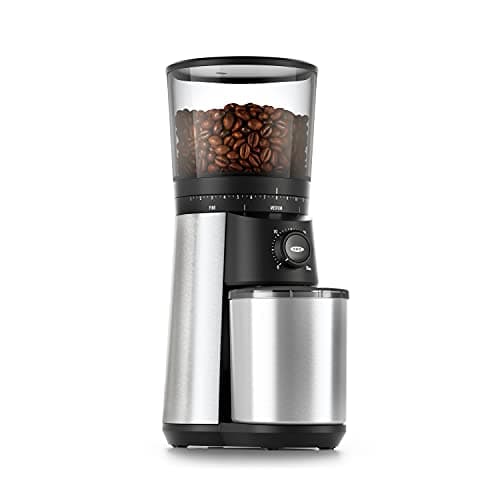
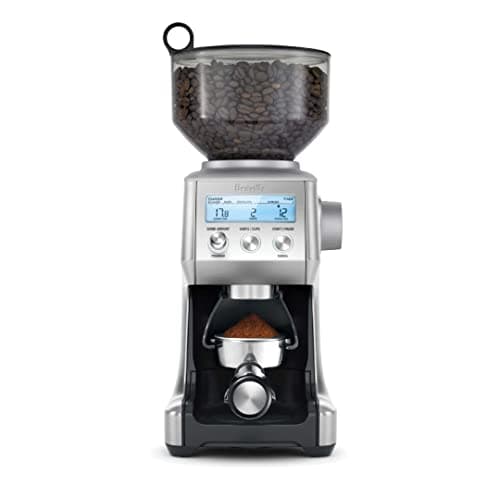
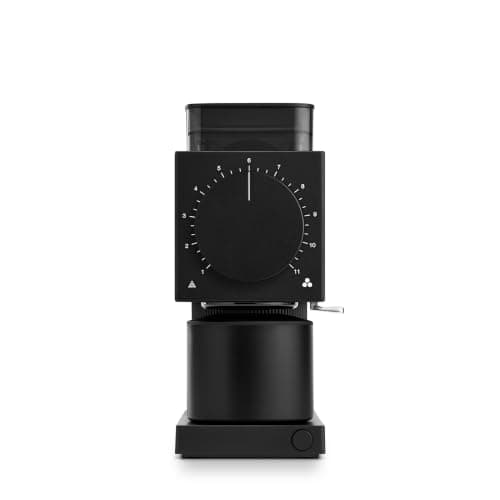
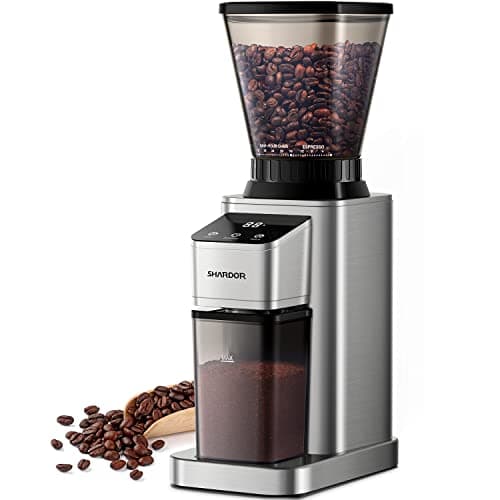
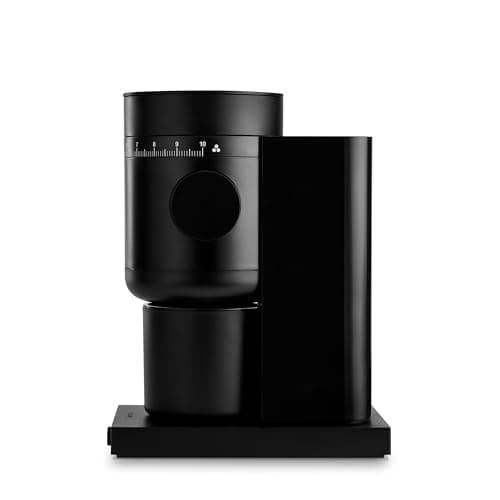
The verdict: if espresso is why you are looking past the Encore, the Fellow Opus 2 is the alternative to buy — 48mm burrs, a stepless dial and a genuine espresso range, which is the one thing the standard Encore cannot do at any setting. If you want the Encore's job done for less, the OXO Brew Conical Burr covers the same brewed range with real conical burrs and a dose timer for well under it. The budget pick is the SHARDOR Professional Conical Burr, the cheapest electric here that is genuinely a burr grinder. One warning that shapes this whole page: almost none of these alternatives match the Encore on the thing that actually makes it a ten-year purchase.
So start there. The Baratza Encore is a 40mm conical burr grinder with 40 stepped settings, a deliberately low-speed drivetrain, and a range that runs from cold brew through to fine drip. Its finest setting is not fine enough for espresso, and Baratza says so — the Encore ESP exists for exactly that reason. What makes the Encore the most-recommended first grinder in home coffee is none of those specs. It is that Baratza publishes its parts, sells replacement burrs, and supports the machine for years, so a dulled burr set or a failed gearbox is a repair rather than a landfill trip. That is unusual at this price and almost unheard of below it.
People look past the Encore for three reasons, and they want different answers. Espresso: the single most common one, because the Encore simply does not reach it and no amount of tamping fixes a grind that gushes. Price: the Encore is not expensive for what it is, but it is not the cheapest way into burrs either, and plenty of drip drinkers do not need forty settings. Grind quality: 40mm conical burrs are good, not exceptional, and if you brew filter coffee daily and nothing else, there is a clear step up available.
The ranking below is by how well each grinder answers one of those three, then by what it costs, then by repairability. We rank repairability last here only because it is the criterion the Encore wins and the alternatives mostly lose — so leading with it would make the page a list of six grinders you should not buy, which is not useful. Instead it is stated on every pick that gives it up. Every pick already appears somewhere on this site; specifications, pros and cons are carried over unchanged from those entries, with the source page named in each pick's body. The Encore ESP is deliberately not a pick, because it is the same machine line rather than an alternative to it — that decision lives on Baratza Encore vs Encore ESP.
What you are actually giving up
The Encore is not the best-grinding machine in its price class and it has never claimed to be. It is the most recommended one, and the reason is worth stating before you replace it.
The repair story is the Encore's real feature
Burrs dull. Motors and gearboxes fail. Baratza publishes parts, sells replacement burr sets and supports its machines for years, so a tired Encore is usually a repair rather than a replacement. Of the six alternatives on this page, none has an equivalent program — most offer a two-year warranty and then goodwill. That difference does not show up in a spec table and it is worth real money over a decade, which is why it is named in the cons of every pick above. If you intend to own one grinder for ten years and you brew filter coffee, the honest answer may well be to buy the Encore and stop reading.
Forty settings in the range you actually use
Total step count is the most over-quoted grinder spec, because where the steps sit matters more than how many there are. The Encore spends all forty of its clicks between cold brew and fine drip, so the settings a filter drinker moves between are close together. A grinder advertising sixty settings across espresso to French press has wider gaps in the brewed range even though the number is bigger. Keep that in mind when the Smart Grinder Pro's sixty looks like an obvious win: it is a win on reach, not necessarily on resolution where you brew.
Pick your alternative by which limit you hit
If you need espresso
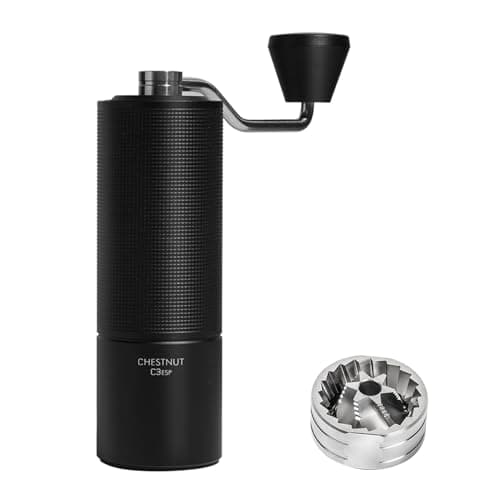
This is the hard limit, and it is the one reason to replace an Encore rather than keep it. A grinder needs a genuinely fine range andincrements small enough to move a shot from thirty seconds to twenty-five without landing on fifteen. The standard Encore has neither. Your list is the Opus 2, the Smart Grinder Pro and the Timemore C3 ESP — and the cheapest route of all is the one this page deliberately excludes, the Encore ESP, which is the same machine with espresso burrs and a different adjustment range. If espresso is your only complaint, read Baratza Encore vs Encore ESP before you leave the brand.
If you need it cheaper
The OXO is the closest equivalent for less, and the SHARDOR is the cheapest thing on the page that still has burrs. Both give up the repair path, and the SHARDOR gives up build quality too. Our best budget coffee grinders ranking covers that whole bracket, and best coffee grinders under $200 is the ladder the Encore sits on.
If you want a better grind for filter
Then you want a larger, flatter burr, and the Ode Gen 2 is the clear answer. Be realistic about the size of the improvement: moving from a 40mm conical to a 64mm flat narrows the particle distribution and reduces fines, which shows up most in a paper-filtered drip basket where fines clog the bed and extend contact time. It is a real improvement and it is not a transformation, and it costs well over twice the Encore. Our conical vs flat burr grinders page explains what geometry actually changes.
If retention is the problem
Every hopper grinder, the Encore included, keeps a few grams in the chute between doses, so the start of today's brew is the end of yesterday's bag. If you drink one bean from one bag, this is invisible. If you rotate roasters, it is the reason single-dose grinders exist, and on this page the Opus 2 and the Ode are built that way while the Timemore holds essentially nothing at all. Our best single dose grinders ranking covers the format.
Three reasons not to replace it yet
Your burrs may just be dull. An Encore that has ground a few hundred pounds of coffee grinds visibly worse than a new one, and a replacement burr set costs a small fraction of any grinder here. That is the whole point of buying a repairable machine, and it is the first thing to check before concluding you need a different one.
It may need cleaning rather than replacing.Coffee oils build up on burrs and in the chute, and dark roasts accelerate it. A grinder that has never been cleaned tastes stale regardless of what it is — how to clean a coffee grinder covers the routine.
The brewer may be the weak link. If your coffee is thin and sour with a correct dose and a medium-roast bean, the problem is more likely brew temperature than grind. A machine that publishes no temperature figure and carries no certification is the usual culprit, and best coffee makers under $200 is where that changes. Replacing a working Encore will not fix a cool brewer.